
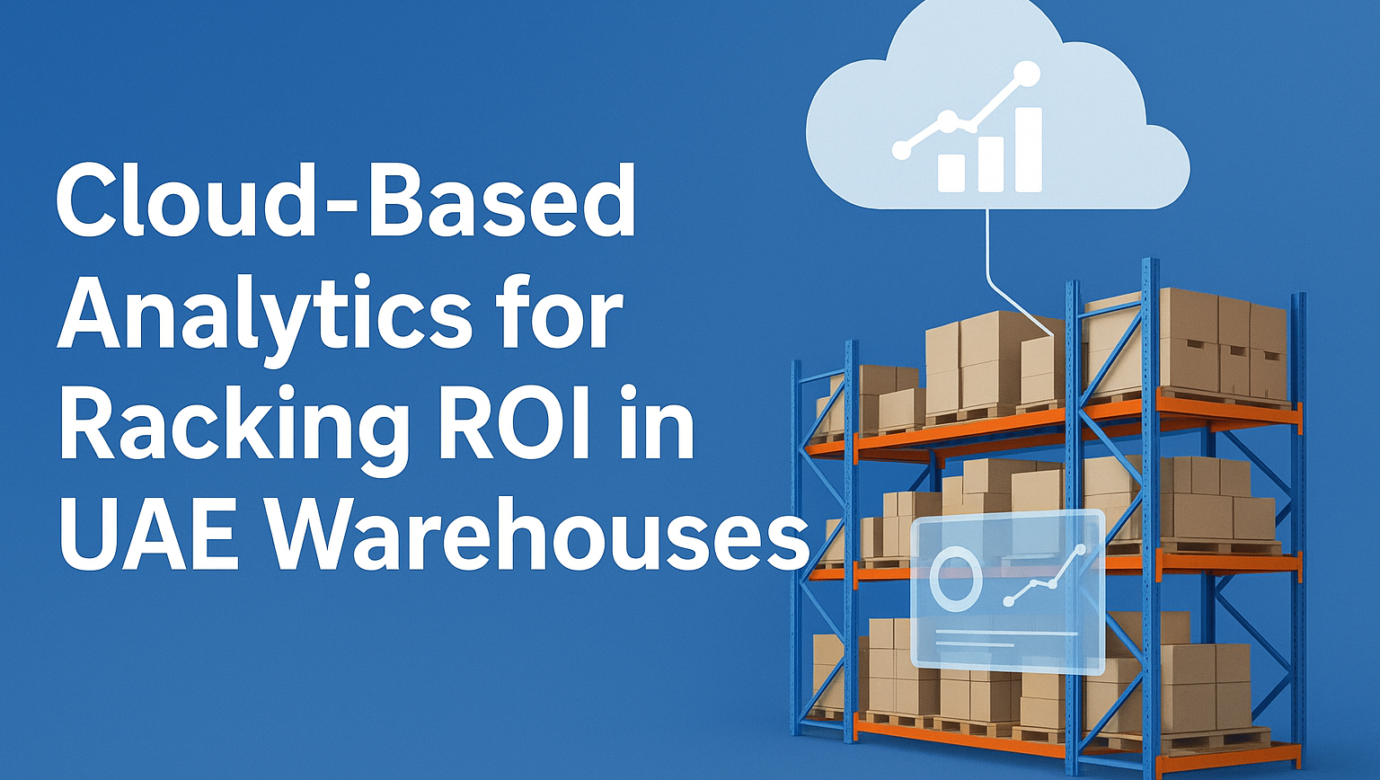
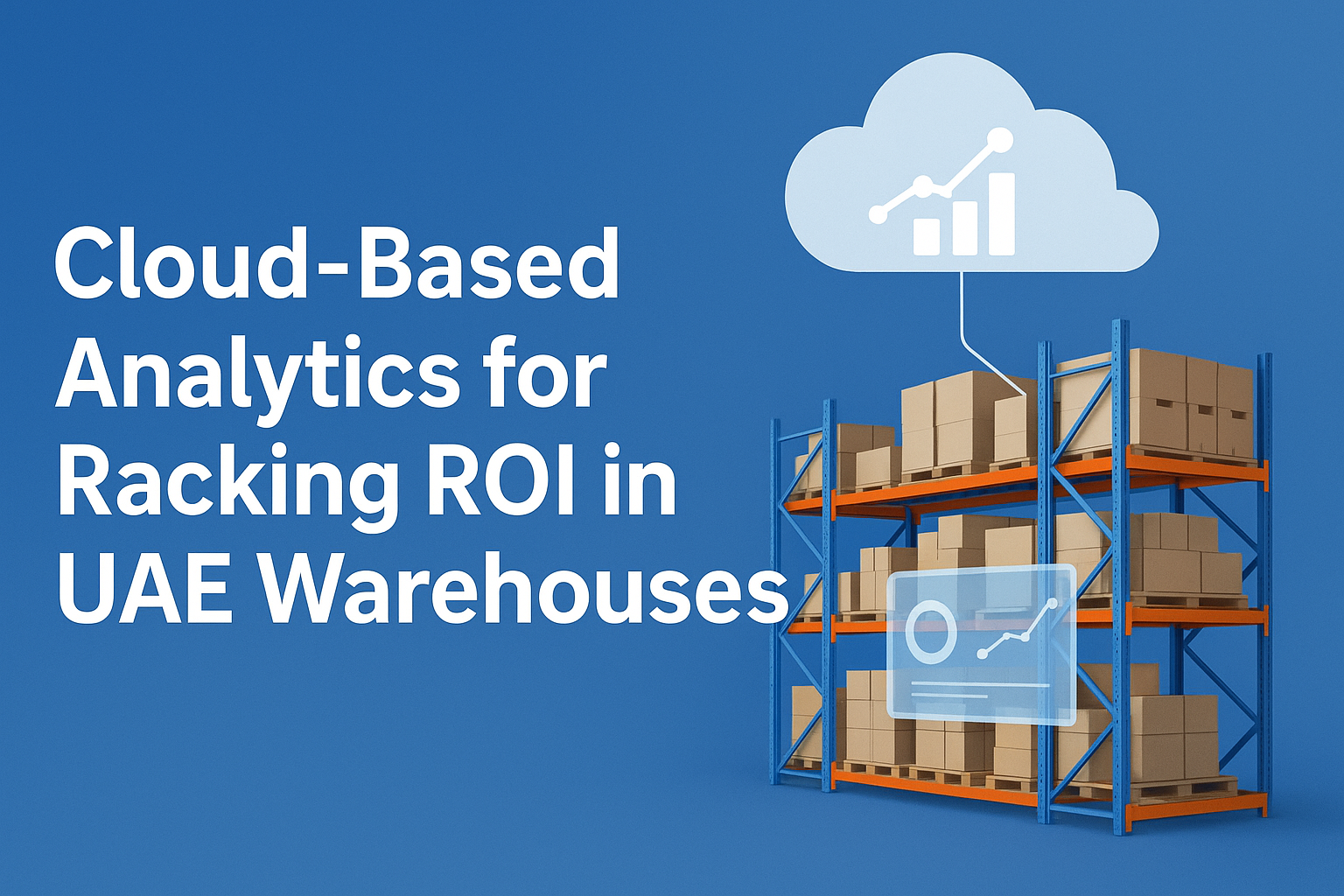
Cloud Based Analytics for Racking ROI in UAE Warehouses
The Data-Driven Revolution in UAE Warehousing
Warehousing in the UAE is entering a new era where data dictates decisions and every square meter counts. With the rapid rise of e-commerce, last-mile logistics, and automation, warehouse operators are under immense pressure to ensure their racking systems deliver measurable returns on investment (ROI). But traditional tracking methods no longer suffice.
Enter cloud-based analytics—a powerful digital transformation tool that enables warehouse managers to measure, monitor, and maximize the ROI of their racking systems in real time.
In this article, we’ll explore how cloud analytics in the UAE is reshaping warehouse performance management, improving racking utilization, and helping decision-makers quantify their investments with precision.
Understanding Racking ROI: More Than Just Cost vs. Output
Before diving into cloud solutions, it’s essential to define what racking ROI truly means in a modern logistics environment.
ROI, or Return on Investment, in the context of racking, refers to the financial and operational return generated from storage systems relative to the costs incurred in their procurement, installation, and maintenance. However, this isn’t limited to money saved or earned.
The true ROI of a racking system encompasses:
- Space Utilization: How effectively the available warehouse area is used.
- Operational Efficiency: Speed of storage and retrieval operations.
- Safety and Durability: Reduced downtime due to fewer accidents or structural issues.
- Scalability: Ability to adapt as storage requirements grow or change.
- Maintenance Costs: Long-term upkeep and repair savings.
Cloud analytics quantifies each of these components, transforming them into actionable data points that decision-makers can interpret instantly.
Why Cloud Analytics Matters for UAE Warehouses
The UAE logistics market is one of the fastest-growing in the GCC, driven by mega hubs like Dubai Logistics City and KIZAD in Abu Dhabi. The region’s competitive environment demands data precision.
Here’s why cloud analytics has become indispensable:
- Real-Time Performance Insights
Cloud platforms gather data from sensors and IoT-enabled racking systems, showing live updates on load distribution, shelf utilization, and system wear. - Centralized Data Access
Managers can access racking performance data from any location. For UAE warehouses managing multiple sites, this ensures consistency and transparency. - Predictive Maintenance
Analytics tools detect anomalies—like uneven loads or temperature fluctuations—that might compromise racking integrity. This reduces downtime and extends lifespan. - Integration with ERP and WMS Systems
Cloud-based analytics seamlessly connects with enterprise systems, ensuring ROI calculations factor in inventory turnover, labor cost, and throughput rates. - Regulatory and Safety Compliance
UAE warehouse operations must adhere to strict safety and quality standards. Cloud systems help document inspections and generate reports for compliance audits.
In short, cloud analytics not only helps warehouse operators understand what’s happening now but also what could happen next—a critical capability in a market driven by speed and accuracy.
How Cloud Analytics Measures Racking ROI
To calculate ROI effectively, warehouses must track a range of operational metrics. Cloud-based tools make this process automatic and precise. Here’s how they do it:
1. Asset Utilization Tracking
Cloud platforms continuously monitor how much of each racking unit is being used. They visualize underused or overloaded sections, enabling adjustments that increase productivity.
For example, if a warehouse has a capacity of 10,000 pallet positions but only 7,000 are regularly used, cloud analytics identifies the utilization gap. This data helps decision-makers either reallocate inventory or redesign racking layouts to achieve higher ROI.
2. Labor Efficiency Analysis
By integrating with warehouse management systems (WMS), cloud analytics measures labor time per pick or per storage transaction. The result? A clear view of how efficient warehouse teams are in using the racking infrastructure.
An optimized racking layout can reduce travel time by up to 25%, directly influencing operational costs.
3. Inventory Turnover Monitoring
Through data visualization, warehouses can see how quickly items move through the system. Fast-moving goods can be positioned closer to dispatch zones, while slow-moving inventory can be stored higher or further back.
This reorganization boosts throughput and shortens payback time for racking investments.
4. Predictive Maintenance Alerts
Sensors in racking structures detect stress, vibration, or temperature changes. Cloud algorithms analyze this data and alert maintenance teams before issues escalate.
This predictive capability not only prevents costly damage but also reduces the need for emergency repairs—enhancing ROI by minimizing unplanned expenses.
5. Energy and Space Optimization
Cloud systems also track warehouse climate control and energy use. In temperature-controlled storage (such as cold chain facilities), even small layout improvements can lead to significant energy savings.
Thus, cloud analytics connects the dots between racking performance and sustainability metrics, ensuring that ROI includes both cost efficiency and environmental performance.
Benefits of Cloud Analytics for UAE Warehouse Operators
Let’s break down the direct benefits of cloud analytics on racking ROI measurement for UAE warehouses:
1. Accurate ROI Calculations
Instead of relying on manual spreadsheets, cloud analytics platforms calculate ROI based on live data—covering utilization, downtime, costs, and productivity.
2. Strategic Decision-Making
Warehouse managers can simulate “what-if” scenarios. For instance, what happens to ROI if you switch from selective racking to drive-in or shuttle systems? Cloud tools provide instant answers backed by data.
3. Scalability
As warehouses expand or adopt automation, cloud systems scale effortlessly. This ensures continuity in data tracking and historical trend analysis.
4. Reduced Downtime
Predictive maintenance, enabled by real-time analytics, cuts downtime and prevents expensive disruptions.
5. Better Financial Forecasting
By correlating warehouse performance metrics with financial outcomes, CFOs and operations directors can justify investments in new racking systems or expansions with data-driven confidence.
Implementing Cloud Analytics in Your UAE Warehouse
Transitioning to cloud-based analytics doesn’t happen overnight. It involves planning, integration, and cultural adaptation within the organization. Here’s a structured roadmap:
Step 1: Define KPIs
Identify the most critical performance indicators—like rack utilization rate, average retrieval time, or system downtime—that align with ROI objectives.
Step 2: Select the Right Cloud Platform
Choose a cloud provider compatible with your warehouse management system (WMS) and capable of integrating IoT data. Leading global solutions like Microsoft Azure, AWS IoT Core, or Oracle Cloud Infrastructure offer warehouse analytics modules that fit UAE business compliance standards.
Step 3: Deploy IoT Sensors
Install load sensors, vibration detectors, and temperature monitors across the racking infrastructure. These sensors form the foundation of accurate data collection.
Step 4: Data Integration and Visualization
Integrate collected data with dashboards and analytics software. Use visualization tools like Power BI or Tableau for clear and actionable insights.
Step 5: Train Your Team
Ensure staff can interpret and act upon the analytics. Even the best technology can underperform without proper user adoption.
Step 6: Continuous Optimization
Use historical data to identify long-term trends. Regularly review ROI performance metrics to refine strategies and investments.
Case Study: Racking ROI Optimization with Cloud Analytics in Dubai
A major logistics operator in Dubai Logistics City implemented cloud analytics to optimize its pallet racking systems.
The Challenge
The company managed over 50,000 pallet positions across three warehouses but struggled with inconsistent utilization and frequent maintenance issues.
The Solution
By integrating IoT sensors with a cloud-based analytics dashboard, management gained full visibility into load balance, structural stress, and utilization rates.
The Results
- 20% increase in average racking utilization
- 15% reduction in maintenance costs through predictive alerts
- Improved ROI by 25% within 12 months
This example illustrates how cloud analytics transforms raw warehouse data into measurable profitability, making it a cornerstone of modern logistics management in the UAE.
Challenges and Considerations
Despite the clear advantages, some challenges can slow adoption:
- Initial Investment Costs: Setting up sensors and analytics platforms requires capital expenditure.
- Data Security: UAE warehouses must comply with strict data protection laws. Ensuring cloud security is essential.
- Integration Complexity: Older warehouse systems may require customization to connect with cloud solutions.
- Skill Gaps: Staff training is critical to maximize the value of analytics insights.
However, the long-term benefits far outweigh these hurdles, especially for logistics companies aiming for precision and sustainability in operations.
The Future of Racking ROI Measurement in the UAE
The future of warehouse management is undoubtedly digital, data-driven, and cloud-connected. As AI and machine learning merge with cloud analytics, racking ROI measurement will become even more accurate and predictive.
Future trends include:
- AI-driven forecasting for warehouse capacity planning
- Automated layout design based on analytics insights
- Blockchain integration for transparent data sharing across logistics networks
For UAE warehouses striving to remain competitive in global logistics, adopting cloud analytics is not just an upgrade—it’s a necessity.
In a logistics market as dynamic as the UAE’s, data is the new currency. Cloud-based analytics empowers warehouse operators to see beyond the surface of operations—into performance metrics, efficiency gaps, and financial returns that were once invisible.
By integrating real-time analytics with racking systems, warehouses can calculate ROI with precision, make informed investment decisions, and achieve higher profitability.
For UAE warehouse operators, cloud analytics for racking ROI isn’t just a technological advantage—it’s the foundation for long-term operational excellence and financial growth.
FAQs
1. What is racking ROI?
Racking ROI measures the financial and operational return on investment from warehouse racking systems, considering factors like utilization, efficiency, and maintenance costs.
2. How does cloud analytics improve racking ROI measurement?
Cloud analytics collects real-time data from IoT sensors and management systems, offering precise insights into usage, maintenance, and performance that help optimize ROI.
3. Is cloud analytics suitable for small warehouses in the UAE?
Yes. Cloud-based platforms scale according to business size. Even small warehouses benefit from improved tracking and forecasting capabilities.
4. What types of racking systems can be monitored through cloud analytics?
All major racking systems, including selective, drive-in, push-back, and automated shuttle systems, can be integrated with cloud analytics tools.
5. Are cloud analytics systems secure for UAE warehouses?
Yes. Most cloud platforms comply with international and UAE data protection regulations, offering encryption and access control to safeguard sensitive warehouse data.
