
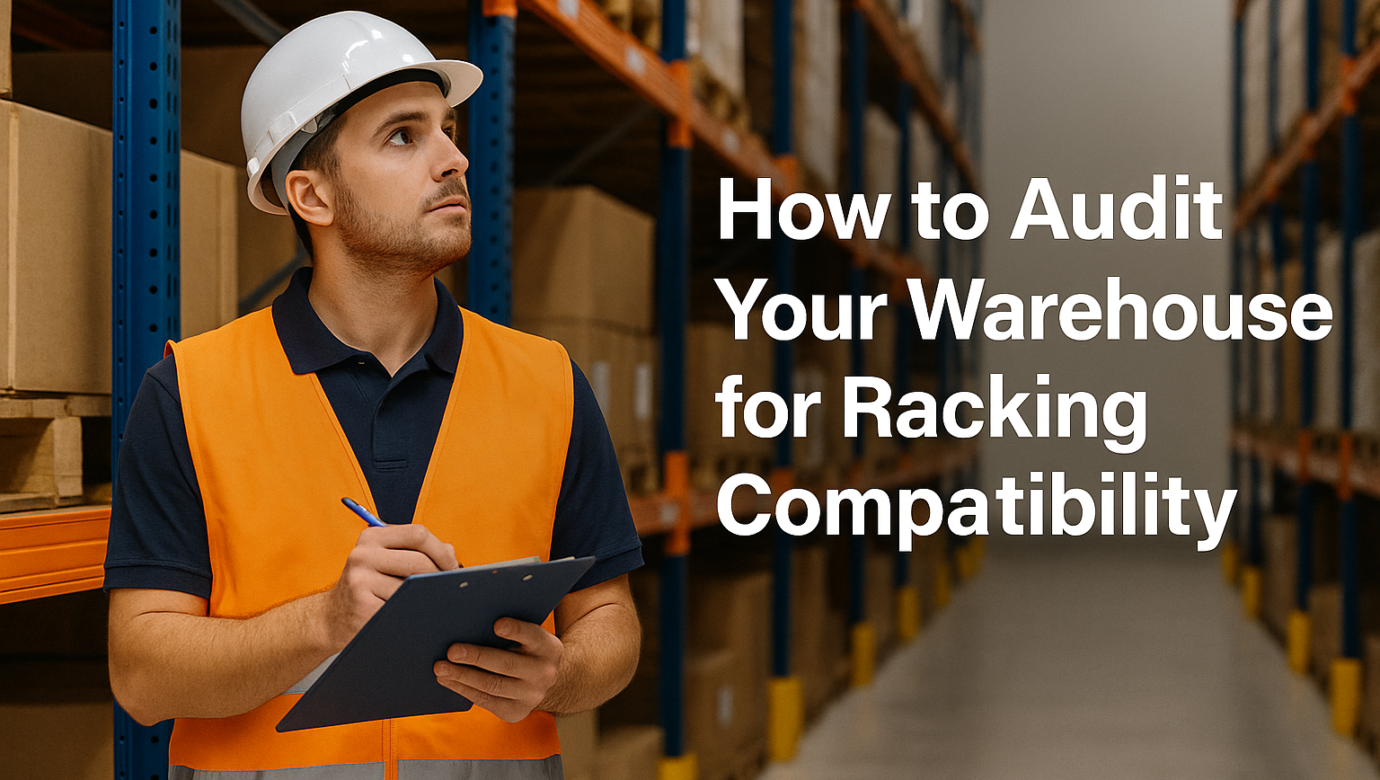
How to Audit Your Warehouse for Racking Compatibility
In a city like Dubai where innovation meets logistics at scale efficient warehouse management is not just an advantage, it’s a necessity. Whether you’re scaling operations or optimizing existing space, racking compatibility can make or break your warehousing strategy.
Conducting a warehouse audit specifically for racking compatibility ensures you’re using the right system for your needs, improving safety, space utilization, and operational efficiency. In this guide, we walk you through how to do it step by step.
Why a Racking Compatibility Audit is Crucial
Before diving into the how, let’s clarify the why:
- Safety Compliance: Incompatible racking systems can lead to accidents and legal liabilities.
- Cost Efficiency: Mismatched racks lead to wasted space and poor product flow.
- Future Scalability: Auditing helps you plan for future volume increases and tech integrations like automation.
- Integration Readiness: Ensures compatibility with your forklifts, conveyors, WMS, and other systems.
Step-by-Step Guide to Auditing Your Warehouse for Racking Compatibility
1. Assess Current Inventory Flow and Volume
Start with a data-driven review:
- Inventory turnover rate
- SKU dimensions & weight
- Seasonal volume spikes
Why it matters: Understanding what you’re storing helps you match the right rack type selective, drive-in, pallet flow, or cantilever.
2. Measure Space Dimensions Accurately
Don’t just go by blueprint specs. Measure:
- Ceiling height
- Aisle width
- Door clearances
- Obstructions (columns, pipes, HVAC, etc.)
Pro Tip: Use 3D warehouse modeling tools for a more accurate spatial overview.
3. Evaluate Load Requirements
Check:
- Weight per pallet/SKU
- Point loads vs. uniform loads
- Dynamic vs. static loads
Outcome: Ensure rack beams and uprights meet structural requirements without over-engineering (which leads to higher cost).
4. Verify Equipment Compatibility
Your forklifts, order pickers, and automated guided vehicles (AGVs) must align with:
- Rack height
- Load beam spacing
- Entry clearances
Mismatch Warning: An incompatible forklift can lead to damage or operational inefficiencies.
5. Inspect Racking Condition
If you’re using existing racking:
- Check for rust, dents, or compromised welds
- Confirm anchoring to floors
- Ensure beam locks are intact
Safety tip: Damaged racks are a liability replace or reinforce before scaling.
6. Analyze Operational Workflow
Does your racking support:
- FIFO or LIFO?
- Bulk vs. split picking?
- Cross-docking or staging areas?
Goal: Your racks should enhance, not obstruct, your workflow logic.
7. Confirm Regulatory & Fire Code Compliance
Dubai Civil Defence and other regional authorities may have codes for:
- Fire suppression clearance
- Aisle width
- Sprinkler access
Documentation: Keep certifications and safety audits up to date.
8. Consult a Racking Expert
After self-assessment, always bring in professionals. They can:
- Validate compatibility
- Suggest cost-effective upgrades
- Provide CAD-based redesigns
Common Mistakes to Avoid
- Ignoring seismic load ratings
- Overloading racks based on assumptions
- Failing to plan for growth and automation
- Using one-size-fits-all solutions for multi-product warehouses
Benefits of a Well-Audited Racking System
- Increased safety & reduced liability
- 20–30% better space utilization
- Faster picking and loading times
- Smoother tech integrations
Ideally once a year or whenever there’s a significant change in inventory or operations.
Only after a thorough structural integrity and compatibility check.
Work with local consultants and submit your design to the Dubai Civil Defence for approval.
Selective pallet racking or carton flow racks usually work best but always audit first.
Facts
A racking compatibility audit isn’t just a checkbox task it’s a strategic decision that impacts safety, efficiency, and profitability. Whether you’re retrofitting or starting fresh, investing in a detailed audit ensures your warehouse aligns with both today’s needs and tomorrow’s growth.
