Warehouse Racking Types: Complete Comparison & Cost Matrix
Selecting the wrong storage framework for your facility can lock you into decades of unnecessary operational expenses, slow order fulfillment, and wasted floor space. For warehouse managers and operations executives in the UAE and GCC region, balancing upfront capital expenditure (CAPEX) against ongoing operational expenditure (OPEX) is the single most critical decision in facility design.
Building an optimized warehouse layout requires matching your inventory profile—such as SKU count, turnover speed, and load dimensions—to the right industrial infrastructure. If you are starting with foundational concepts, reviewing what warehouse racking is, its core uses, and safety considerations can help clarify how structural design impacts daily operations. In this guide, we break down the performance metrics, density ratios, access speeds, and 10-year total cost of ownership across seven primary racking systems.
What Are the Main Warehouse Racking Types?
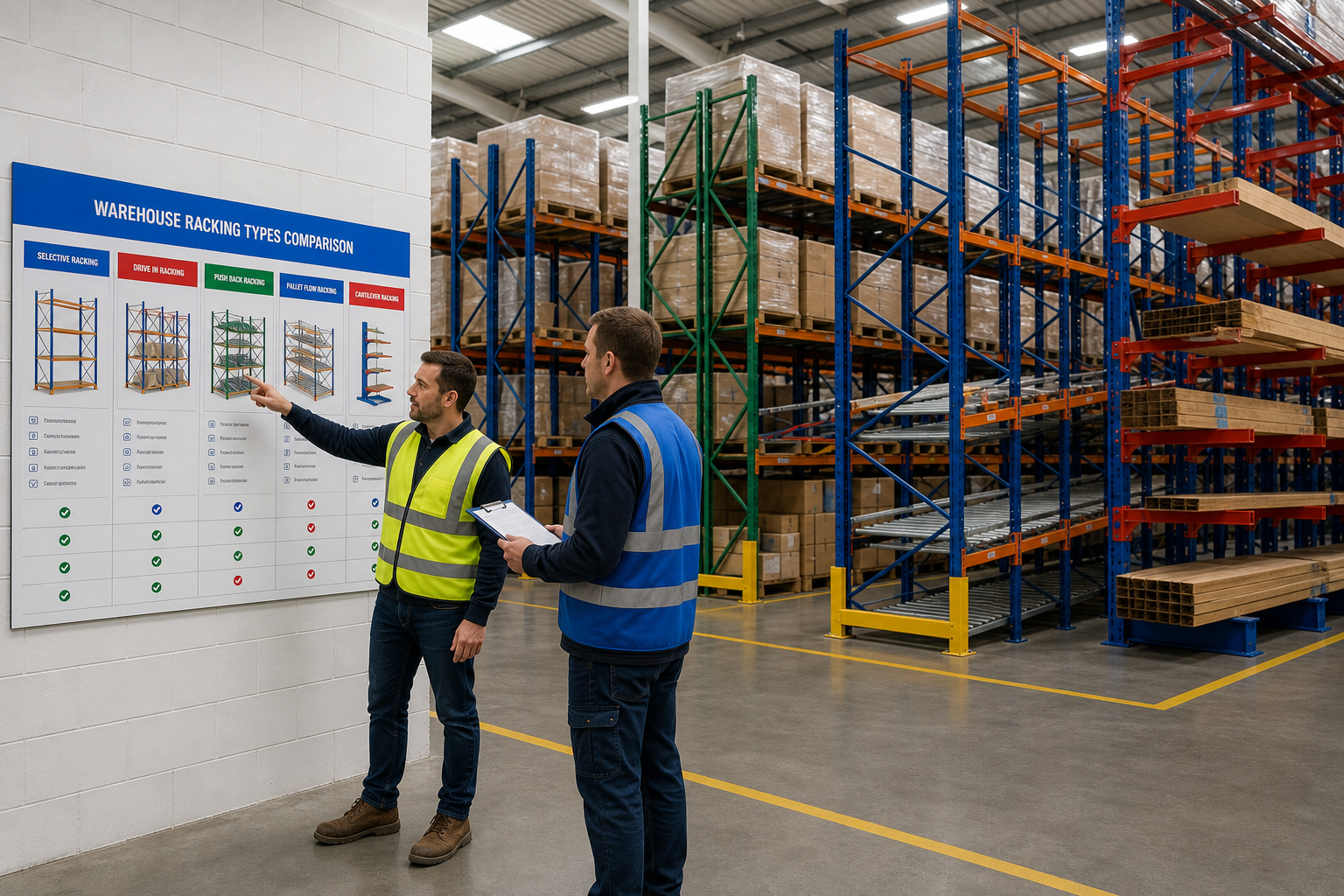
Industrial storage solutions fall along a spectrum between 100% selectivity (immediate access to every pallet) and maximum high density racking (maximizing cubic footprint utilization). The primary systems powering modern operations include:
- Selective Pallet Racking: The most common system, offering direct access to every pallet position.
- Double-Deep Racking: Pallets are stored two deep, requiring specialized reach trucks but increasing density by up to 30%.
- Drive-In / Drive-Through Racking: High-density storage designed for homogeneous stock, where forklifts enter the racking structure itself.
- Cantilever Racking: Specialized arm-based storage designed for long, bulky, or irregular materials like pipes, timber, and sheet metal.
- Mezzanine Warehouse Storage: Raised structural platforms that add additional elevated floor space within the existing building footprint.
- Mobile Racking Systems: Heavy-duty racks mounted on motorized mobile bases that open and close aisles as needed to eliminate static aisle space.
- Slotted Angle Shelving: Versatile, light-to-medium duty manual storage ideal for hand-picked small parts and archives.
Warehouse Racking Comparison Table: Density, Speed, Selectivity, and Cost
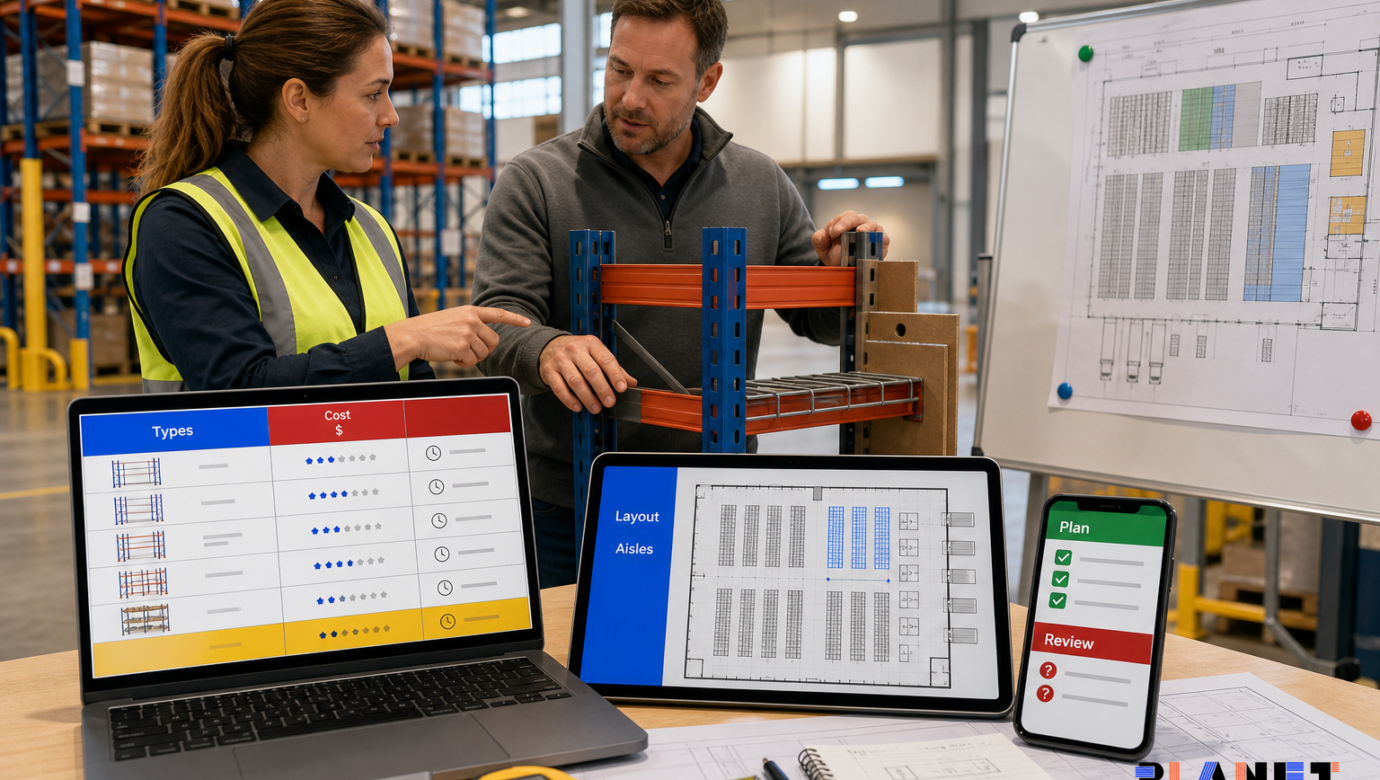
To evaluate these options, operations decision-makers must look at the key tradeoffs between space efficiency, access speed, and initial investment. The table below outlines how each system compares across essential performance criteria.
| Racking System | Storage Density | Selectivity | Access Speed | Est. Cost per Pallet Position (USD) |
|---|---|---|---|---|
| Selective Pallet Racking | Low (40–50% space utilization) | 100% (Direct access) | Very Fast | $60 – $90 |
| Double-Deep Racking | Medium-High (60–65%) | 50% (Requires moving front pallet) | Moderate | $80 – $120 |
| Drive-In Racking | Very High (75–85%) | Low (LIFO method) | Slow | $110 – $160 |
| Cantilever Racking | Variable (Depends on load) | 100% (For exposed items) | Fast (For bulky loads) | $150 – $250+ |
| Mezzanine Systems | Doubles/Triples floor space | 100% (Manual picking level) | Fast (Hand picking) | $15 – $30 / sq ft |
| Mobile Racking Systems | Maximum (80–90%) | 100% (When aisle opens) | Moderate | $250 – $400+ |
| Slotted Angle Systems | Low-Medium | 100% (Manual level) | Fast (Hand picking) | $20 – $40 (Per shelf unit) |
Planning a facility upgrade or new fit-out in Dubai or across the GCC? Planet Racking provides custom layouts tailored to your operational throughput. Explore our core types of racking systems for modern warehouses to learn more about engineered industrial solutions.
Selective Pallet Racking: Best for Fast Access and Flexibility
Selective pallet racking is the industry baseline. Built with vertical upright frames and horizontal load beams, this system allows operators to pick any individual pallet without moving others.
Because it offers 100% selectivity, it is the premier choice for facilities handling high SKU counts, fast-moving consumer goods (FMCG), third-party logistics (3PL), and dynamic retail inventory. However, standard selective layouts require wide aisles (typically 3.0 to 3.5 meters) to accommodate standard forklifts, meaning up to 60% of your total floor space is dedicated to aisles rather than inventory.
Double-Deep and Drive-In Racking: When Higher Density Wins
When real estate costs are high, high density racking becomes necessary to reduce cost per square foot.
Double-Deep Racking
By placing two rows of selective racking back-to-back, double-deep racking eliminates every second aisle. This layout increases storage density by up to 30% compared to standard selective systems. It requires specialized reach trucks equipped with pantograph mechanisms or telescopic forks. Selectivity drops to 50%, making it ideal for operations with multiple pallets per SKU and moderate turnover rates.
Drive-In Racking
Drive-in racking eliminates operational aisles altogether by allowing forklifts to drive directly into multi-level lanes. Pallets rest on continuous side rails. Operating on a Last-In, First-Out (LIFO) inventory management model, drive-in systems are tailored for bulk storage, seasonal inventory, and cold storage applications where thermal efficiency is paramount and individual pallet selectivity is not required.
Cantilever Racking for Long, Bulky, and Irregular Loads
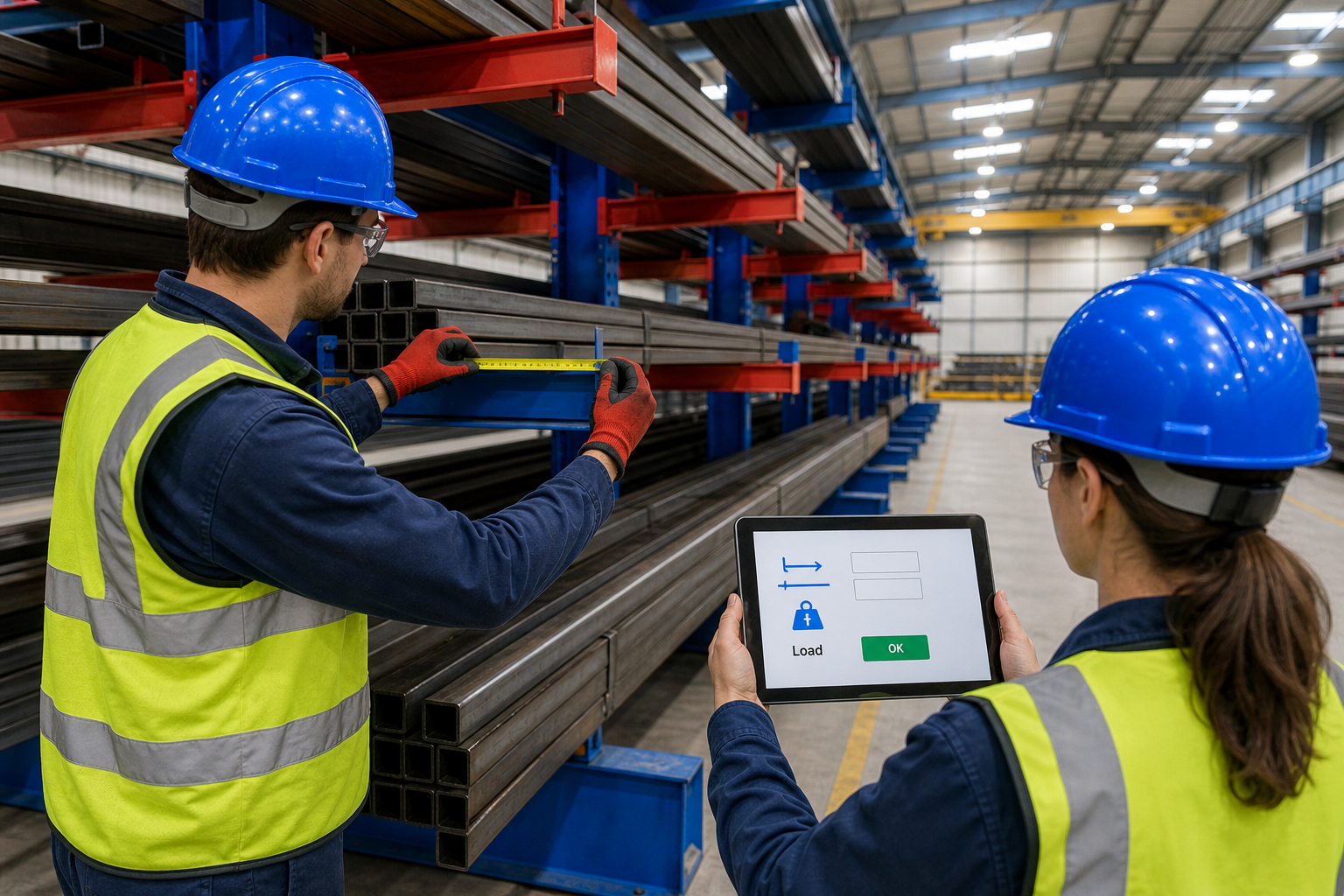
Standard pallet racking relies on front vertical columns, which restrict the lateral movement of long items. Cantilever racking eliminates front columns, utilizing a central vertical column anchor fitted with extended horizontal arms.
This design makes cantilever structures essential for storing structural steel, timber, PVC piping, sheet metal, and furniture. By removing front obstructions, material handlers can pick and place irregular loads quickly via forklift or overhead crane. The initial racking cost per pallet position equivalent is higher due to heavy structural steel requirements, but it eliminates the risk of product damage caused by cramming oversized goods into standard bays.
Mezzanine, Mobile, and Slotted Angle Systems: When They Make Sense
Not every warehouse requirement revolves around standard forklift pallet placement. Hybrid systems unlock cubic volume that standard racking misses.
- Mezzanine Warehouse Storage: Utilizing structural steel columns, mezzanines transform unused vertical headroom into functional secondary floors. They are ideal for adding picking modules, light assembly areas, or administrative offices without increasing the facility footprint.
- Mobile Racking Systems: Heavy-duty selective racks mounted on automated floor tracks. Multiple rows share a single moving aisle, which opens automatically via remote control. This delivers up to 85% space saving while retaining 100% individual pallet access—making it a preferred capital investment for high-cost cold stores.
- Slotted Angle Systems: Highly adaptable, bolted or boltless light-duty steel shelving. Perfect for spare parts rooms, e-commerce hand-picking modules, and archiving, slotted angle allows operators to adjust shelf heights manually as inventory dimensions shift.
10-Year CAPEX vs OPEX: The Real Cost of Each Racking Type
A common mistake when evaluating warehouse storage systems is selecting a framework based purely on initial purchase price. The true cost of ownership spans upfront CAPEX (steel, foundation work, installation, specialized forklifts) and ongoing 10-year OPEX (building rent, labor travel time, energy costs, and racking maintenance).
The Upfront Winner: Selective pallet racking is the cheapest option upfront ($60–$90 per pallet position). However, in high-cost real estate markets like Dubai, low density means paying for significantly larger building footprints over time.
The 10-Year Financial Winner: High-density options like Mobile Racking or Drive-In systems require higher initial capital investment ($250+ per position for mobile). Yet, by consolidating storage into 40% less space, they dramatically reduce 10-year real estate leases and climate-control utility costs. In cold storage environments, a mobile racking system typically achieves full ROI within 36 to 48 months by drastically lowering operational expenditures.
How to Choose the Right Racking System for Your Warehouse
Selecting the optimal architecture requires systematic evaluation of your current operational parameters:
- Analyze Your SKU Profile & Throughput: High SKU count with low volume per SKU demands 100% selectivity (Selective or Mobile). Low SKU count with high volume per SKU suits high density (Drive-In or Double-Deep).
- Evaluate Existing Equipment: Standard forklifts work with selective and drive-in systems. Double-deep racking requires deep-reach trucks, while narrow-aisle selective configurations require VNA (Very Narrow Aisle) trucks.
- Factor in Ceiling Heights: Ensure your building’s clear height supports vertical expansion, especially when considering heavy-duty multi-tier mezzanines.
- Consult a Racking Specialist: Off-the-shelf buying risks structural compliance failures and lost storage capacity. Working with an experienced engineer ensures your solution complies with local UAE safety standards and maximizes operational flow.
Every facility has unique throughput demands, spatial constraints, and expansion targets. Partnering with a dedicated industrial team eliminates guesswork and prevents expensive layout redesigns.
Ready to optimize your space and calculate your exact ROI? Request a free warehouse racking consultation and cost matrix from Planet Racking today, and let our engineering experts design a system built for long-term growth.
Frequently asked questions
Which warehouse racking type is the cheapest upfront?
Based on the article, selective pallet racking is the cheapest upfront among the main pallet systems, with an estimated cost per pallet position of $60 to $90. Slotted angle shelving is lower cost for light-duty manual storage, but it is not a standard pallet racking system.
Which warehouse racking type is cheapest over 10 years?
The article does not give a full 10-year cost ranking, but it explains that the cheapest option over time depends on both CAPEX and OPEX. Selective pallet racking often wins for flexibility and fast access, while higher-density systems may reduce space costs enough to offset higher initial spend in the right operation.
How do selective, double-deep, drive-in, cantilever, mezzanine, mobile, and slotted angle systems compare on access speed?
Selective pallet racking offers very fast direct access. Double-deep is moderate because the front pallet must be moved. Drive-in is slow because forklifts enter the lanes and it uses LIFO. Cantilever is fast for bulky items, mezzanine is fast for hand picking, mobile is moderate, and slotted angle is fast for manual picking.
What is the cost per pallet position for each racking type?
The article lists these estimated costs: selective pallet racking at $60 to $90, double-deep at $80 to $120, drive-in at $110 to $160, cantilever at $150 to $250+, and mobile racking at $250 to $400+. Mezzanine systems are priced at $15 to $30 per square foot, while slotted angle is $20 to $40 per shelf unit.
Which racking system is best for high-turnover inventory versus high-density storage?
Selective pallet racking is best for high-turnover inventory because it gives direct access to every pallet. For high-density storage, double-deep, drive-in, and mobile racking are better choices because they reduce aisle space and increase storage density. The best fit depends on SKU mix, turnover speed, and how much access you need.
When should I use a supplier or consultant instead of buying a standard racking system?
You should use a supplier or consultant when your warehouse needs a custom layout, unusual load types, or a balance between storage density and access speed. The article highlights that inventory profile, forklift type, and facility design all affect the right choice, so expert planning is especially useful before a new fit-out or upgrade.
