
Warehouse Optimization: How Storage Impacts Profit
Warehouse optimization has become a critical focus for businesses managing logistics, inventory, and distribution. As global supply chains grow more complex in 2026, companies are increasingly turning to improved storage systems and layout strategies to enhance efficiency. Effective warehouse optimization directly influences operational costs, delivery speed, and overall profitability.
Industry analysts, including McKinsey & Company, note that inefficient warehouse layouts can reduce productivity by up to 30%, making optimization a key operational priority across sectors such as retail, manufacturing, and e-commerce.
What Is Warehouse Optimization?
Warehouse optimization refers to the process of improving storage, layout, and workflow within a warehouse to maximize efficiency and reduce operational waste. It involves a combination of physical infrastructure, technology, and process improvements.
Key components include:
- Storage system design (e.g., pallet racking, shelving)
- Inventory management processes
- Material handling flow
- Space utilization strategies
A well-optimized warehouse ensures that goods move quickly and safely from storage to dispatch.
Why Warehouse Optimization Matters in Modern Supply Chains
The rise of e-commerce and just-in-time delivery models has increased pressure on warehouses to operate faster and more accurately. According to a 2025 report by Deloitte, companies that invest in warehouse optimization see measurable gains in order accuracy and fulfillment speed.
Key operational challenges addressed:
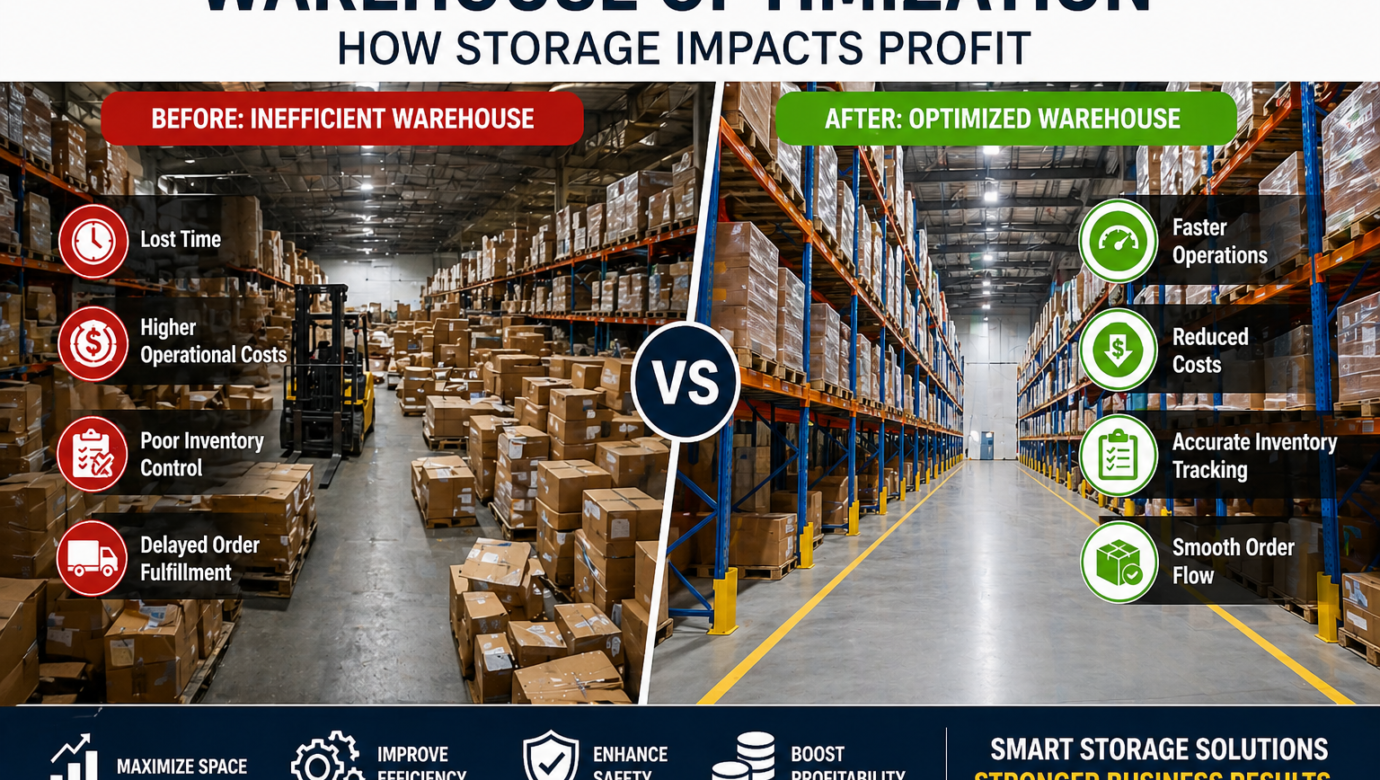
- Congested aisles and inefficient layouts
- Delayed order processing
- High labor costs due to unnecessary movement
- Poor inventory visibility
Addressing these issues allows businesses to remain competitive in fast-moving markets.
How Warehouse Optimization Improves Profitability
1. Reduced Operational Costs
Optimized layouts minimize travel time and manual handling. This reduces labor costs and energy consumption, particularly in large facilities.
2. Improved Inventory Accuracy
Structured storage systems make it easier to track stock levels. This reduces errors, shrinkage, and stockouts.
3. Faster Order Fulfillment
Efficient workflows enable quicker picking, packing, and dispatch. Faster fulfillment improves customer satisfaction and retention.
4. Better Space Utilization
Vertical storage solutions, such as high-density racking, allow businesses to store more without expanding physical space.
5. Enhanced Workplace Safety
Organized storage reduces the risk of accidents, supporting compliance with occupational safety standards.
Warehouse Optimization Strategies Businesses Are Adopting
Warehouse Optimization Strategies for 2026
Businesses are adopting a mix of traditional and technology-driven approaches to improve warehouse performance.
Popular strategies include:
Layout Redesign
Reconfiguring aisles and storage zones to reduce congestion and improve flow.
High-Density Storage Systems
Using drive-in racking or mobile shelving to maximize storage capacity.
Automation and Digital Tools
Implementing warehouse management systems (WMS) and barcode tracking for real-time visibility.
Zoning and Slotting Optimization
Placing high-demand items closer to dispatch areas to reduce picking time.
The Role of Storage Systems in Warehouse Optimization
Warehouse Optimization Through Storage Systems
Storage systems play a central role in achieving warehouse optimization. The type of racking or shelving used can significantly affect workflow efficiency.
Common systems include:
- Selective pallet racking for accessibility
- Drive-in racking for high-density storage
- Cantilever racking for long or bulky items
- Mezzanine systems for vertical expansion
Selecting the right system depends on inventory type, turnover rate, and available space.
Industry Trends Shaping Warehouse Optimization
Recent developments highlight the growing importance of optimization in logistics operations.
Key trends:
- Increased adoption of automation and robotics
- Demand for scalable storage solutions
- Integration of AI-driven inventory forecasting
- Focus on sustainability and energy efficiency
According to the World Economic Forum, digital transformation in logistics is expected to accelerate through 2027, further driving the need for optimized warehouse operations.
Key Takeaways
- Warehouse optimization is essential for improving efficiency and reducing costs
- Storage systems play a critical role in operational performance
- Businesses adopting optimization strategies see faster fulfillment and better inventory control
- Modern supply chains demand scalable, technology-driven solutions
FAQs
1. What is warehouse optimization and why is it important?
Warehouse optimization is the process of improving layout, storage, and workflows to increase efficiency. It is important because it reduces operational costs, improves order accuracy, and enhances productivity, making businesses more competitive in modern supply chains.
2. How does warehouse optimization reduce costs?
Warehouse optimization reduces costs by minimizing unnecessary movement, improving space utilization, and streamlining processes. This leads to lower labor expenses, reduced energy usage, and fewer operational errors that could result in financial losses.
3. What role do storage systems play in warehouse optimization?
Storage systems are fundamental to warehouse optimization. They determine how efficiently goods are stored and accessed. Proper racking solutions improve organization, increase capacity, and support faster picking and inventory management.
4. What are common warehouse optimization strategies?
Common strategies include layout redesign, high-density storage systems, automation, and inventory slotting. Businesses also use warehouse management systems to improve tracking, accuracy, and operational visibility across the facility.
5. Can small businesses benefit from warehouse optimization?
Yes, small businesses can significantly benefit from warehouse optimization. Even minor improvements in layout and storage can enhance efficiency, reduce costs, and support growth without requiring major capital investment or expansion.
