Slotted Angle Shelving: A Practical Storage Solution for Modern Industries
Slotted Angle Shelving continues to play a critical role in modern storage systems, offering a flexible and cost-effective solution for businesses across industries. From warehouses and retail stores to offices and workshops, this shelving system supports efficient organization and space optimization. As supply chains grow more complex, adaptable storage infrastructure has become essential for maintaining operational efficiency.
Industry analysts note that modular storage systems like slotted shelving are increasingly preferred due to their scalability and ease of installation. This trend reflects a broader shift toward flexible logistics infrastructure, particularly in fast-growing markets such as the Middle East and Asia.
What Is Slotted Angle Shelving?
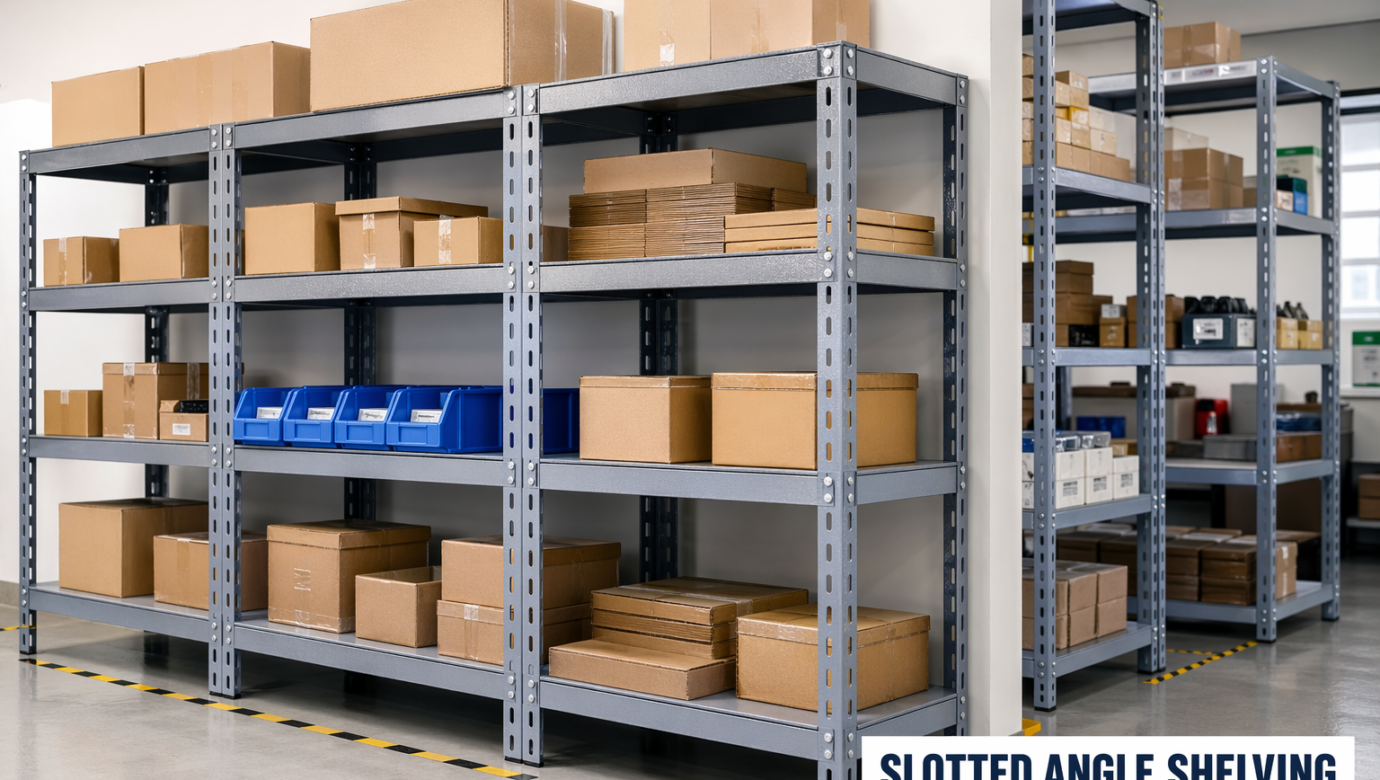
Slotted angle shelving is a type of storage system constructed using steel angles with regularly spaced slots. These slots allow components to be assembled into customized shelving units using nuts and bolts, without the need for welding.
Key Characteristics
- Modular design for easy customization
- Bolt-based assembly system
- Adjustable shelf heights
- Durable steel construction
- Suitable for light to medium loads
The system’s simplicity enables quick assembly and reconfiguration, making it suitable for dynamic storage environments where requirements may change frequently.
How Slotted Angle Shelving Works
The structure consists of vertical slotted angles that form the frame, combined with horizontal shelves made from steel, plywood, or particle board. Components are joined using bolts, allowing users to modify the structure as needed.
Basic Components
- Slotted angle posts (vertical supports)
- Shelving panels (metal or wooden)
- Nuts and bolts
- Corner plates for reinforcement
This configuration allows users to create single-tier or multi-tier shelving units depending on space availability and storage needs.
Applications Across Industries
Warehouse Storage
Slotted angle shelving is widely used in warehouses for organizing inventory. It is especially effective for storing small to medium-sized items that require easy access.
Retail Environments
Retailers use these systems for backroom storage and display shelving due to their neat appearance and adaptability.
Office Storage
In office settings, slotted shelving supports document storage, archiving, and supply organization.
Workshops and Industrial Use
Workshops benefit from the system’s strength and flexibility, using it to store tools, spare parts, and equipment.
Slotted Angle Shelving in Modern Supply Chains
Why Slotted Angle Shelving Remains Relevant
As logistics networks expand, businesses require storage solutions that can adapt quickly. Slotted Angle Shelving meets this need by offering:
- Rapid installation without specialized tools
- Easy expansion or downsizing
- Compatibility with various storage accessories
According to logistics industry reports, modular shelving systems reduce setup time and operational costs compared to fixed storage installations.
Advantages of Slotted Angle Shelving
1. Flexibility and Customization
Users can adjust shelf heights and configurations based on changing storage needs.
2. Cost-Effective Solution
Compared to automated or heavy-duty racking systems, slotted shelving offers a budget-friendly alternative.
3. Easy Installation
No welding or complex machinery is required, making it accessible for small and medium enterprises.
4. Space Optimization
Vertical storage design helps maximize available space, particularly in compact environments.
5. Durability
Galvanized or powder-coated steel improves resistance to corrosion and wear.
Limitations to Consider
While slotted angle shelving offers several benefits, it may not be suitable for all applications.
Common Limitations
- Lower load capacity compared to pallet racking
- Manual handling required for inventory
- Not ideal for high-volume automated warehouses
Understanding these limitations helps businesses select the appropriate storage system for their operational requirements.
Comparison with Other Storage Systems
| Feature | Slotted Angle Shelving | Pallet Racking | Mobile Shelving |
|---|---|---|---|
| Load Capacity | Light to Medium | Heavy | Medium |
| Flexibility | High | Moderate | High |
| Cost | Low | High | Moderate |
| Installation | Easy | Complex | Moderate |
This comparison highlights why slotted shelving remains a preferred option for businesses seeking affordability and adaptability.
Material and Design Considerations
Types of Materials Used
- Mild steel (MS)
- Galvanized steel
- Stainless steel (for specialized environments)
Surface Finishes
- Powder coating for durability
- Anti-rust treatments for humid environments
Selecting the right material ensures longevity and safety, particularly in regions with high humidity or temperature variations.
Safety and Compliance
Storage systems must adhere to safety standards to prevent accidents and ensure structural stability.
Best Practices
- Proper load distribution
- Secure fastening of bolts
- Regular inspection for wear and tear
- Compliance with local safety regulations
Organizations such as OSHA and regional safety authorities emphasize the importance of maintaining storage systems to reduce workplace risks.
Market Trends and Industry Outlook
The demand for modular shelving systems is expected to grow steadily, driven by:
- Expansion of e-commerce logistics
- Increased need for warehouse optimization
- Growth of small and medium enterprises
In regions like the UAE, rapid industrial development and logistics expansion have increased the adoption of flexible storage solutions, including slotted angle shelving systems.
Role of Manufacturers and Suppliers
Companies such as Planet Racking contribute to the availability of standardized and customized shelving systems in the market. Manufacturers focus on:
- Engineering durable designs
- Offering customizable configurations
- Ensuring compliance with safety standards
The presence of local suppliers supports faster deployment and after-sales service, which is critical for operational continuity.
Maintenance and Longevity
Proper maintenance extends the lifespan of shelving systems and ensures safe operation.
Maintenance Tips
- Regularly tighten bolts and connections
- Inspect shelves for bending or damage
- Avoid overloading beyond capacity
- Clean surfaces to prevent corrosion
Routine checks help maintain structural integrity and reduce long-term costs.
Environmental Considerations
Sustainability is becoming a key factor in storage system design.
Eco-Friendly Aspects
- Reusable and recyclable steel components
- Long lifespan reduces material waste
- Minimal need for replacement parts
These factors align with global efforts to reduce industrial waste and improve sustainability in supply chains.
What This Means
Slotted angle shelving remains a reliable and adaptable storage solution in an evolving logistics landscape. Its modular design, affordability, and ease of use make it suitable for a wide range of applications, particularly where flexibility is essential.
As industries continue to prioritize efficiency and scalability, such systems are likely to maintain their relevance alongside more advanced storage technologies.
FAQs
1. What is slotted angle shelving used for?
Slotted angle shelving is used for organizing and storing goods in warehouses, retail stores, offices, and workshops. It is ideal for light to medium-duty storage and allows easy access to items, making it suitable for environments requiring manual handling and frequent reorganization.
2. How much weight can slotted angle shelving hold?
The load capacity depends on the material, thickness, and design. Typically, it supports light to medium loads, ranging from 50 kg to several hundred kilograms per shelf. Manufacturers provide specific load ratings, which should always be followed for safe use.
3. Is slotted angle shelving easy to install?
Yes, slotted angle shelving is designed for easy installation using nuts and bolts. It does not require welding or specialized tools, allowing users to assemble and modify the structure quickly based on their storage requirements.
4. Can slotted angle shelving be customized?
Slotted angle shelving is highly customizable. Users can adjust shelf heights, add additional levels, or modify configurations to fit specific storage needs. This flexibility makes it suitable for changing operational environments and diverse applications.
5. How does slotted angle shelving differ from pallet racking?
Slotted angle shelving is designed for lighter loads and manual access, while pallet racking supports heavy loads and is often used with forklifts. Pallet racking is more suitable for large-scale warehouse operations, whereas slotted shelving is ideal for smaller, flexible storage needs.
