
Double-Deep Racking in UAE Warehouses: Density Gains, Speed & Hidden Costs
Double-deep pallet racking increases warehouse storage density by up to 30% to 40% compared to standard selective racking by storing pallets two-deep in a back-to-back layout. For logistics facilities across Dubai and the UAE facing rising commercial real estate costs, double-deep pallet racking provides a highly effective balance between high density and operational accessibility. However, maximizing this space efficiency requires specialized pantograph reach trucks and a tailored inventory strategy to prevent throughput bottlenecks.
To evaluate how this high density storage system compares to other core types of racking systems for modern warehouses, businesses must weigh spatial footprint against retrieval speed.
What Is Double-Deep Pallet Racking and How Does It Work?
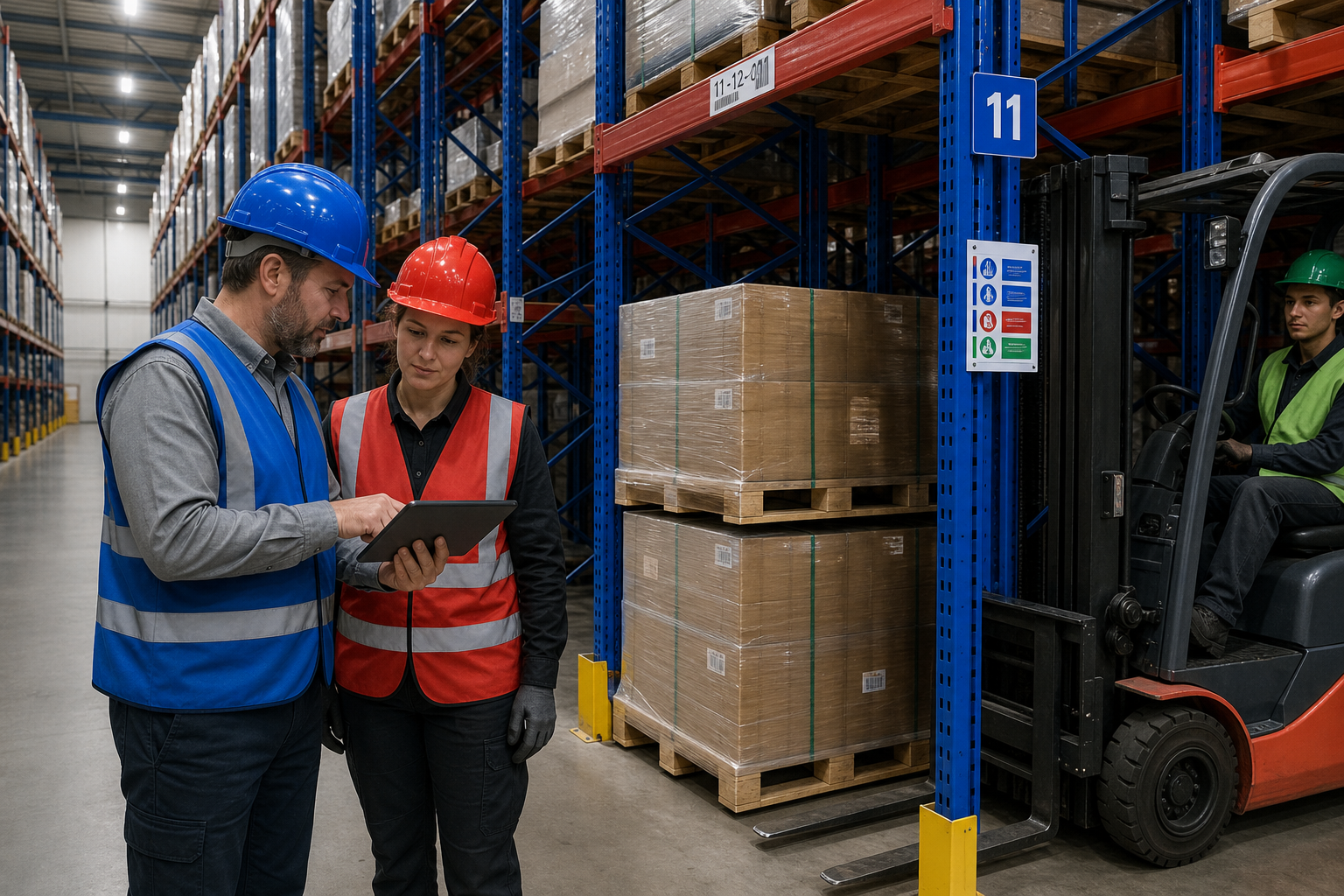
Double-deep pallet racking is a semi-selective storage solution where pallets are stored two rows deep instead of one. By eliminating standard aisle space between every two rows, double-deep configurations consolidate space, requiring fewer aisles to access the same volume of goods.
The system operates on a FILO (First-In, Last-Out) access model per double-deep slot. To store or retrieve the rear pallet, the front pallet slot must either be empty or moved temporarily (a process known as “honeycombing”). Accessing the rear position requires a specialized deep-reach forklift or pantograph reach truck equipped with extendable forks.
How Much Density Gain Can UAE Warehouses Expect?
In high-rent industrial corridors like Dubai South, JAFZA, and Dubai Industrial City, maximizing floor area is critical. Transitioning from traditional single-deep selective racking to double-deep racking yields significant floor-space optimization:
- 30% to 40% Increase in Storage Density: By eliminating up to 50% of operating aisles, floor space utilization increases dramatically.
- Floor Space Reduction: Businesses can store the same number of pallets in roughly 60% to 65% of the footprint required by selective setups.
- Higher Cubic Utilization: Maximizes vertical height while tightening horizontal floor space, resulting in lower per-pallet storage costs.
Compared to ultra-dense options like Drive-In racking, double-deep maintains higher overall flexibility while offering a massive step up in capacity over selective racking.
When Double-Deep Racking Saves Space: Best Use Cases
Double-deep racking is not a one-size-fits-all setup; it delivers the highest return on investment under specific operational profiles. What most generic advice gets wrong is treating double-deep as a pure replacement for selective racking without evaluating SKU velocity.
The best use cases for double-deep systems in UAE logistics include:
- Multiple Pallets per SKU: Facilities storing 4 to 10+ pallets per individual Stock Keeping Unit (SKU), allowing homogeneous items to be staged behind each other.
- Cold Storage & Ambient Distribution: High-cost refrigerated or freezer warehouses in Dubai where energy and square-meter costs demand high density.
- Medium-Velocity Inventory: Fast-to-medium moving consumer goods (FMCG) and raw materials where batch processing and bulk staging are common.
- Batch-Manufacturing & Staging: Warehouses running scheduled production shifts where full pallet loads are moved simultaneously.
The Hidden Trade-Off: Throughput, Selectivity, and Retrieval Speed
While density gains are substantial, double-deep racking introduces operational trade-offs that affect daily warehouse throughput. At Planet Racking, we use our Density-Velocity Matrix framework to help engineering teams balance floor space against handling labor.
Key trade-offs include:
- Reduced Direct Selectivity: Immediate access drops from 100% (selective racking) to 50%. Half of your stock sits behind another pallet.
- Increased Cycle Times: Retrieving a rear pallet when a front pallet is present requires double-handling. The operator must move the front pallet to a temporary holding location, extract the rear pallet, and replace the front pallet, increasing travel and handling time by 40% to 60% for those specific transactions.
- The “Honeycombing” Effect: If rear slots remain partially filled while waiting for matching SKUs, effective storage utilization can drop below theoretical maximums.
What Equipment and Forklifts Are Required?
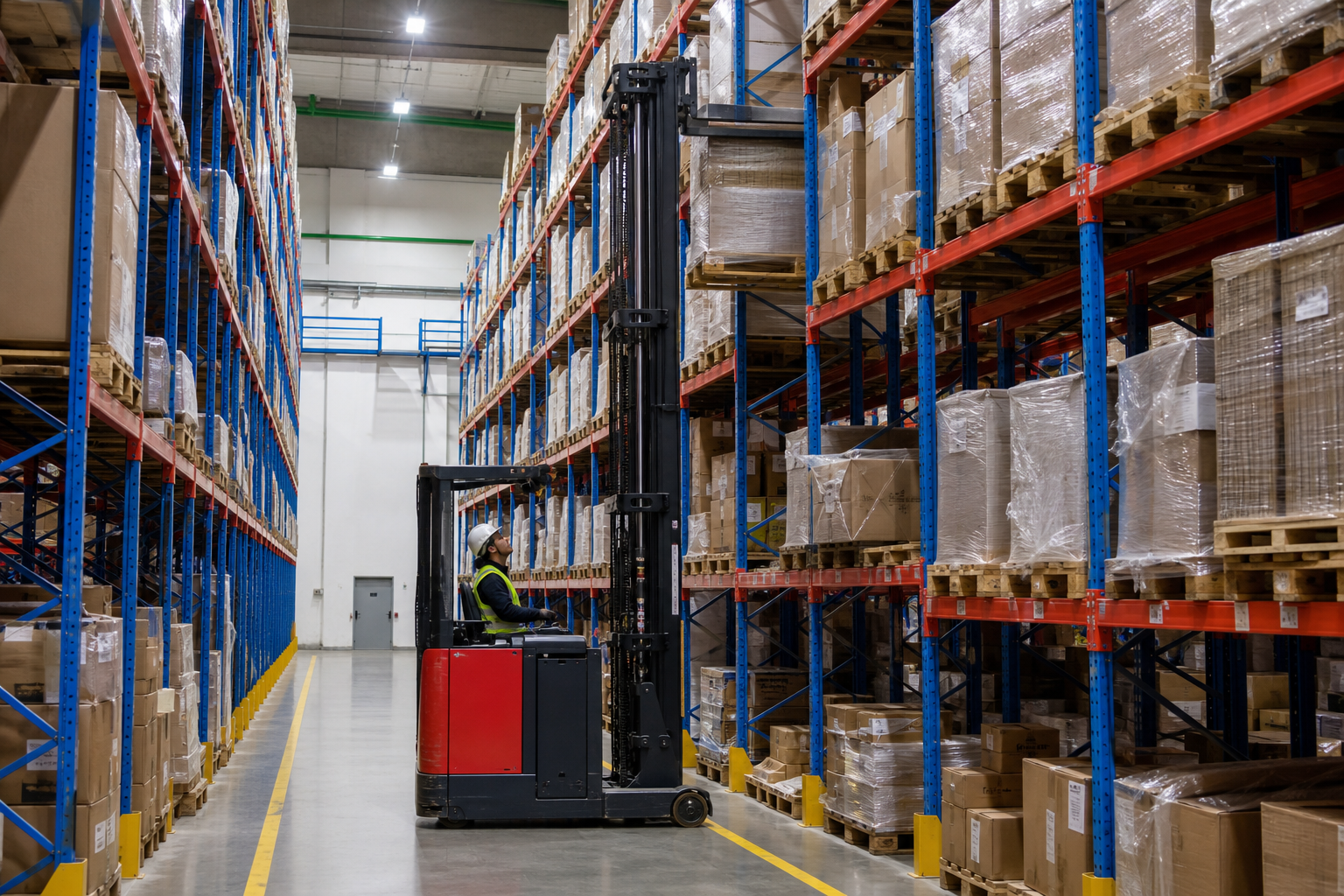
Standard counterbalanced forklifts or standard reach trucks cannot operate in a double-deep racking system. Implementing double-deep storage requires specific material handling equipment (MHE):
- Deep-Reach Forklifts / Pantograph Reach Trucks: Equipped with a scissor-type extension mechanism (pantograph) or telescopic forks capable of extending deep into the double rack structure.
- Camera Systems and Laser Guides: High-level double-deep placement (above 6 meters) heavily relies on mast-mounted cameras and line-laser alignment tools to assist operators in pinpointing rear pallet entry.
- Guide Rails or Wire Guidance: Narrow-aisle double-deep configurations often incorporate floor-mounted guide rails to minimize aisle widths and prevent upright collisions.
Operator Training, Safety, and Maintenance Considerations
Operating a deep-reach forklift demands higher skill levels than standard material handling. Because extended forks alter the load center and truck stability, comprehensive operator training is non-negotiable for UAE warehouse safety.
- Capacity Derating Awareness: As pantograph forks extend forward, the truck’s lifting capacity drops significantly due to leverage. Operators must understand capacity charts to prevent tipping hazards at height.
- Rack Protection Infrastructure: Extended reach maneuvers increase collision risks with frame uprights. Heavy-duty column protectors, row end protectors, and heavy-gauge base plates are vital investments.
- Regular Structural Audits: Given the higher impact risk from extended loads, periodic rack safety inspections must be conducted to check for beam deflection, anchor looseness, and frame damage.
ROI Scenarios for Dubai Logistics and Distribution Centers
To evaluate if double-deep racking is cost-effective compared to other high-density options (like Drive-In or automated shuttle systems), consider this typical Dubai logistics scenario:
Scenario: A 2,000 square-meter distribution center in Al Quoz or JAFZA switching from selective racking to double-deep racking.
- Capital Investment (CAPEX): Racking material costs are marginally higher than selective racking. However, deep-reach MHE units cost roughly 15% to 25% more than standard reach trucks.
- Operational Savings (OPEX): By gaining 35% more pallet capacity within the existing footprint, the business avoids expanding into an additional 700 square meters of warehouse space. At average Dubai industrial rental rates, this translates to tens of thousands of Dirhams saved annually in rent, DEWA utilities, and insurance.
- Payback Horizon: For facilities with suitable SKU profiles, the capacity gain offsets equipment costs, delivering full CAPEX payback within 12 to 18 months.
Related reading: What Is Warehouse Racking? Types, Uses and Safety · How to Maximize Vertical Space in UAE Warehouses · Improve Warehouse Efficiency with Pallet Flow Racks in Dubai
Frequently asked questions
How much storage density does double-deep pallet racking add compared with selective racking?
Double-deep pallet racking typically delivers a 30% to 40% increase in storage capacity over standard selective racking by reducing the number of operational aisles required by up to 50%.
What are the main drawbacks of double-deep pallet racking in a fast-moving UAE warehouse?
The primary drawbacks are reduced direct selectivity (50% immediate access), potential handling delays caused by double-handling front pallets, and the requirement for specialized, higher-cost deep-reach forklifts.
What forklift attachments or reach trucks are needed for double-deep storage?
Double-deep racking requires pantograph reach trucks (scissor-reach) or forklifts fitted with telescopic fork attachments designed to extend through the first rack bay into the second position.
How does double-deep racking affect picking speed and inventory access?
Picking speeds can slow down if single-pallet picking is required across diverse SKUs. However, picking efficiency remains high when stock is managed on a LIFO/FILO batch basis where entire channels contain identical SKUs.
What type of warehouse in Dubai benefits most from double-deep pallet racking?
Warehouses handling high-volume, medium-velocity SKUs with 4 or more pallets per SKU—such as cold storage facilities, FMCG distributors, and third-party logistics (3PL) providers—benefit the most.
Is double-deep pallet racking cost-effective compared with other high-density systems?
Yes. Double-deep racking is significantly less expensive to install than automated shuttle systems while offering better selectivity and flexibility than drive-in racking, making it a highly cost-effective middle ground.
