
Heavy-Duty Mobile Shelving for High-Density Storage: When & How to Use It
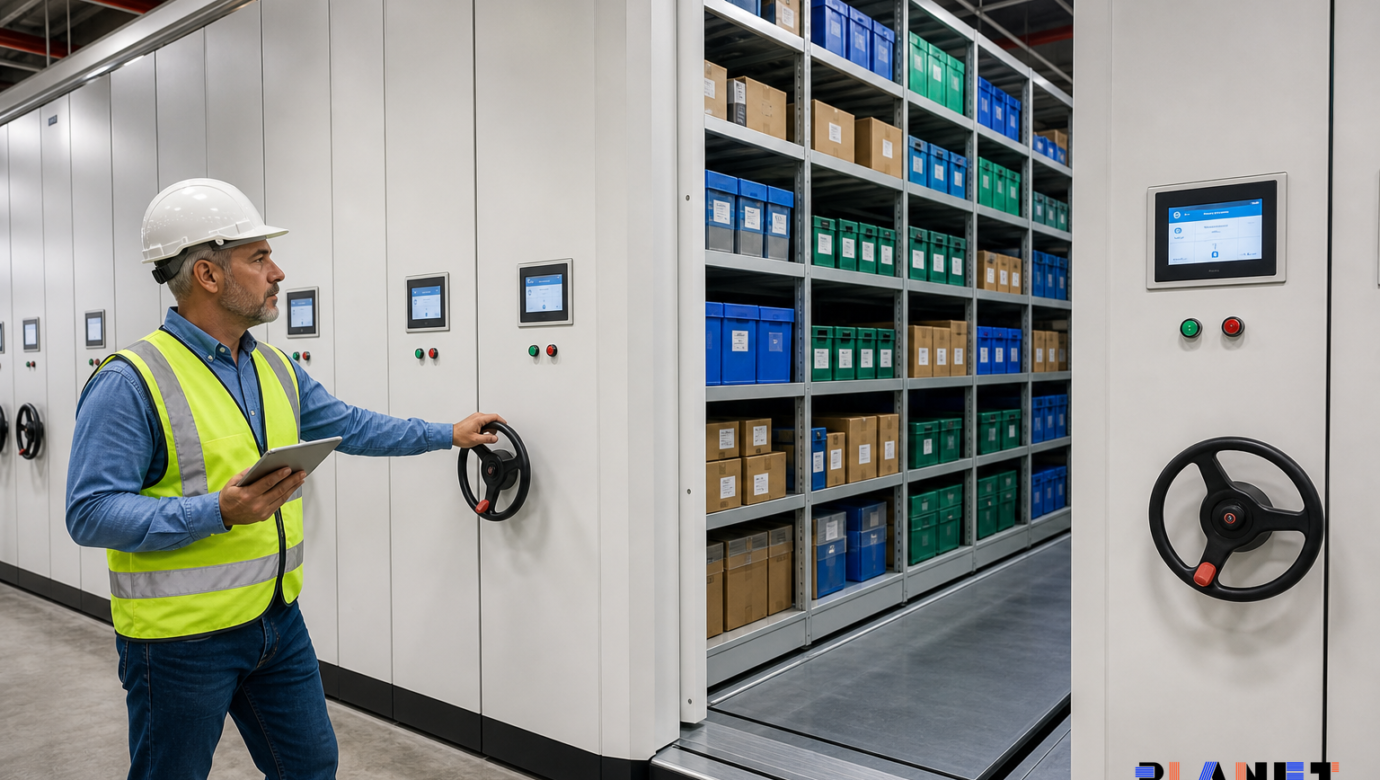
Heavy-duty mobile shelving is a high-density storage solution that mounts heavy industrial shelving units onto wheeled carriages running on floor-embedded tracks. Unlike traditional static racking that requires fixed aisles between every row, mobile shelving consolidates storage by creating a single moving aisle opened only when access is required. This mechanism increases warehouse storage capacity by up to 80% to 100% within the same floor footprint, making it an essential space-saving shelving system for high-value commercial real estate, temperature-controlled cold rooms, and inventory-heavy facilities across the UAE.
What Is Heavy-Duty Mobile Shelving and How Does It Work?
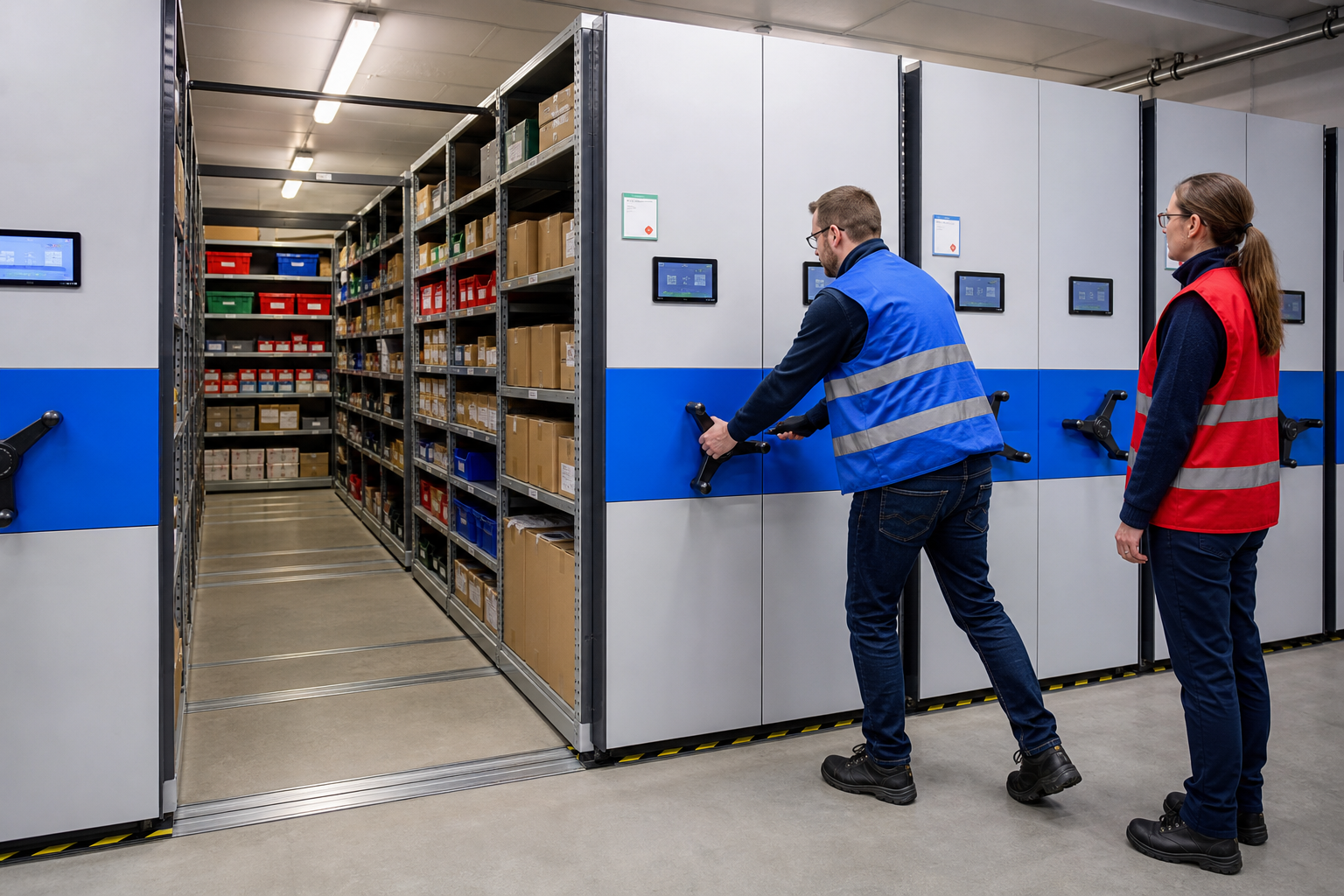
Heavy-duty mobile shelving transforms static aisle space into usable inventory capacity. Standard industrial shelving relies on permanent aisles between every single rack. In contrast, a mobile shelving system mounts heavy-duty rack frames onto steel carriages fitted with precision wheels. These carriages travel along steel rails embedded directly into or surface-mounted onto the concrete floor slab.
When an operator needs to access a specific pallet or shelf level, they initiate movement manually via a mechanical hand-crank or automatically using an electronic push-button control panel connected to electric drive motors. The units shift smoothly sideways, closing adjacent aisles and opening an access aisle exactly where needed.
Most general storage advice suggests simply building higher to gain volume. However, vertical expansion is often limited by building fire codes, ceiling clearances, or clear-height restrictions in specialized facilities. Heavy-duty mobile shelving solves floor-level gridlock by eliminating wasted aisle space while retaining 100% direct access to every SKU.
Why Choose Mobile Shelving for High-Density Storage?
Warehouse space optimization directly dictates operational profitability. Static pallet racking typically devotes 50% to 60% of total warehouse floor area strictly to aisle space for material handling equipment. By utilizing heavy-duty mobile shelving, facilities compress their footprint while expanding pallet and shelf capacity.
- Footprint Reduction: Reclaim up to 50% of existing floor space for assembly, packaging, or receiving operations without sacrificing SKU capacity.
- Capacity Maximization: Double storage density within the existing warehouse envelope, eliminating the capital expense of buying or leasing additional space.
- Direct SKU Accessibility: Unlike drive-in racking or block stacking, mobile shelving maintains selective access to every picking location.
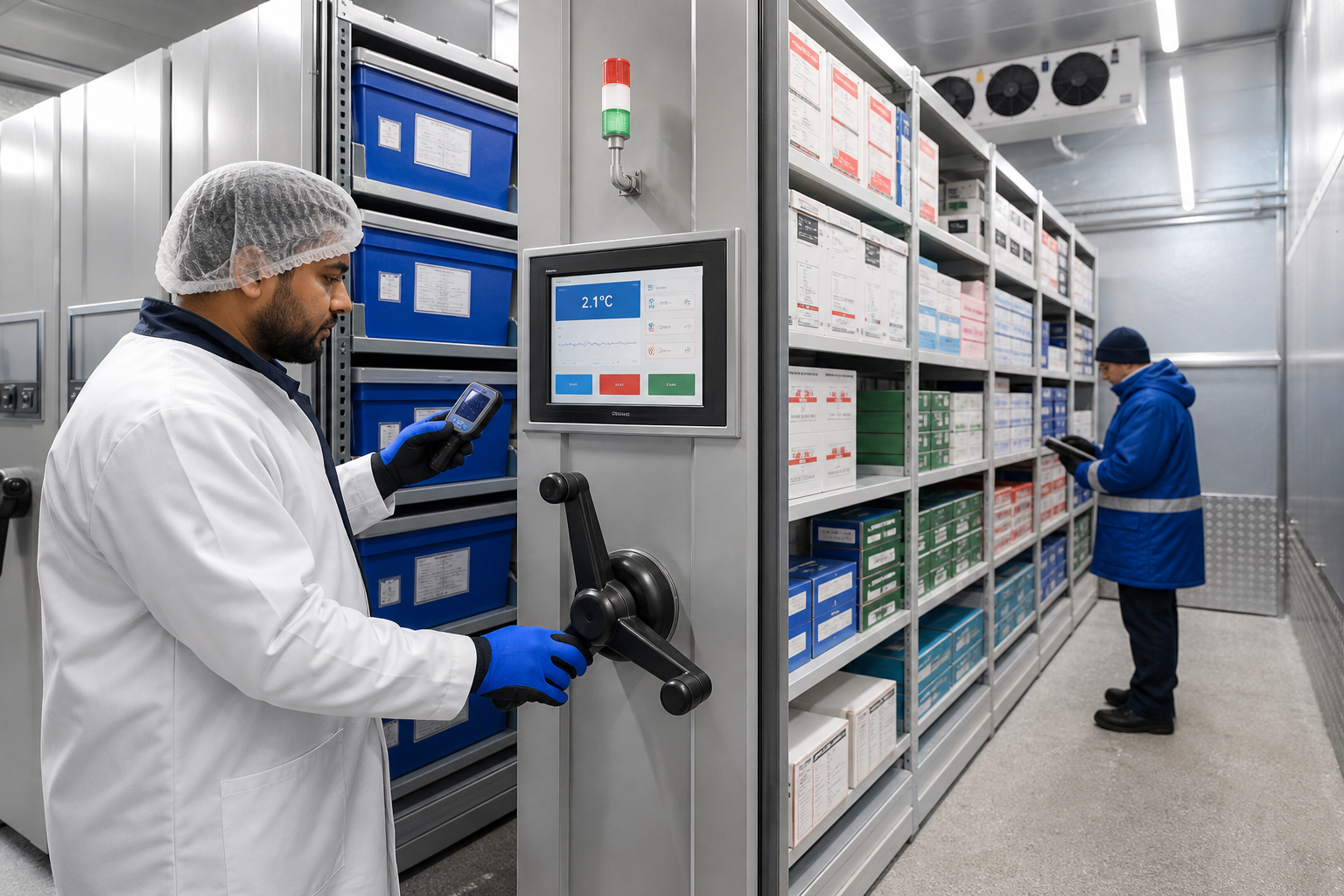
- Energy Cost Savings: In refrigerated spaces, storing double the inventory in half the space reduces cubic air volume requirements, lowering utility bills significantly.
Load Ratings, Shelf Capacity, and Safety Considerations
Selecting the correct load rating is critical to operational safety and structural longevity. Heavy-duty mobile shelving systems are engineered to bear substantially higher weights than light commercial or office mobile units.
System capacities are evaluated across three core operational tiers:
- Medium to Heavy Industrial: System carriage capacities typically range from 5,000 kg to over 24,000 kg per mobile block, designed to support heavy manufacturing parts, tooling, and bulk retail goods.
- Shelf-Level Bay Loads: Individual shelf capacities range from 300 kg for manual hand-loading up to 1,500+ kg per beam level for palletized components.
At Planet Racking, we utilize the Dynamic Capacity-to-Slab Load Framework when engineering high-density storage layout options. This design approach evaluates not only the internal weight rating of the steel uprights and beams, but also the point loads transmitted through the wheel carriages onto the warehouse floor slab.
Integrated safety systems are essential for powered heavy-duty installations. Safe operation relies on three primary features: zero-pressure safety sweep sensors along carriage bases to stop movement if an object is detected in an aisle, photoelectric light curtains across aisle entrances, and emergency mechanical locks on manual hand-cranks.
Footprint vs. Capacity: How Mobile Shelving Saves Space
To evaluate the direct trade-off between footprint and operational capacity, consider a standard comparison between traditional static racking and a mobile shelving system in a 1,000-square-meter facility:
| Storage Configuration | Footprint Occupied | Aisle Area Required | Pallet / Bay Capacity | Space Efficiency |
|---|---|---|---|---|
| Standard Static Selective Racking | 1,000 m² | 550 m² (Multiple Aisles) | 1,000 Positions | Baseline (45%) |
| Heavy-Duty Mobile Shelving | 550 m² | 100 m² (Single Moving Aisle) | 1,000 Positions | 45% Footprint Reduction |
| Mobile Shelving (Full Footprint) | 1,000 m² | 100 m² (Single Moving Aisle) | 1,900 Positions | +90% Capacity Increase |
When calculating financial returns, operations should evaluate overall system financial performance through parameters like cost per position versus static racking in Dubai markets, factoring in long-term lease rates and climate control expenditures.
Best Use Cases in Pharmaceuticals, FMCG, and Cold-Chain Operations
High-density industrial shelving delivers clear benefits across sectors with distinct operational demands:
Pharmaceutical Storage
Pharmaceutical distribution requires strict compliance, absolute batch traceability, and full access to individual product lines. High-density mobile shelving allows medical facilities to store vast SKU counts securely within climate-controlled cleanrooms. Integrated electronic control systems can lock specific aisles to protect controlled substances, fulfilling regulatory compliance while maximizing limited cleanroom floor space.
Fast-Moving Consumer Goods (FMCG) Warehouses
FMCG environments manage fast-moving stock alongside slow-moving reserve inventory. By placing reserve stock on powered mobile racking bases, FMCG operations can maintain dedicated, high-speed picking zones in static areas while stowing reserve volume overhead or nearby in condensed mobile blocks. Aligning these systems with clear inventory workflows and operator training ensures smooth picking speeds.
Cold-Chain & Cold-Storage Facilities
Operating refrigerated and deep-freeze facilities in the Middle East involves substantial electrical power costs. Air volume that is cooled but unutilized represents direct financial loss. Heavy-duty mobile shelving minimizes cold-room volume by compacting storage racks into a single footprint. Cold-chain operators routinely decrease refrigeration energy consumption per pallet position by 30% to 40% after transitioning from open static layouts to high-density mobile bases.
How UAE Climate Conditions Affect Shelving Selection and Performance
Deploying mobile shelving in Dubai and the broader GCC requires specialized engineering considerations due to extreme environmental conditions.
High ambient heat combined with coastal humidity causes rapid condensation when warehouse doors are opened during loading operations. Standard powder-coated steel finishes can degrade if moisture collects inside tracks or carriage mechanisms. Heavy-duty systems deployed in non-climate-controlled environments or transitional cold-room vestibules require hot-dip galvanized steel components, sealed bearings, and IP65-rated moisture-resistant electrical motors to prevent corrosion and system downtime.
Additionally, extreme temperature swings cause floor slabs to expand and contract. Mobile tracks must be anchored with specialized epoxy grout and precise thermal expansion gaps. Planet Racking engineers ground tracks directly into the sub-floor slab using laser leveling to ensure smooth carriage transit regardless of ambient warehouse temperature shifts.
How to Plan a Mobile Shelving Deployment: Layout, Access, and Workflow
Implementing a high-density storage strategy requires a clear execution plan. The process follows four essential steps:
- Slab Analysis and Track Selection: Evaluate floor slab thickness, levelness, and structural point-load capacity. Decide between embedded floor tracks (ideal for seamless forklift crossing) or surface-mounted tracks with ramp transitions.
- Throughput and Aisle Planning: Determine peak picking times and fork-truck transit counts. High-throughput operations may require splitting one massive mobile block into two smaller blocks, creating two simultaneous access aisles to prevent forklift bottlenecking.
- Integration with Material Handling Equipment (MHE): Match aisle clear widths with your existing equipment fleet, whether using reach trucks, articulated forklifts, or manual order pickers.
- Installation & Commissioning Timeline: Project managers must balance track laying, curing, racking assembly, and sensor calibration. For detailed scheduling templates, review our guide on installing mobile shelving in Dubai, covering timelines, training, and first-year maintenance requirements.
Frequently asked questions
What is heavy-duty mobile shelving and how is it different from static shelving?
Heavy-duty mobile shelving mounts storage racks onto motorized or mechanically driven wheel carriages running on floor tracks. Unlike static shelving, which requires fixed aisles between every row, mobile shelving consolidates space into a single moving aisle, doubling overall storage capacity within the same area.
How much floor space can high-density mobile shelving save?
Mobile shelving typically reduces total floor space requirements by 40% to 50% compared to traditional static racking systems, or allows facilities to double their available storage capacity within their current footprint.
What load rating do I need for pharmaceutical, FMCG, or cold-storage applications?
Standard heavy-duty installations require shelf beam load ratings from 500 kg to over 1,500 kg per level, with carriage block capacities supporting 10,000 kg to 24,000 kg depending on product density, stack height, and palette weight.
Is mobile shelving suitable for UAE warehouses and cold-chain environments?
Yes. When built with corrosion-resistant finishes, IP-rated electric components, and laser-leveled embedded tracks, heavy-duty mobile shelving performs reliably in high-ambient UAE climates and cold-chain facilities operating down to -30°C.
What are the main risks, limitations, and maintenance needs of mobile shelving?
Primary limitations include higher initial capital investment compared to simple static racks and sequential access speeds during peak picking. Maintenance requires periodic optical sensor cleaning, track debris removal, drive chain tensioning, and annual slab settlement checks.
How do I decide whether mobile shelving or another high-density system is the better choice?
Choose heavy-duty mobile shelving if you need maximum floor space utilization while retaining 100% direct selective access to every individual SKU. If your operation handles very low SKU counts with massive bulk volume, alternative systems like drive-in or pallet-shuttle racking may be evaluated.
