
Maximise Efficiency with Mobile Shelving Systems: A Smarter Way to Store
Efficient storage is becoming a growing priority for organizations that manage increasing volumes of inventory, documents, and equipment. Mobile shelving systems are emerging as a practical solution that allows businesses to maximize storage capacity without expanding their physical footprint.
From offices and libraries to warehouses and healthcare facilities, mobile shelving helps organizations use available space more efficiently. By eliminating unused aisles and allowing shelves to move along floor tracks, these systems create compact storage layouts that can significantly increase capacity while maintaining accessibility.
As urban spaces become more expensive and businesses seek smarter infrastructure investments, mobile shelving systems are increasingly recognized as a modern storage strategy.
What Are Mobile Shelving Systems?
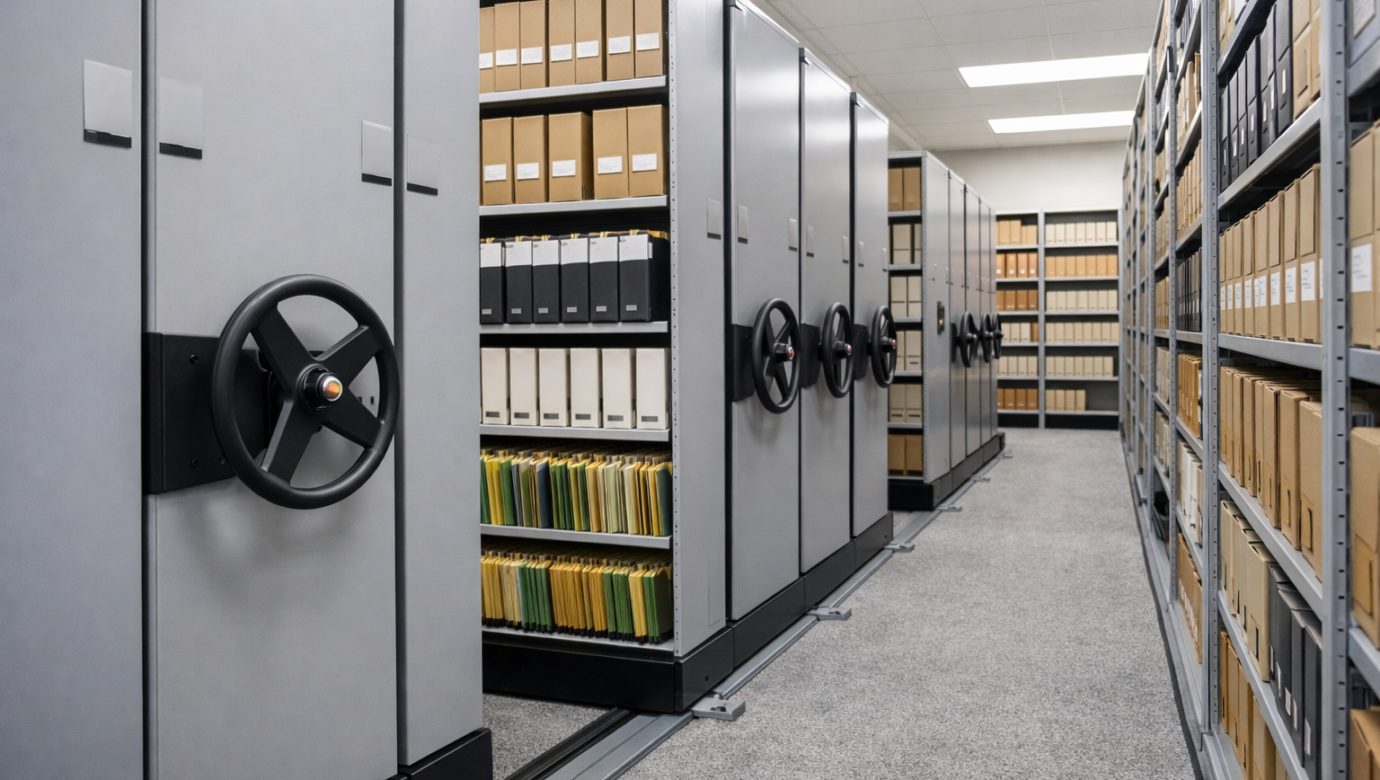
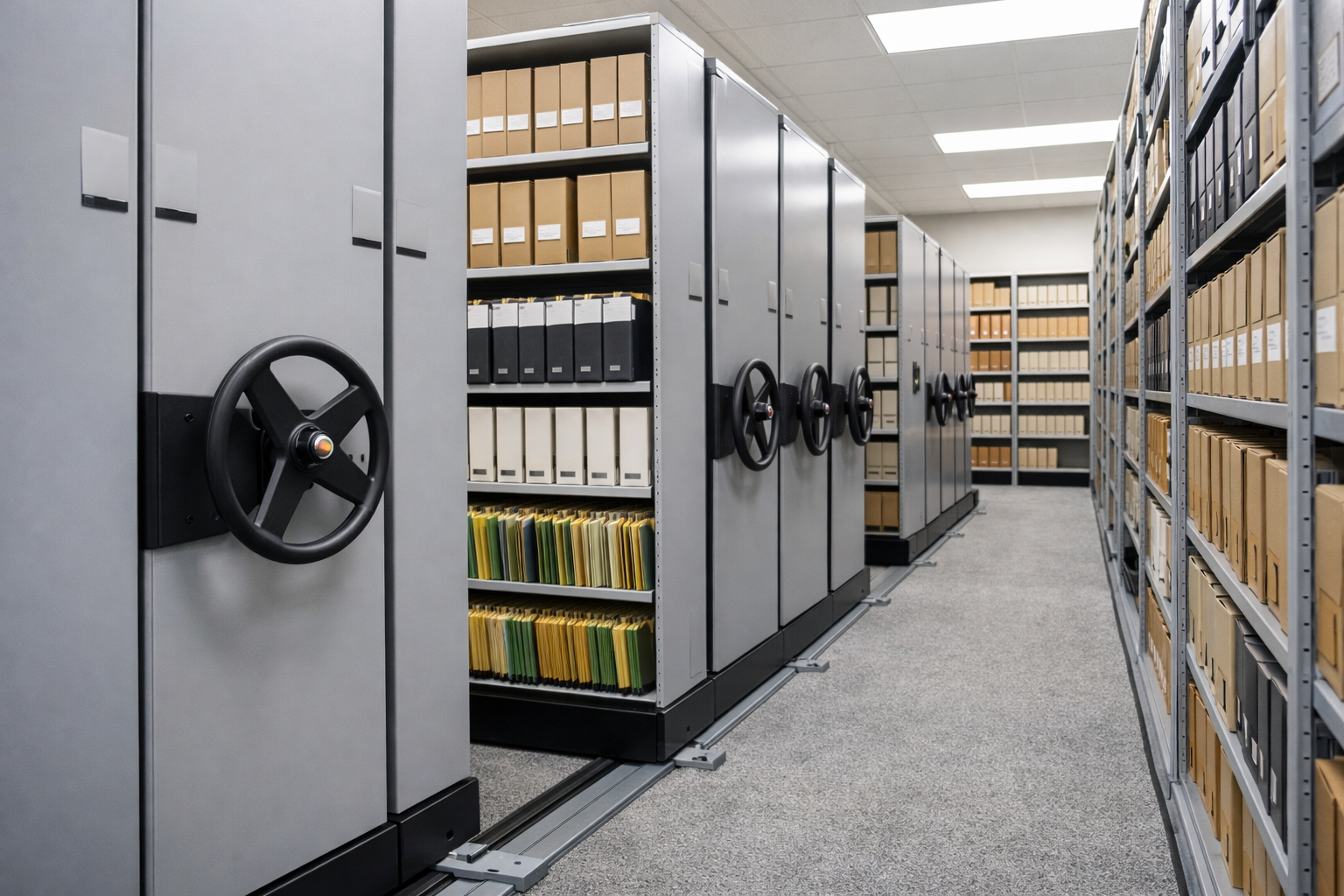
Mobile shelving systems are storage units mounted on movable carriages that slide along floor-mounted tracks. Instead of fixed rows of shelving with multiple aisles, the system creates a single accessible aisle that can move between shelves when needed.
This design allows organizations to store more materials within the same space while maintaining organized access.
Key components of mobile shelving include:
- Movable shelving units mounted on rolling bases
- Track systems installed on the floor
- Manual or mechanical drive systems to move shelves
- Safety locking mechanisms to prevent unintended movement
Because the shelves can be repositioned easily, users can access specific sections without requiring multiple permanent aisles.
Why Mobile Shelving Systems Improve Storage Efficiency
Space efficiency is the primary advantage of mobile shelving. Traditional static shelving requires several fixed aisles for access, which often results in underutilized space.
Key efficiency benefits include:
- Increased storage capacity without expanding floor space
- Reduced unused aisle space
- Better inventory organization
- Improved accessibility to stored materials
- Lower facility expansion costs
Industry studies suggest that compact mobile shelving can increase storage capacity by up to 80 percent compared with traditional shelving layouts.
For organizations operating in high-cost urban environments, this efficiency can translate into substantial operational savings.
Common Industries Using Mobile Shelving Systems
Mobile shelving systems are widely adopted across multiple sectors where space optimization is essential.
1. Corporate Offices and Document Archives
Businesses often manage large volumes of physical records. Mobile shelving helps store files efficiently while keeping them accessible for compliance and operational needs.
2. Libraries and Educational Institutions
Libraries frequently rely on compact shelving to store books, journals, and archival materials. By reducing aisle space, institutions can increase collection capacity without expanding buildings.
3. Healthcare Facilities
Hospitals and medical centers use mobile shelving to store patient records, pharmaceuticals, and medical supplies in organized and secure environments.
4. Warehouses and Industrial Storage
Warehouses use mobile racking systems to store smaller inventory items, tools, and spare parts while optimizing limited floor space.
5. Museums and Archival Centers
Museums and heritage institutions use specialized mobile shelving to protect delicate artifacts and historical documents while maintaining climate-controlled environments.
Space Optimization Through Compact Storage
One of the defining characteristics of mobile shelving systems is their ability to eliminate unnecessary aisle space.
Traditional shelving layouts often dedicate 30–40 percent of floor area to aisles alone. Mobile shelving systems reduce this requirement to a single moving aisle.
This compact design offers several advantages:
- Greater storage density
- Better use of expensive real estate
- Reduced need for additional storage rooms
- Improved facility layout flexibility
For organizations planning long-term growth, compact storage systems also allow for future expansion within the same facility.
Safety and Accessibility in Mobile Shelving Systems
Modern mobile shelving systems incorporate safety features that allow safe operation in busy workplaces.
Common safety mechanisms include:
- Anti-tip stabilization systems
- Aisle locks to secure shelves during use
- Mechanical braking systems
- Clear visibility into open aisles
These features ensure that users can operate shelving units without risk while maintaining smooth movement across track systems.
Proper installation and regular inspection further enhance system safety and long-term reliability.
Manual vs Mechanical Mobile Shelving
Mobile shelving systems are available in several operational configurations.
Manual Systems
Manual mobile shelving is operated by pushing the shelving units directly. These systems are commonly used for lighter loads and smaller storage areas.
Advantages:
- Lower installation cost
- Simple operation
- Minimal maintenance requirements
Mechanical Assist Systems
Mechanical systems use hand wheels or geared mechanisms that make it easier to move heavier shelving units.
Advantages:
- Suitable for larger storage volumes
- Easier movement of heavy loads
- Greater stability in high-density storage environments
The choice between manual and mechanical systems often depends on storage weight, frequency of access, and available floor space.
Planning a Mobile Shelving Installation
Successful mobile shelving installations depend on careful planning and site evaluation.
Organizations typically consider the following factors:
- Floor load capacity
- Track system layout
- Weight distribution across shelving units
- Future storage expansion needs
- Accessibility and workflow requirements
Professional assessments often help ensure that the system aligns with building safety standards and operational requirements.
The Role of Mobile Shelving in Modern Storage Strategies
As organizations continue to digitize operations and optimize infrastructure, physical storage remains essential in many sectors.
Mobile shelving systems support modern facility planning by providing:
- Flexible storage layouts
- Higher capacity within limited space
- Efficient organization of physical materials
- Adaptability for different industries
These systems are increasingly integrated into facility design strategies where efficient use of space is a priority.
Key Takeaways
- Mobile shelving systems allow organizations to maximize storage capacity within existing spaces.
- The systems eliminate multiple fixed aisles and replace them with a movable aisle design.
- Industries including healthcare, education, archives, and warehousing widely use compact shelving solutions.
- Proper planning, installation, and safety mechanisms ensure efficient and reliable operation.
- As real estate costs rise, mobile shelving continues to gain attention as a practical storage strategy.
FAQs
What are mobile shelving systems used for?
Mobile shelving systems are used to store documents, equipment, and inventory in a compact and organized manner. They are common in offices, libraries, hospitals, and warehouses where space efficiency is important. The movable shelving design allows users to access materials while minimizing the amount of floor space needed for aisles.
How do mobile shelving systems save space?
Mobile shelving systems save space by eliminating multiple fixed aisles between shelves. Instead, the shelving units move along tracks to create a single accessible aisle when needed. This compact design allows organizations to increase storage capacity within the same floor area without expanding facilities.
Are mobile shelving systems safe to use?
Modern mobile shelving systems include several safety features such as locking mechanisms, anti-tip stabilization, and braking systems. These features help prevent accidental movement and ensure safe operation. When installed and maintained properly, mobile shelving systems provide reliable and secure storage.
Which industries commonly use mobile shelving systems?
Mobile shelving systems are used across industries including corporate offices, healthcare facilities, libraries, warehouses, museums, and archival institutions. These environments often require efficient storage of documents, records, equipment, or collections while maintaining easy access to stored materials.
What is the difference between mobile shelving and static shelving?
Static shelving remains fixed in place and requires permanent aisles for access. Mobile shelving, however, moves along floor tracks, allowing shelves to shift and create a temporary aisle when needed. This design significantly improves storage density and makes better use of available space.
