
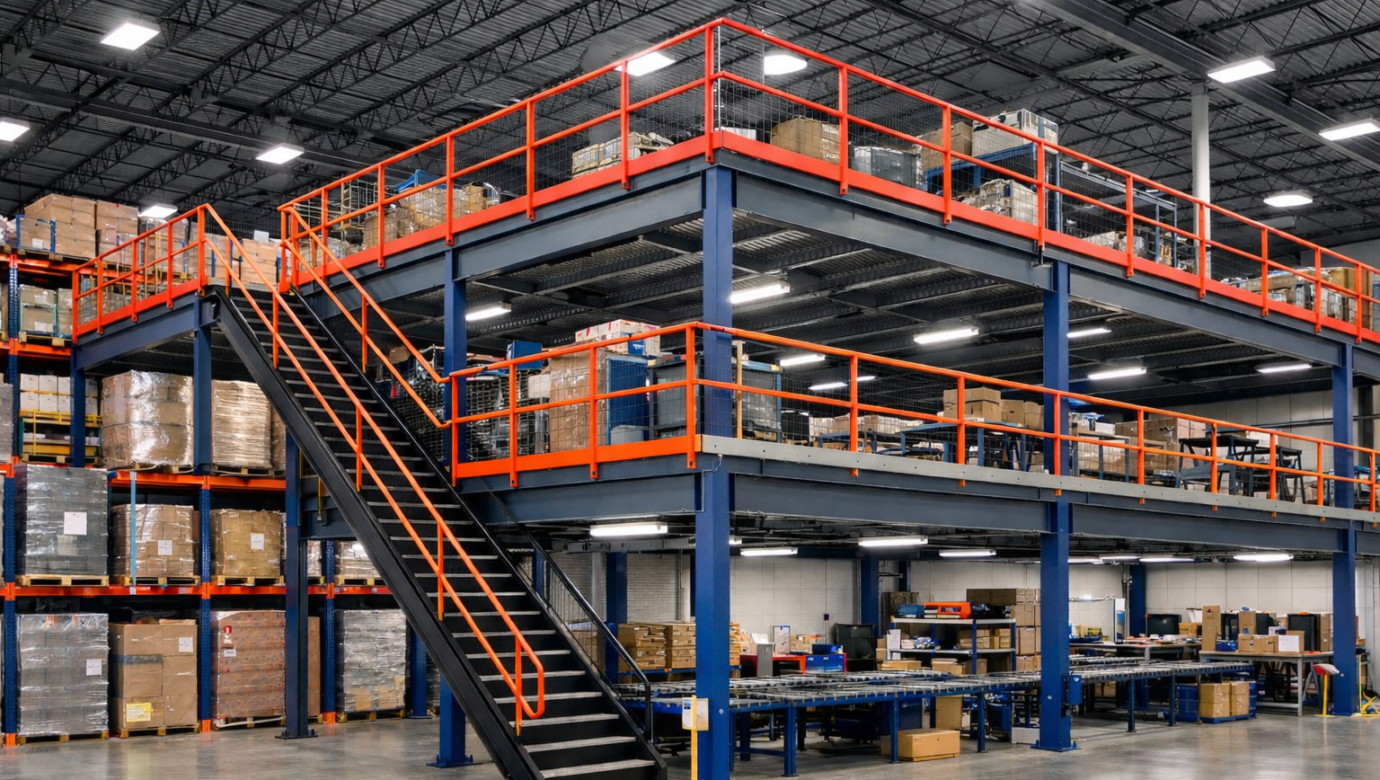
Custom Mezzanine Floor Solutions for Modern Warehouses
Custom mezzanine floor solutions are increasingly shaping how warehouses and industrial facilities expand storage capacity without relocating or rebuilding. As global logistics demands grow in 2026, businesses are turning to vertical space optimization to improve efficiency, reduce costs, and maintain operational continuity.
Industry analysts note that mezzanine systems offer a flexible alternative to traditional expansion, especially in urban and high-cost real estate markets such as the UAE, Europe, and parts of Asia. These systems are engineered to fit specific facility layouts, making them adaptable across sectors including retail, manufacturing, and e-commerce.
Understanding Custom Mezzanine Floor Solutions
Custom mezzanine floor solutions refer to elevated platforms installed within an existing building to create additional usable floor space. Unlike standard mezzanine systems, custom solutions are designed based on precise operational needs, load requirements, and spatial constraints.
These structures are typically made from steel and can support various applications, including:
- Storage of goods and inventory
- Office space within warehouses
- Production or assembly areas
- Retail display zones
Their modular design allows for future expansion or reconfiguration, aligning with evolving business requirements.
Key Benefits Driving Adoption
Efficient Use of Vertical Space
One of the primary advantages is the ability to utilize unused vertical space. Instead of expanding outward, businesses can build upward, effectively doubling or even tripling usable space within the same footprint.
Cost-Effective Alternative to Relocation
Relocating to a larger facility often involves significant capital investment and operational disruption. Mezzanine floors provide a cost-efficient solution by enhancing existing infrastructure.
Minimal Operational Disruption
Installation of custom mezzanine floor solutions typically occurs with minimal downtime. This allows businesses to continue operations during implementation.
Scalable and Flexible Design
Custom systems can be modified over time. Whether increasing load capacity or expanding floor area, mezzanine structures can adapt without major reconstruction.
Custom Mezzanine Floor Solutions in Warehouse Design
Custom mezzanine floor solutions play a central role in modern warehouse design strategies. With the rise of automation and high-density storage systems, warehouses require flexible layouts that can evolve with technological advancements.
Integration with Racking Systems
Mezzanine floors can be integrated with:
- Pallet racking systems
- Shelving units
- Automated storage and retrieval systems (AS/RS)
This integration supports efficient inventory management and improves workflow.
Safety and Compliance Considerations
Designing mezzanine floors involves strict adherence to safety standards. Key considerations include:
- Load-bearing capacity
- Fire safety regulations
- Guardrails and handrails
- Anti-slip flooring
Regulatory compliance ensures worker safety and long-term structural integrity.
Industries Leveraging Mezzanine Solutions
E-commerce and Retail
Rapid growth in online retail has increased demand for high-density storage. Mezzanine floors help optimize picking, packing, and sorting operations.
Manufacturing
Manufacturers use mezzanine platforms for assembly lines, equipment storage, and administrative offices within production facilities.
Logistics and Distribution
Distribution centers benefit from improved space utilization and faster order processing enabled by multi-level operations.
Commercial Spaces
Retail outlets and showrooms use mezzanine levels to enhance customer experience and maximize display areas.
Design Factors for Custom Mezzanine Systems
Load Requirements
Understanding the weight capacity is critical. Different applications require varying load-bearing capabilities, from light storage to heavy industrial use.
Material Selection
Steel remains the most commonly used material due to its strength and durability. However, finishes and coatings may vary based on environmental conditions.
Accessibility Options
Access points can include:
- Staircases
- Ladders
- Lifts or conveyors
These must align with operational workflows and safety regulations.
Lighting and Ventilation
Proper lighting and airflow are essential for maintaining a safe and productive working environment on mezzanine levels.
Technological Advancements in Mezzanine Design
Recent developments in engineering and design software have improved the precision and efficiency of mezzanine installations. According to construction technology reports, digital modeling tools allow for:
- Accurate load simulations
- Space optimization planning
- Faster customization and installation timelines
Additionally, integration with smart warehouse systems enables better monitoring and utilization of mezzanine spaces.
Environmental and Sustainability Considerations
Custom mezzanine floor solutions support sustainability by reducing the need for new construction. By optimizing existing space, businesses can:
- Lower carbon footprint
- Minimize material consumption
- Reduce land use
This aligns with global sustainability goals and green building practices.
What This Means for Businesses
Custom mezzanine floor solutions are becoming a strategic investment for businesses aiming to remain competitive in a rapidly evolving logistics landscape. They offer a practical approach to scaling operations while maintaining cost control and operational efficiency.
As supply chain demands continue to shift, adaptable infrastructure such as mezzanine systems will likely play a key role in future-ready warehouse design.
FAQs
What are custom mezzanine floor solutions used for?
Custom mezzanine floor solutions are used to create additional floor space within existing buildings. They are commonly applied in warehouses, factories, and retail environments for storage, office space, or operational activities, helping businesses optimize vertical space without expanding their physical footprint.
How much weight can a mezzanine floor support?
The load capacity of a mezzanine floor depends on its design and intended use. Light-duty systems may support storage loads, while heavy-duty industrial mezzanines can handle machinery and equipment. Engineers calculate load requirements during the design phase to ensure safety and compliance.
Are mezzanine floors considered permanent structures?
Mezzanine floors are typically semi-permanent structures. They can be dismantled, relocated, or expanded as needed. This flexibility makes them a practical solution for businesses that anticipate future changes in layout or operational requirements.
Do mezzanine floors require permits or approvals?
In most regions, installing a mezzanine floor requires regulatory approvals and compliance with building codes. Requirements may include structural assessments, fire safety measures, and adherence to occupational safety standards. Local authorities usually define specific permit guidelines.
How long does it take to install a mezzanine floor?
Installation timelines vary based on size, complexity, and customization. Smaller systems may take a few days, while larger, more complex mezzanine structures can require several weeks. Proper planning and design help streamline the installation process.
