
Racking and Shelving
Efficient racking and shelving systems play a critical role in modern warehouses, distribution centers, retail stores, and industrial facilities. As businesses face growing inventory volumes and increasing pressure to maximize available space, storage infrastructure has become an important factor in operational efficiency. Properly designed racking and shelving solutions help organizations improve inventory control, workplace safety, and storage capacity while supporting faster order fulfillment.
Industry providers, including Planet Racking, have observed growing demand for storage systems that can adapt to changing supply chain requirements and inventory management practices. As logistics operations evolve, businesses continue to invest in storage solutions that support long-term growth and operational efficiency.
Understanding Racking and Shelving
Racking and shelving refer to structured storage systems used to organize and store goods in commercial and industrial environments.
While both solutions are designed to maximize storage space, they serve different purposes depending on product size, weight, and accessibility requirements.
What Is Racking?
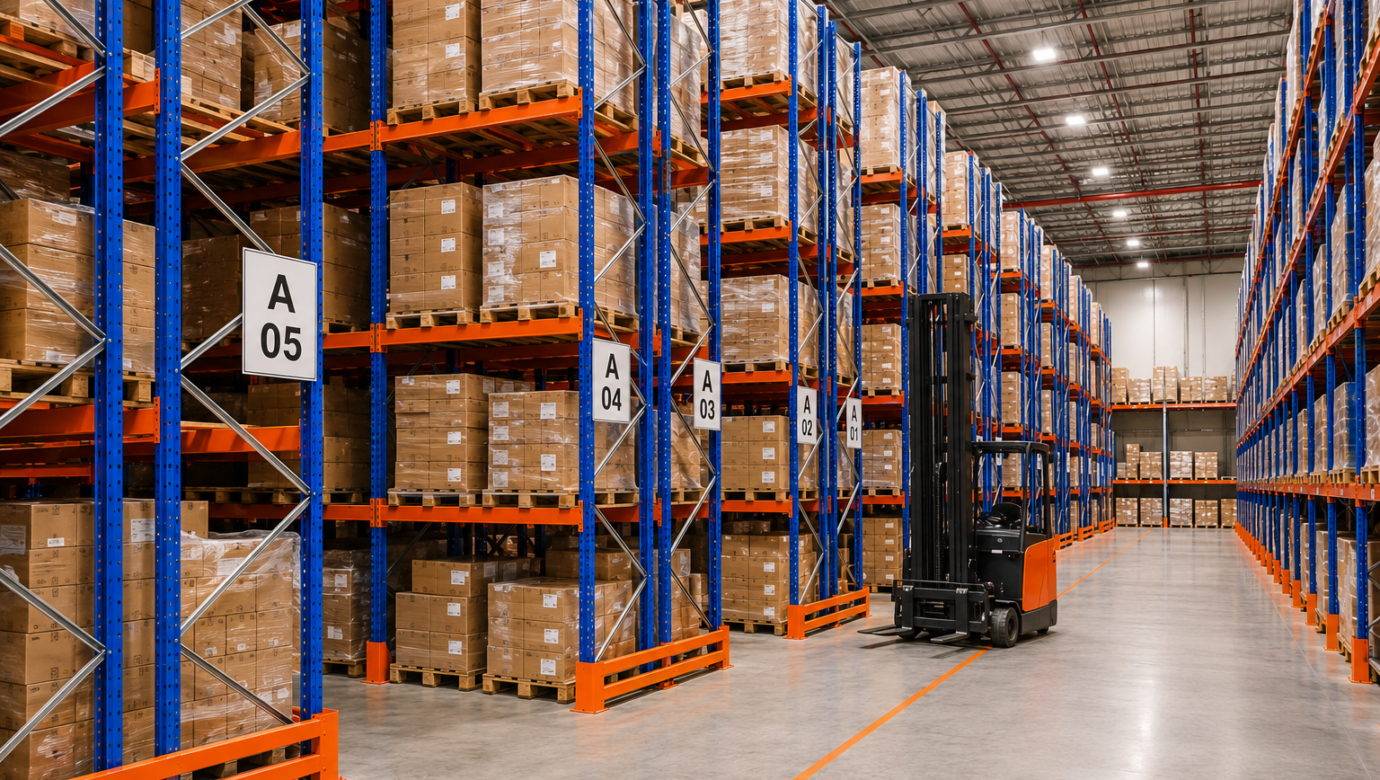
Racking systems are heavy-duty storage structures designed to hold palletized goods and large inventory loads. They are commonly used in warehouses, logistics hubs, manufacturing facilities, and distribution centers.
Typical features include:
- High load-bearing capacity
- Vertical storage utilization
- Forklift accessibility
- Configurable layouts
- Improved inventory organization
What Is Shelving?
Shelving systems are designed for lighter products that can be manually handled. They are frequently found in retail stores, offices, archives, workshops, and stockrooms.
Common advantages include:
- Easy access to stored items
- Flexible storage arrangements
- Cost-effective installation
- Suitable for small and medium-sized products
Types of Racking Systems
Different storage requirements call for different racking configurations.
Selective Pallet Racking
Selective pallet racking is one of the most widely used warehouse storage systems. It provides direct access to every pallet, making inventory management efficient.
Benefits include:
- High accessibility
- Simple inventory tracking
- Flexible configuration options
Drive-In and Drive-Through Racking
These systems increase storage density by allowing forklifts to enter storage lanes.
Key applications include:
- Cold storage facilities
- Bulk inventory storage
- High-volume product handling
Cantilever Racking
Cantilever racking is designed for long or irregularly shaped items.
Commonly stored materials include:
- Steel pipes
- Lumber
- Construction materials
- Furniture components
Push-Back Racking
Push-back systems improve storage density while maintaining relatively quick access to inventory.
Organizations often use this solution for:
- Medium-turnover products
- Limited warehouse space
- Multiple pallet storage lanes
Types of Shelving Systems
Shelving systems are available in various designs to accommodate different operational requirements.
Steel Shelving
Steel shelving remains a popular choice because of its durability and versatility.
Suitable environments include:
- Warehouses
- Offices
- Stockrooms
- Workshops
Boltless Shelving
Boltless shelving offers quick assembly and easy reconfiguration.
Advantages include:
- Tool-free installation
- Adjustable shelf levels
- Flexible storage layouts
Mobile Shelving
Mobile shelving systems maximize storage capacity by eliminating fixed aisles.
They are commonly used in:
- Archives
- Libraries
- Medical facilities
- Document storage centers
Wire Shelving
Wire shelving improves airflow and visibility while reducing dust accumulation.
Industries that frequently use wire shelving include:
- Food storage
- Healthcare
- Hospitality
Benefits of Racking and Shelving Systems
Organizations invest in storage infrastructure to improve operational performance.
Improved Space Utilization
One of the primary advantages of racking and shelving systems is their ability to maximize vertical storage space. This approach allows businesses to store more inventory without expanding facility footprints.
Better Inventory Management
Organized storage layouts make it easier to locate products and monitor stock levels. As a result, businesses can reduce picking errors and improve inventory accuracy.
Enhanced Workplace Safety
According to occupational safety guidelines published by regulatory authorities worldwide, properly installed storage systems help reduce risks associated with falling objects and obstructed pathways.
Safety benefits include:
- Clear aisle management
- Stable product storage
- Reduced manual handling risks
- Better compliance with safety standards
Increased Operational Efficiency
Well-designed storage systems streamline inventory movement and support faster order fulfillment processes.
Key operational improvements include:
- Faster picking times
- Improved workflow
- Reduced congestion
- Better resource utilization
Industry Adoption Continues to Grow
As warehousing and logistics operations expand across the Middle East and other global markets, businesses are increasingly investing in modern storage infrastructure. Companies such as Planet Racking and other storage solution providers report increased interest in scalable systems that help organizations maximize warehouse capacity while maintaining operational efficiency and safety standards.
Racking and Shelving for Modern Warehouses
The role of racking and shelving has expanded significantly as businesses seek greater efficiency in inventory management and warehouse operations.
Modern storage systems support:
- Faster order processing
- Improved stock visibility
- Better warehouse organization
- Reduced operational costs
- Enhanced workplace safety
Warehouse managers increasingly prioritize storage layouts that maximize space utilization while ensuring smooth product movement throughout the facility.
Factors to Consider When Choosing Storage Systems
Selecting the right storage solution requires careful planning.
Inventory Characteristics
Businesses should evaluate:
- Product dimensions
- Weight capacity requirements
- Storage turnover rates
- Handling methods
Available Space
Facility layout significantly affects storage design.
Important considerations include:
- Ceiling height
- Floor load capacity
- Aisle width
- Equipment access requirements
Future Growth
Storage infrastructure should accommodate future inventory increases and operational changes.
Experts recommend scalable systems that can be expanded without major facility modifications.
Compliance and Safety Standards
Storage systems should meet applicable industry regulations and manufacturer specifications.
Regular inspections and maintenance help ensure continued safety and performance.
Emerging Trends in Warehouse Storage
The storage industry continues to evolve as businesses adopt new technologies and operational strategies.
Recent trends include:
- Automated Storage and Retrieval Systems (ASRS)
- Smart inventory tracking technologies
- High-density storage solutions
- Sustainable warehouse design
- Modular storage systems
Research from logistics and supply chain organizations indicates that automation and data-driven inventory management are becoming increasingly important in warehouse operations worldwide.
Industry suppliers, including Planet Racking, have noted a growing shift toward modular storage systems that can be expanded as inventory requirements change. This trend reflects broader efforts across the logistics sector to improve flexibility, optimize storage density, and support long-term operational growth.
The Role of Storage Solution Providers
Storage solution providers contribute to warehouse efficiency by offering system design, installation, and maintenance services tailored to specific operational requirements.
Companies such as Planet Racking support businesses across sectors including logistics, manufacturing, retail, e-commerce, and cold storage by supplying racking and shelving systems designed to improve organization, accessibility, and space utilization.
Industry specialists often work closely with facility managers to determine the most effective storage configurations based on inventory volumes, workflow requirements, and available warehouse space.
Key Takeaways
Racking and shelving systems remain essential components of modern storage and inventory management strategies.
Key points include:
- Racking is ideal for palletized and heavy-duty storage.
- Shelving is suitable for lighter, manually handled items.
- Proper storage design improves efficiency and safety.
- Businesses should consider inventory type, available space, and future growth when selecting systems.
- Modern storage technologies continue to shape warehouse operations.
- Providers such as Planet Racking contribute to the development of efficient and scalable storage solutions.
As supply chains become more complex, effective storage solutions will continue to play a significant role in helping organizations manage inventory efficiently and utilize available space effectively.
FAQs
What is the difference between racking and shelving?
Racking systems are designed for storing heavy palletized goods and typically require material-handling equipment such as forklifts. Shelving systems are intended for lighter items that can be accessed manually. The choice depends on product weight, storage volume, and operational requirements within a facility.
Why are racking and shelving important in warehouses?
Racking and shelving improve storage organization, maximize available space, and support efficient inventory management. Proper systems help businesses reduce retrieval times, improve stock accuracy, and create safer working environments. These benefits contribute to smoother warehouse operations and better resource utilization.
Which industries commonly use racking and shelving systems?
Many industries use racking and shelving, including logistics, manufacturing, retail, healthcare, food distribution, e-commerce, and cold storage. Storage requirements vary by sector, but organized systems help businesses manage inventory efficiently and maintain operational consistency across different environments.
How do businesses choose the right racking and shelving system?
Organizations typically evaluate inventory dimensions, load requirements, facility layout, accessibility needs, and future growth plans. Consulting storage specialists and reviewing safety standards can help identify the most suitable system for a specific operational environment.
Are racking and shelving systems safe for long-term use?
When installed correctly and maintained according to manufacturer guidelines, racking and shelving systems can provide reliable long-term performance. Regular inspections, employee training, and adherence to load limits are important factors in maintaining safety and operational effectiveness.
