

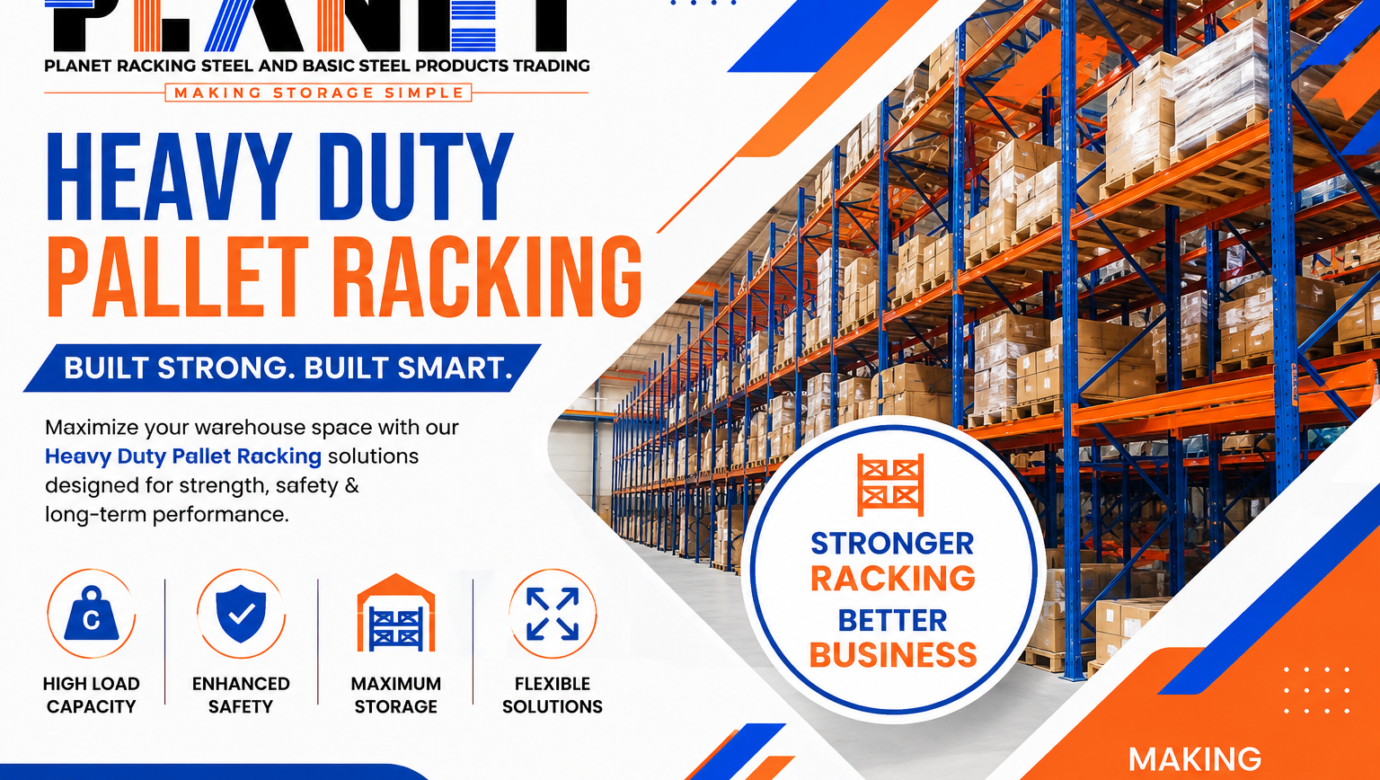
Heavy Duty Pallet Racking for FMCG Distribution Centers
Fast-moving consumer goods (FMCG) distribution centers handle thousands of products that move through warehouses every day. Heavy Duty Pallet Racking for FMCG Distribution Centers plays an important role in organizing inventory, supporting high stock turnover, and improving warehouse operations. As supply chains continue to evolve, efficient storage systems help distribution centers maintain consistent product availability while reducing operational delays.
Warehouses that manage packaged foods, beverages, personal care items, cleaning products, and household essentials require storage systems capable of handling frequent pallet movements while maintaining safe and organized inventory.
Why Heavy Duty Pallet Racking for FMCG Distribution Centers Matters
FMCG products have one of the fastest inventory turnover rates across the logistics industry. Distribution centers must receive, store, and dispatch products quickly to retailers, wholesalers, and e-commerce fulfillment facilities.
Heavy duty pallet racking supports these requirements by providing structured pallet storage that allows forklifts to access inventory efficiently while maximizing available warehouse space.
Key operational benefits include:
- Better pallet organization
- Improved inventory visibility
- Faster loading and unloading
- Efficient use of vertical storage
- Reduced aisle congestion
- Safer warehouse operations
The Storage Challenges Faced by FMCG Distribution Centers
FMCG warehouses often experience rapid inventory movement throughout the day. This creates several storage challenges.
High Product Turnover
Products arrive and leave continuously, requiring efficient pallet access.
Large Product Variety
A single distribution center may store thousands of different SKUs with varying pallet dimensions.
Seasonal Demand
Promotional campaigns and seasonal sales often increase storage requirements for limited periods.
Space Optimization
Warehouse operators seek to increase storage capacity without expanding facility footprints.
Heavy duty pallet racking helps address these operational demands through organized pallet storage layouts.
Key Features of Heavy Duty Pallet Racking
Modern pallet racking systems include features designed for busy warehouse environments.
Adjustable Beam Levels
Beam heights can be modified to accommodate different pallet sizes and packaging dimensions.
High Load Capacity
Heavy-duty steel components support substantial pallet loads while maintaining structural stability when installed correctly.
Selective Pallet Access
Each pallet location remains directly accessible, reducing handling time during order picking and replenishment.
Flexible Warehouse Layouts
Racking configurations can be adapted as inventory profiles or operational requirements change.
Improving Warehouse Efficiency
Efficient warehouse operations depend on minimizing unnecessary movement.
Heavy duty pallet racking contributes to operational efficiency by:
- Creating clearly defined storage locations
- Supporting systematic inventory management
- Reducing pallet handling time
- Improving forklift travel routes
- Increasing storage density without sacrificing accessibility
These improvements can support consistent warehouse workflows throughout daily operations.
Supporting Inventory Accuracy
Inventory accuracy is essential in FMCG logistics.
Organized pallet storage helps warehouse teams:
- Assign fixed storage locations
- Improve stock identification
- Simplify cycle counting
- Reduce misplaced inventory
- Support barcode and warehouse management systems
Accurate inventory records contribute to smoother order fulfillment and supply chain visibility.
Safety Considerations in FMCG Warehouses
Busy distribution centers require safe storage practices to protect employees and inventory.
Important safety measures include:
- Following manufacturer load capacities
- Inspecting racks regularly
- Training forklift operators
- Keeping aisles free of obstructions
- Replacing damaged rack components promptly
- Displaying load capacity information where appropriate
Routine inspections help identify wear or accidental damage before it affects warehouse operations.
Industries That Benefit
Heavy duty pallet racking is widely used across FMCG sectors, including:
- Food and beverage distribution
- Grocery wholesalers
- Personal care products
- Household goods
- Consumer electronics
- Pharmaceutical distribution
- Retail supply chains
- E-commerce fulfillment centers
Each sector benefits from organized pallet storage and efficient inventory movement.
Technology Integration
Modern distribution centers increasingly combine pallet racking with digital warehouse technologies.
Examples include:
- Warehouse Management Systems (WMS)
- Barcode scanning
- RFID tracking
- Inventory management software
- Forklift guidance systems
- Data analytics dashboards
These technologies help warehouse managers monitor stock levels and improve operational planning.
Planning a Heavy Duty Pallet Racking System
Several factors influence racking system design.
Warehouse planners typically evaluate:
Product Characteristics
Weight, pallet dimensions, packaging type, and stacking requirements.
Warehouse Dimensions
Building height, floor loading capacity, aisle widths, and dock locations.
Material Handling Equipment
Forklift specifications influence aisle dimensions and rack heights.
Future Growth
Scalable layouts allow facilities to adapt to changing inventory volumes.
Proper planning helps improve long-term warehouse performance while supporting operational flexibility.
What This Means
Heavy Duty Pallet Racking for FMCG Distribution Centers remains an important storage solution for warehouses managing high inventory volumes and frequent stock movement. Well-planned pallet storage systems improve organization, support efficient inventory handling, and make better use of warehouse space. As FMCG supply chains continue to expand, structured storage systems will remain a key component of modern distribution center operations.
FAQs
What is heavy duty pallet racking for FMCG distribution centers?
Heavy duty pallet racking for FMCG distribution centers is a warehouse storage system designed to hold palletized consumer goods safely and efficiently. It supports organized inventory storage, improves forklift accessibility, and helps facilities manage high-volume product movement while maximizing available warehouse space.
How does heavy duty pallet racking improve warehouse efficiency?
Heavy duty pallet racking improves efficiency by organizing pallet locations, reducing product retrieval times, supporting faster loading and unloading, and optimizing vertical storage. These improvements help warehouses streamline inventory movement and maintain consistent operational workflows during periods of high demand.
Why is pallet racking important for FMCG logistics?
Pallet racking helps FMCG logistics operations manage rapid inventory turnover, maintain accurate stock organization, and support timely order fulfillment. Organized storage also improves warehouse safety, reduces handling errors, and enables more efficient use of available storage capacity.
Which industries commonly use heavy duty pallet racking?
Heavy duty pallet racking is widely used in food and beverage distribution, retail logistics, pharmaceutical warehousing, consumer goods storage, e-commerce fulfillment, automotive parts distribution, and manufacturing facilities that require organized pallet storage and efficient inventory management.
What factors should be considered when selecting heavy duty pallet racking?
Key considerations include pallet dimensions, load capacity, warehouse height, floor loading limits, aisle width, forklift type, inventory turnover, future expansion plans, and compliance with applicable warehouse safety standards. Proper planning helps ensure the storage system matches operational requirements.
