

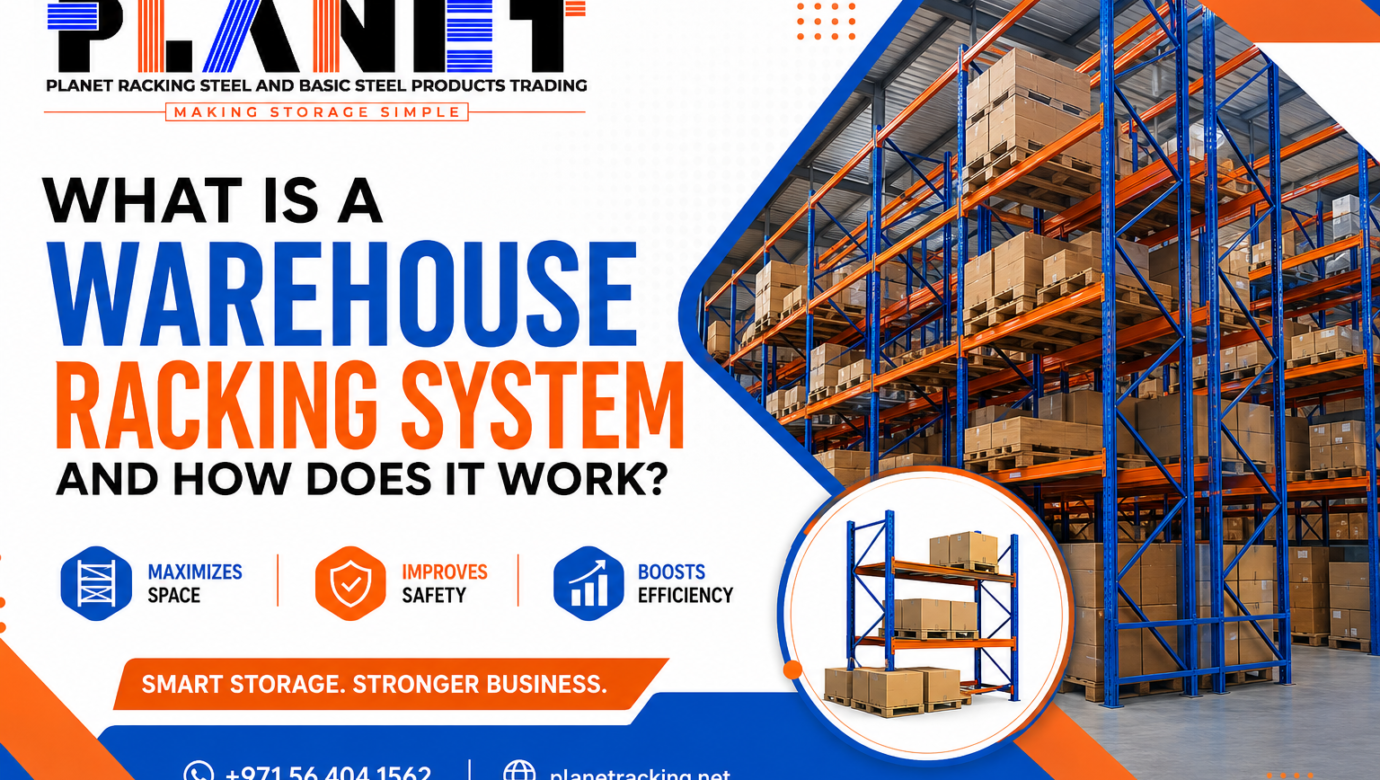
What Is a Warehouse Racking System?
What Is a Warehouse Racking System and How Does It Work?
A warehouse racking system is a structural storage solution designed to organize goods efficiently within a warehouse or distribution facility. As businesses handle growing volumes of inventory, these systems have become a standard part of modern storage operations.
In simple terms, a warehouse racking system consists of vertical frames and horizontal beams that create multiple levels for storing palletized or boxed goods. Rather than placing items directly on the floor, businesses use racking to stack inventory upward, making better use of available space.
How a Warehouse Racking System Works
The basic structure of a racking system includes upright frames, horizontal beams, and, in some cases, wire decking or additional support components. Together, these elements form storage bays where pallets or products are placed.
Forklifts or pallet jacks are typically used to load and unload items from these structures, especially in systems designed for heavier or bulk goods.
Key functions of a warehouse racking system include:
- Maximizing vertical storage space
- Organizing inventory for faster retrieval
- Supporting safe handling of palletized goods
- Reducing floor clutter and improving workflow
Warehouse operators often select racking configurations based on inventory type, turnover speed, and available floor space.
Common Types of Warehouse Racking Systems
Different racking systems are used depending on operational needs.
Selective Pallet Racking
This is the most widely used type, allowing direct access to each pallet without needing to move other stock. It suits warehouses with a wide variety of products.
Drive-In and Drive-Through Racking
These systems allow forklifts to enter the racking structure directly, making them suitable for high-density storage of uniform goods with lower turnover.
Push-Back Racking
Pallets are loaded from the front and pushed back on rails as new pallets are added, offering higher storage density than selective racking.
Cantilever Racking
Designed for long or irregularly shaped items such as pipes, timber, or metal sheets, offering easy access from the side rather than the front.
Mezzanine Racking
Used to create additional storage levels within an existing building, helping businesses expand capacity without extending the facility footprint.
Why Businesses Use a Warehouse Racking System
As e-commerce and logistics operations expand, efficient storage has become a priority for many companies. A well-designed warehouse racking system can reduce operational delays, improve inventory accuracy, and support safer working conditions.
Industry safety guidelines also emphasize that properly installed and maintained racking reduces the risk of structural failure, which can otherwise lead to costly disruptions or workplace accidents.
Factors businesses typically consider when choosing a racking system include:
- Warehouse ceiling height and floor space
- Type and weight of stored goods
- Frequency of inventory turnover
- Equipment used for loading and unloading
Maintenance and Safety Considerations
A warehouse racking system requires regular inspection to remain safe and functional. Structural damage, overloading, or improper installation can compromise the integrity of the entire storage structure.
Best practices for maintaining racking systems include:
- Conducting routine visual and structural inspections
- Avoiding loads that exceed rated capacity
- Training staff on safe loading and unloading procedures
- Promptly repairing or replacing damaged components
Key Takeaways
- A warehouse racking system is a structural framework used to store goods efficiently, typically through vertical stacking.
- Different racking types suit different inventory needs, from selective racking to cantilever systems.
- Businesses adopt racking systems to improve space use, safety, and operational efficiency.
- Regular inspection and maintenance are essential to keep racking systems safe over time.
What This Means
As warehouse operations continue to scale globally, understanding how a warehouse racking system works helps businesses make informed decisions about storage design, safety, and long-term operational efficiency.
FAQs Section
1. What is a warehouse racking system used for?
A warehouse racking system is used to store goods, typically palletized items, in an organized and space-efficient manner. It allows businesses to stack inventory vertically, improving storage capacity and making products easier to locate and retrieve.
2. What are the main types of warehouse racking systems?
Common types include selective pallet racking, drive-in racking, push-back racking, cantilever racking, and mezzanine racking. Each type is suited to different inventory characteristics, such as turnover rate, product shape, or available warehouse height.
3. How is a warehouse racking system installed?
Racking systems are typically installed by assembling vertical upright frames connected with horizontal beams, forming multiple storage levels. Installation should follow manufacturer guidelines and local safety standards to ensure structural stability and load-bearing capacity.
4. How often should a warehouse racking system be inspected?
Racking systems should be inspected regularly, including routine internal checks and periodic professional assessments, to identify damage, wear, or overloading that could affect structural safety and overall storage reliability.
5. Why do businesses invest in warehouse racking systems?
Businesses invest in racking systems to maximize storage space, improve inventory organization, and support safer, more efficient warehouse operations. As storage demands grow, structured racking helps companies scale without requiring additional facility space.
