
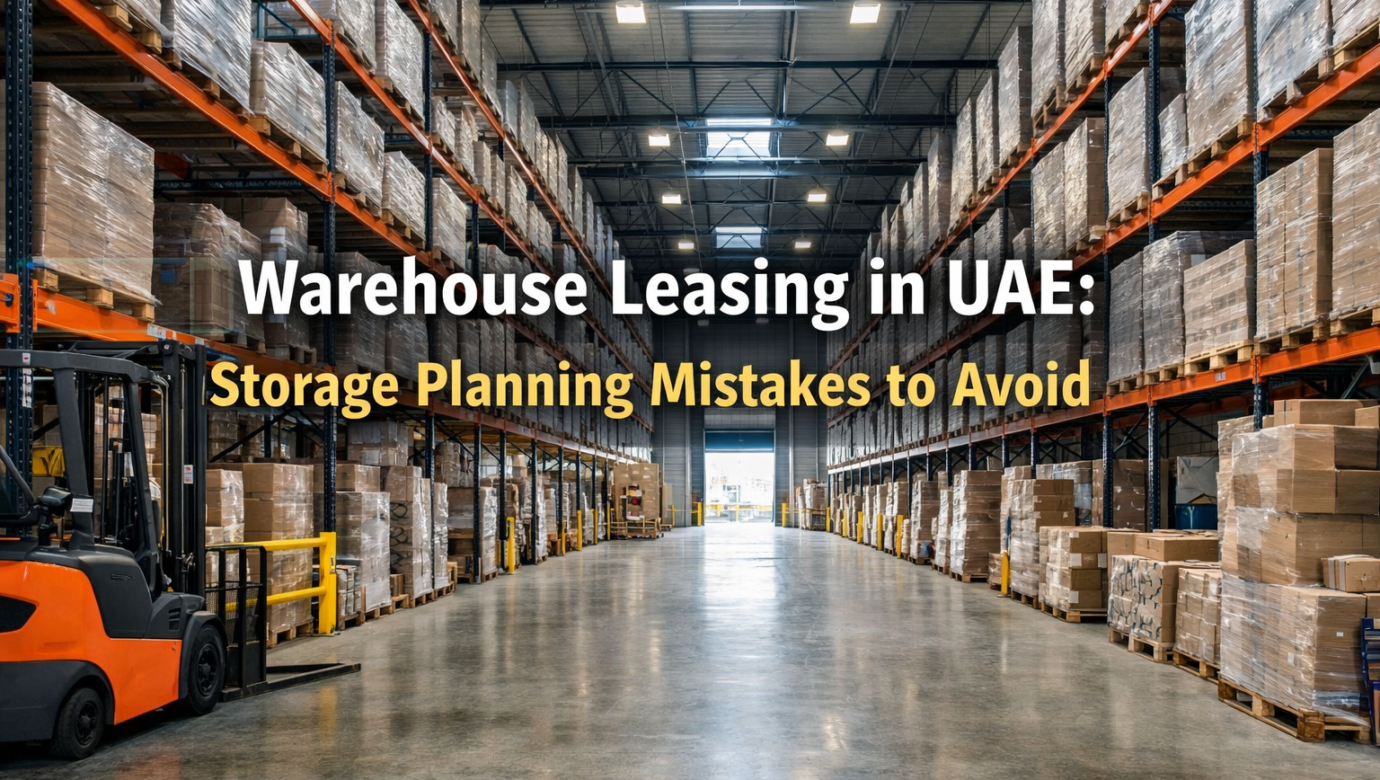
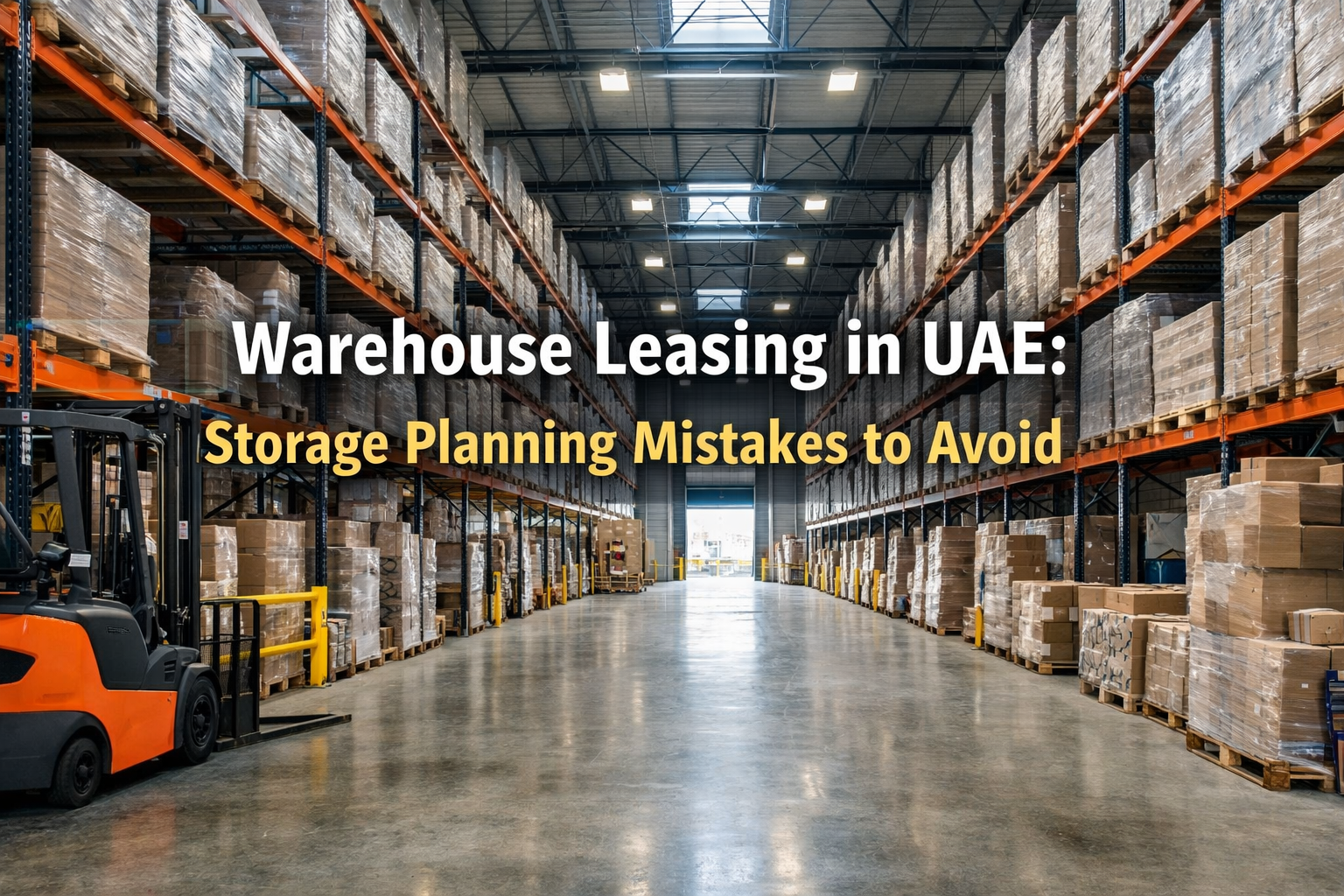
Warehouse Leasing in UAE: Storage Planning Mistakes to Avoid
Leasing a warehouse in the UAE is a strategic decision that directly impacts operational efficiency, scalability, and long-term costs. With the rapid growth of logistics, e-commerce, manufacturing, and cold chain sectors across Dubai, Abu Dhabi, and other emirates, demand for warehouse space has never been higher.
However, many businesses rush into warehouse leasing in the UAE without proper storage planningleading to underutilized space, compliance issues, and avoidable expenses. In this article, we’ll break down the most common storage planning mistakes tenants make and how you can avoid them while staying aligned with Google content and quality guidelines.
1. Underestimating Future Storage Requirements
One of the biggest mistakes companies make when leasing a warehouse in the UAE is planning only for current needs. Business growth, seasonal demand, and market expansion often require more storage capacity than initially expected.
Why this is a problem:
- Frequent relocations increase costs
- Operational disruptions during peak seasons
- Limited flexibility for new product lines
Smart approach: Choose a warehouse with scalable storage options and enough vertical clearance to support advanced racking systems. Planning for growth from day one ensures your warehouse supports your businessnot restricts it.
2. Ignoring Warehouse Layout and Racking Compatibility
Many tenants focus solely on location and rent, overlooking how the warehouse layout affects storage efficiency. Column spacing, ceiling height, floor load capacity, and dock positioning all influence how well racking systems can be installed.
Common consequences:
- Poor space utilization
- Limited racking configurations
- Higher material handling costs
Best practice: Before signing a lease, assess whether the warehouse supports selective pallet racking, drive-in racking, or automated storage systems. A well-planned layout can increase storage capacity by up to 40% without increasing floor space.
3. Overlooking Regulatory and Compliance Requirements
Warehouse leasing in the UAE involves strict regulations related to fire safety, civil defense approvals, zoning, and municipality guidelines. Many tenants assume compliance is the landlord’s responsibilitywhich can be a costly assumption.
Risks of non-compliance:
- Delays in operations
- Fines or shutdowns
- Rejection of racking installations
What to do: Ensure the warehouse meets Dubai Civil Defense (DCD) or relevant emirate regulations, especially if you plan to install high-density storage or mezzanine floors. Always confirm approval requirements before finalizing your storage design.
4. Choosing Location Over Operational Efficiency
While prime locations reduce transportation time, they don’t always guarantee efficient warehouse operations. A smaller warehouse in a premium area may limit storage density and workflow optimization.
Hidden challenges:
- Traffic congestion affecting dispatch times
- Limited yard space for trucks
- Higher rent with lower storage efficiency
Balanced strategy: Evaluate how location, accessibility, storage capacity, and racking potential work together. In many cases, a slightly peripheral location with better infrastructure delivers higher long-term ROI.
5. Failing to Optimize Warehouse Rent Through Storage Design
Many businesses try to cut costs by leasing smaller warehouseswithout investing in proper storage planning. This often leads to cluttered aisles, safety risks, and inefficient picking processes.
The smarter alternative: Optimizing vertical space with the right racking system allows you to store more within the same footprint. This approach improves safety, workflow, and cost efficiency while maximizing warehouse rent value.
Why Storage Planning Matters in Warehouse Leasing UAE
Effective storage planning is not just about fitting products into spaceit’s about aligning infrastructure with business goals. From selecting the right warehouse to designing an efficient racking layout, every decision impacts productivity, safety, and profitability.
Businesses that plan storage correctly:
- Reduce long-term leasing costs
- Improve inventory accuracy
- Scale operations without relocating
Frequently Asked Questions
Check ceiling height, floor load capacity, fire safety compliance, accessibility, and whether the layout supports your required racking system.
While not legally mandatory, proper storage planning is essential to meet civil defense regulations and ensure safe, efficient operations.
By maximizing vertical space, racking systems allow higher storage density, reducing the need to lease larger or additional warehouses.
Yes. Cold storage facilities require temperature-controlled environments, insulated panels, and racking systems designed for freezer conditions.
This depends on the lease agreement. However, tenants are usually responsible for approvals related to racking, mezzanines, and storage modifications.
Warehouse leasing in the UAE is a long-term investment that should never be approached without proper storage planning. By avoiding these common mistakes, businesses can optimize space, reduce costs, and build a warehouse operation that supports growth and compliance.
Whether you’re leasing your first warehouse or upgrading an existing facility, strategic planning today will prevent expensive corrections tomorrow.
