

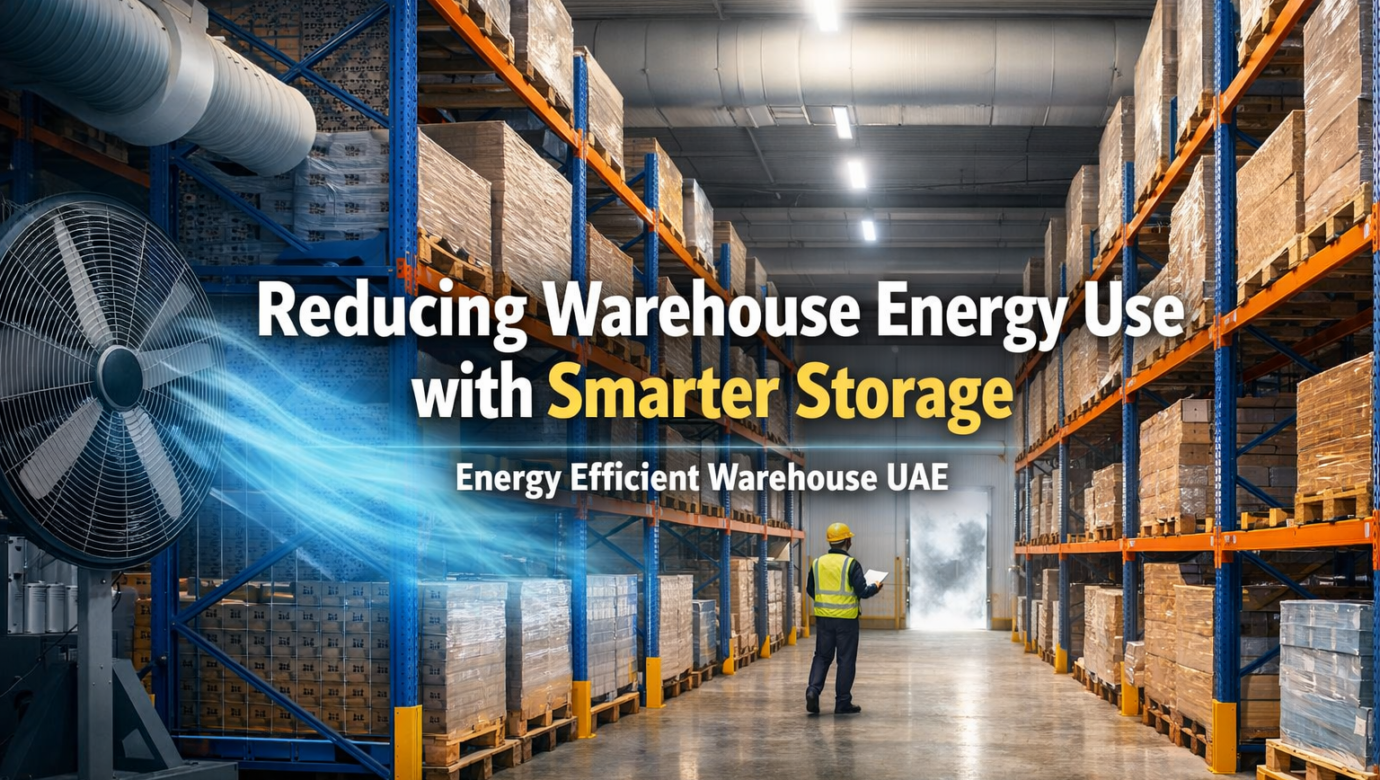
How to Reduce Warehouse Energy Use with Smarter Storage
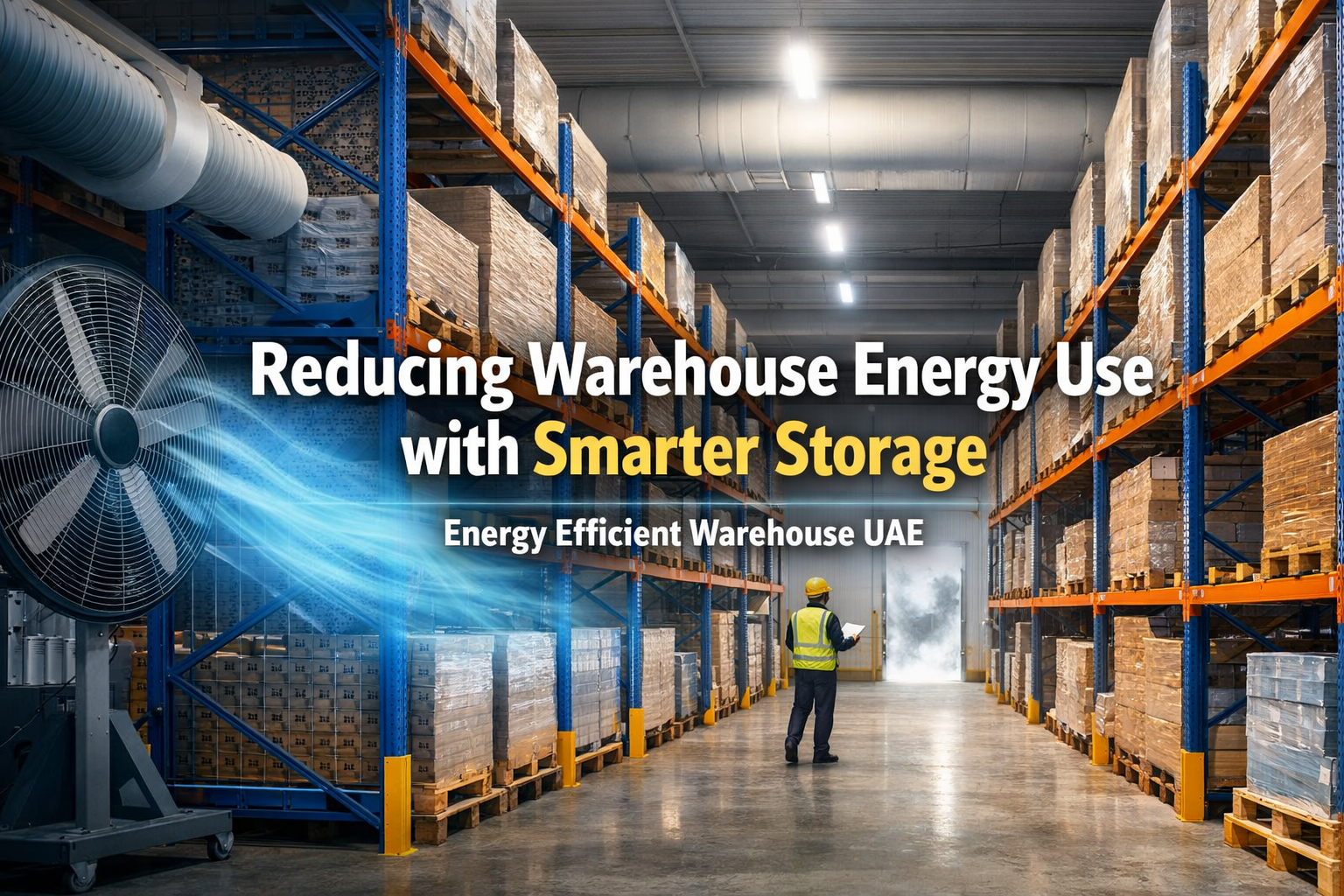
Energy Efficiency Is Now a Warehouse Priority in the UAE
Rising electricity costs, extreme summer temperatures, and sustainability mandates are pushing warehouse operators across the UAE to rethink how energy is consumed inside their facilities. While lighting and HVAC systems often receive the most attention, storage design and racking systems play a critical but often overlooked role in warehouse energy efficiency.
By adopting smarter storage solutions, UAE warehouses can significantly reduce cooling loads, improve airflow, and lower long-term operational costs. This article explores how optimized racking layouts contribute to building an energy efficient warehouse UAE, without compromising storage capacity or throughput.
Why Warehouses in the UAE Consume So Much Energy
The UAE climate presents unique challenges for logistics and storage facilities:
- Average summer temperatures exceeding 45°C
- Heavy reliance on air conditioning and mechanical ventilation
- High energy demand in cold storage and temperature-controlled warehouses
- Large cubic volumes that require continuous cooling
Regional energy audits indicate that cooling can account for up to 60 to 70 percent of a warehouse’s total electricity consumption. Poor storage layout and airflow-blocking racking designs further increase this demand.
How Smarter Storage Reduces Energy Consumption
1. Improved Airflow and Cooling Efficiency
Traditional racking systems often block airflow, creating hot zones that force HVAC systems to work harder. Airflow-friendly racking designs allow cool air to circulate evenly throughout the warehouse, maintaining stable temperatures with less energy.
Key features include:
- Open-back racking structures
- Perforated shelves for vertical airflow
- Optimized aisle spacing
These features are especially valuable in energy efficient warehouse UAE environments, where cooling efficiency directly affects operating costs.
2. Reduced Cooling Volume Through Vertical Optimization
Warehouses that expand horizontally require more cooling per square meter. High-bay racking systems maximize vertical space, reducing the overall cooled footprint.
Benefits include:
- Lower air volume requiring temperature control
- Reduced HVAC runtime
- Increased storage capacity without physical expansion
This strategy is commonly used in modern UAE distribution centers focused on both space efficiency and energy savings.
3. Zoned Temperature Control with Smart Layouts
Smarter storage planning allows warehouses to create temperature zones rather than cooling the entire facility uniformly.
Examples include:
- Separating fast-moving goods from long-term storage
- Isolating temperature-sensitive inventory
- Using compact racking in controlled cold zones
This targeted cooling approach significantly reduces energy usage, particularly in multi-temperature warehouse operations.
Energy-Efficient Racking Systems Suitable for UAE Warehouses
Selective Pallet Racking with Optimized Aisles
Modern selective pallet racking designed for airflow allows operators to:
- Maintain easy access to inventory
- Minimize airflow obstruction
- Improve ventilation efficiency
These systems are ideal for general storage warehouses prioritizing energy efficiency.
Mobile Racking Systems for Cooling Reduction
Mobile racking eliminates fixed aisles, reducing the total space that must be cooled. When combined with intelligent control systems, mobile racking can reduce cooling energy usage by up to 40 percent in suitable UAE facilities.
They are especially effective in:
- Cold storage warehouses
- High-value inventory storage
- Facilities with limited floor area
Drive-In and Shuttle Racking for Cold Environments
In freezer and chilled warehouses, high-density racking systems reduce the volume of circulating air, enabling faster and more efficient cooling.
Key advantages include:
- Lower refrigeration energy demand
- Reduced temperature fluctuation
- Improved thermal stability
These systems are widely used in food, pharmaceutical, and FMCG cold chains across the UAE.
Sustainability and Compliance Benefits
Energy-efficient storage solutions support broader UAE sustainability objectives, including:
- UAE Net Zero 2050 Strategy
- Green building standards such as Estidama and LEED
- Corporate ESG reporting requirements
Investing in energy-efficient warehouse racking helps businesses lower utility costs while strengthening environmental and regulatory compliance.
Long-Term Cost Savings and ROI
Although smarter racking systems may involve higher upfront investment, long-term benefits include:
- Reduced electricity bills
- Lower HVAC maintenance costs
- Extended equipment lifespan
- Improved workforce comfort and productivity
Many UAE warehouses achieve return on investment within two to four years, depending on facility size and cooling demand.
Smarter Storage Is a Strategic Energy Decision
Reducing warehouse energy consumption in the UAE is not limited to upgrading HVAC systems or installing LED lighting. Storage design and racking systems play a strategic role in energy efficiency.
By adopting airflow-friendly, space-optimized, and high-density racking solutions, warehouse operators can build an energy efficient warehouse UAE that is cost-effective, sustainable, and future-ready.
Frequently Asked Questions
Racking design affects airflow, cooling efficiency, and temperature consistency. Poor layouts restrict air circulation, increasing HVAC energy demand in hot climates like the UAE.
There is no single solution. High-bay racking, mobile racking, and airflow-optimized selective racking are among the most energy-efficient choices for UAE warehouses.
Yes. Optimized racking layouts can lower cooling energy consumption by 20 to 40 percent, particularly in temperature-controlled facilities.
Yes. Many energy-efficient racking solutions can be retrofitted into existing warehouses with minimal structural modification.
Yes. Reduced energy usage supports ESG initiatives, green building certifications, and alignment with national sustainability goals.
