
The Rise of GCC Logistics Hubs and What It Means for UAE Storage
The Gulf Cooperation Council is entering a period of major logistics investment across ports, free zones, industrial cities and trade corridors. This transformation reshapes how goods move across the region and reinforces the UAE’s position as a strategic global distribution hub.
Why GCC Logistics Hubs Are Expanding
1. Rapid e commerce growth
Online retail is increasing throughout Saudi Arabia, the UAE, Qatar and Oman. To support fast delivery expectations, businesses require stronger fulfilment networks, inventory reserves and larger warehouse footprints.
2. Government driven investment
GCC states are investing heavily in logistics infrastructure aligned with economic diversification goals such as Saudi Vision 2030, Omanport corridor development and expansions across UAE free zones.
3. Free zones enabling market entry
Tax benefits, customs flexibility and simplified licensing attract global companies to use the Gulf as a gateway for Middle East trade. Dubai now hosts hundreds of supply chain operators supporting regional and global commerce.
4. Industrial diversification
Automotive, petrochemicals, food, pharmaceuticals and machinery manufacturing all rely on accessible storage and efficient distribution networks.
How the UAE Fits Into the Regional Transformation
The UAE remains the most mature logistics ecosystem in the GCC.
World class ports and connectivity
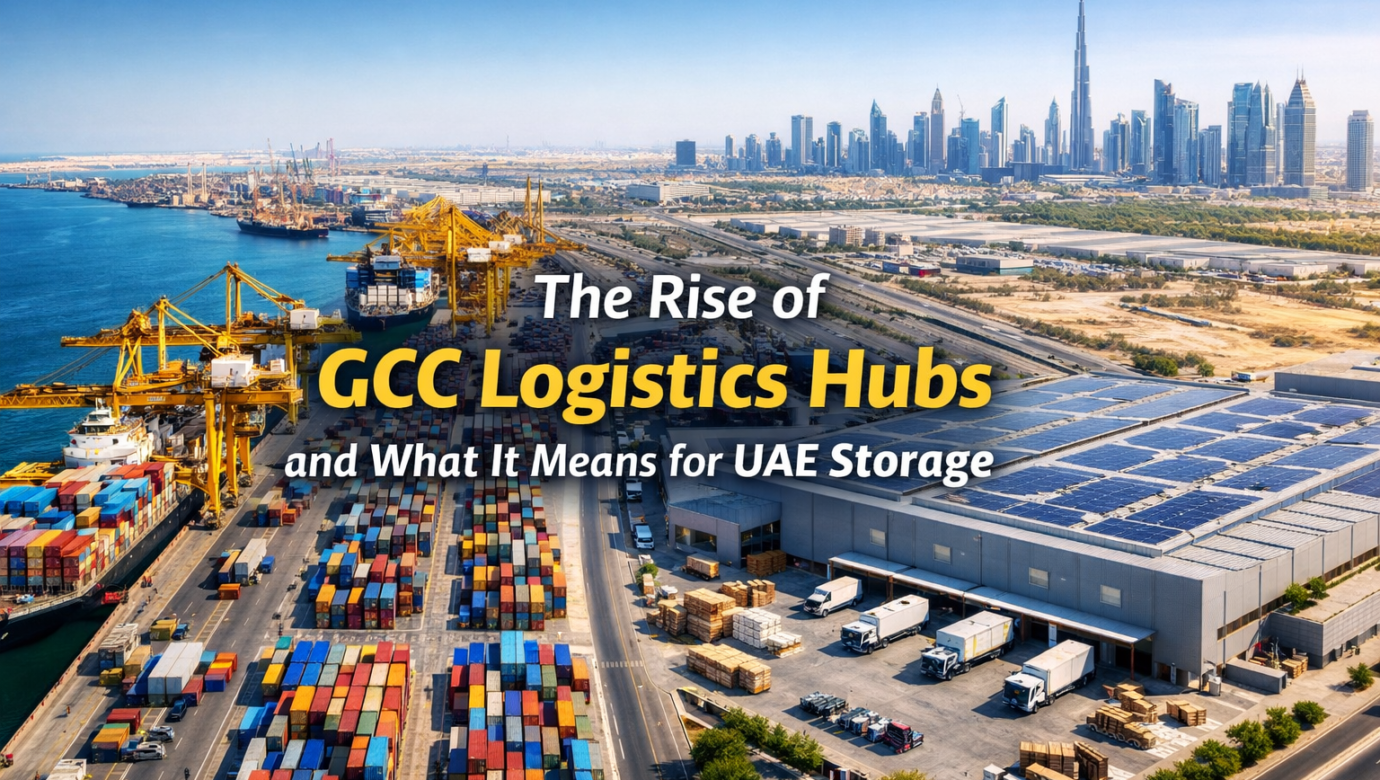
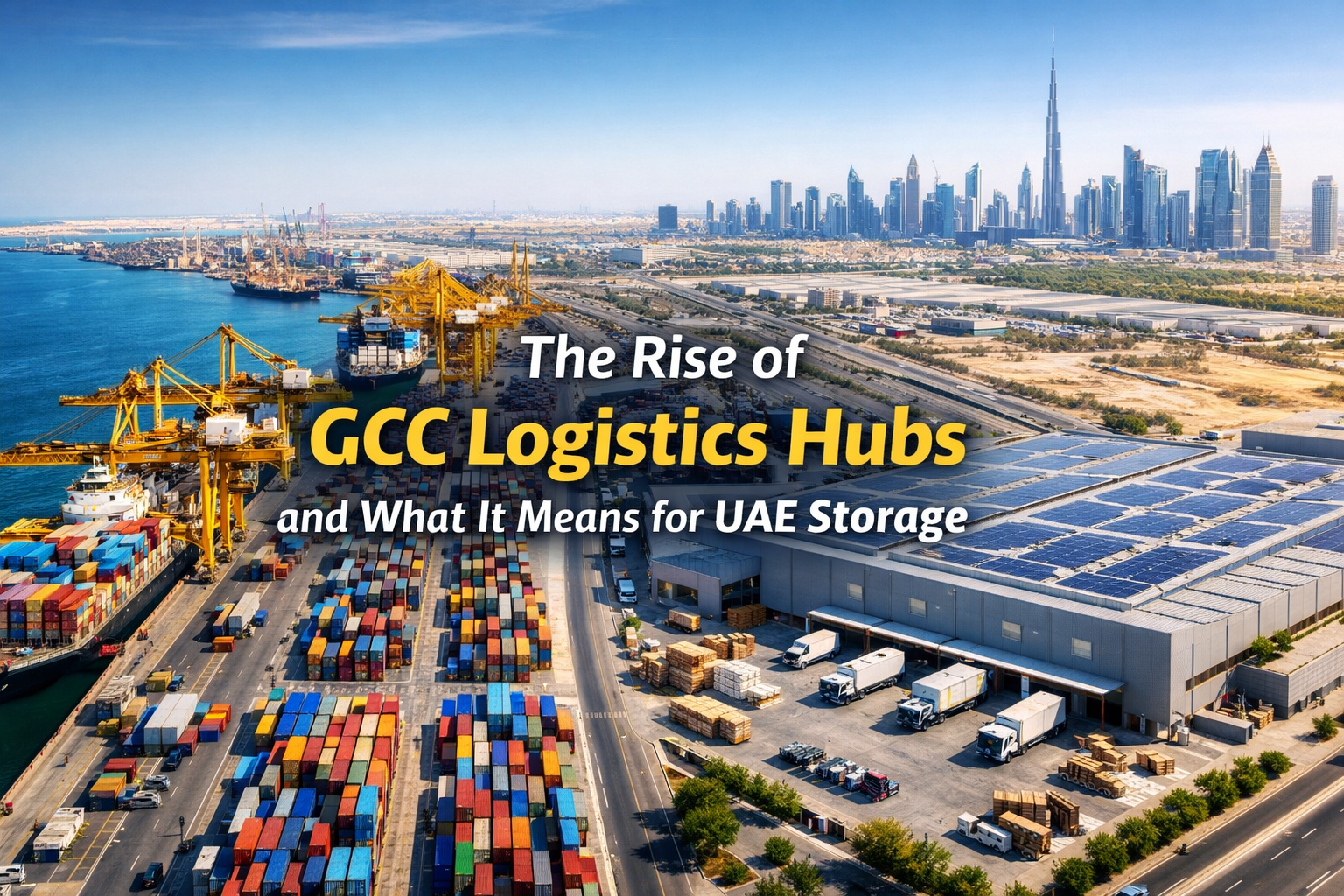
Jebel Ali Port integrates seamlessly with road and air transport, enabling multimodal movement of goods to Saudi Arabia, Oman and beyond.
Established logistics service network
Freight forwarders, 3PLs, cold chain operators and warehouse technology providers create a complete supply chain support system unmatched in the region.
Rapid adoption of new warehousing technology
Automation, robotics picking, real time warehouse management systems and high density racking solutions are increasingly mainstream in the Emirates.
Impact on UAE Storage and Warehousing Demand
Growth across Gulf trade and transportation directly increases the need for storage capacity inside the UAE.
Rising warehouse space occupancy
Industrial clusters including Dubai Industrial City, Dubai South and Kizad are seeing record demand from retail, manufacturing and distribution companies.
Shift toward specialised storage
The market is expanding fastest in cold chain storage for food and pharmaceuticals, bulk pallet solutions for industry and automated high bay systems that maximise vertical space.
Urban fulfilment demand
Same day and next day delivery expectations are pushing logistics providers to secure smaller warehouses closer to residential districts.
Sustainability requirements
Businesses are adopting energy saving lighting, solar power, intelligent layout and eco friendly material handling equipment.
What It Means for UAE Businesses
Companies looking to compete in the GCC market should prepare for rising warehouse rents, strong competition for industrial space and increased need for scalable racking systems. Businesses with flexible and modern storage operations will gain competitive advantage across the region.
The rapid rise of dedicated logistics hubs across the GCC reinforces the UAE’s role as a trade gateway. As demand continues to grow across cold storage, retail fulfilment and heavy industry, the country will remain the operational center of Gulf storage and distribution.
FAQs
Growth is driven by e commerce, industrial diversification and heavy investment in transport and trade networks.
More regional logistics activity means more goods flow through the UAE, increasing the need for storage capacity.
Cold storage, pallet racking, high density solutions and automated warehouses are leading growth.
Saudi Arabia, the UAE, Qatar and Oman are currently at the forefront of infrastructure development.
Yes. Due to superior connectivity, supply chain expertise and free zone ecosystems, the UAE is expected to remain the region’s primary logistics hub.
