

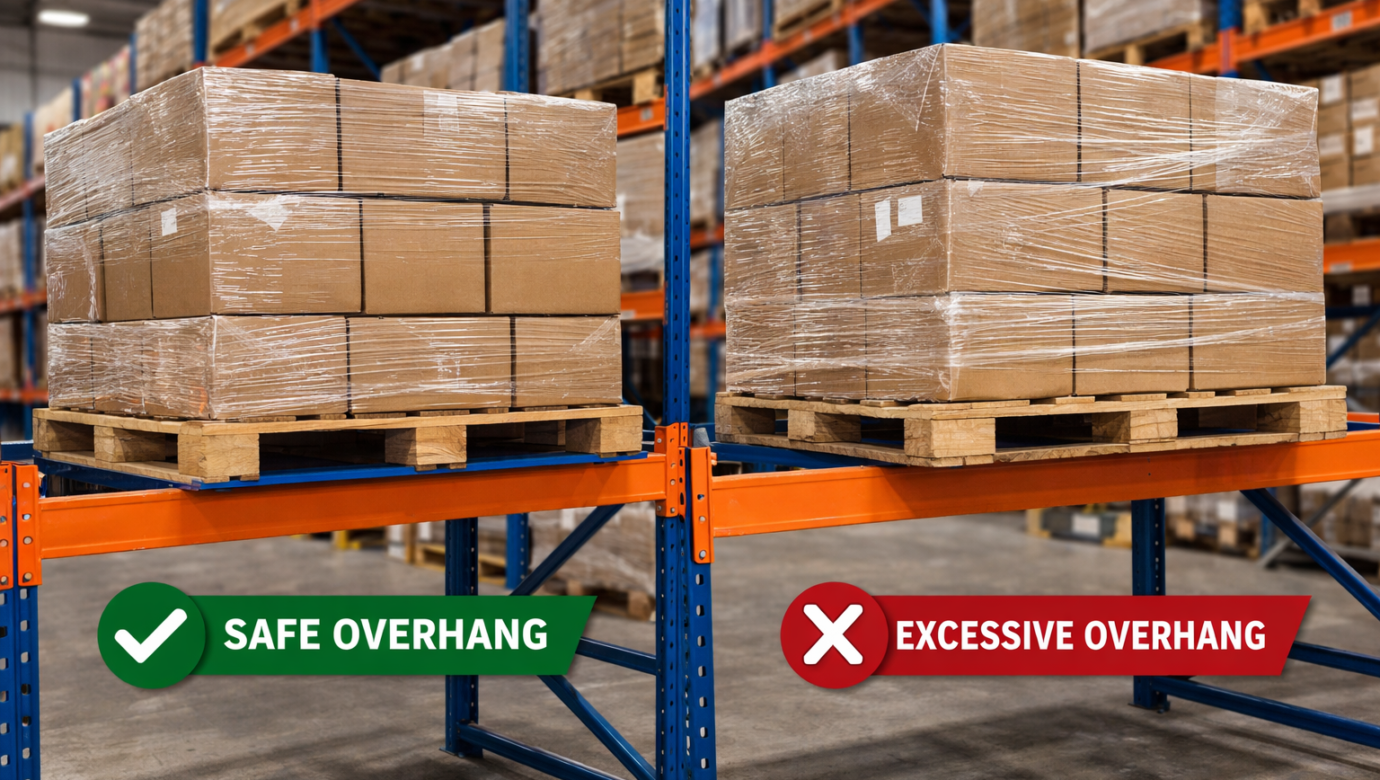
Pallet Overhang Safety: Why Proper Fit Matters
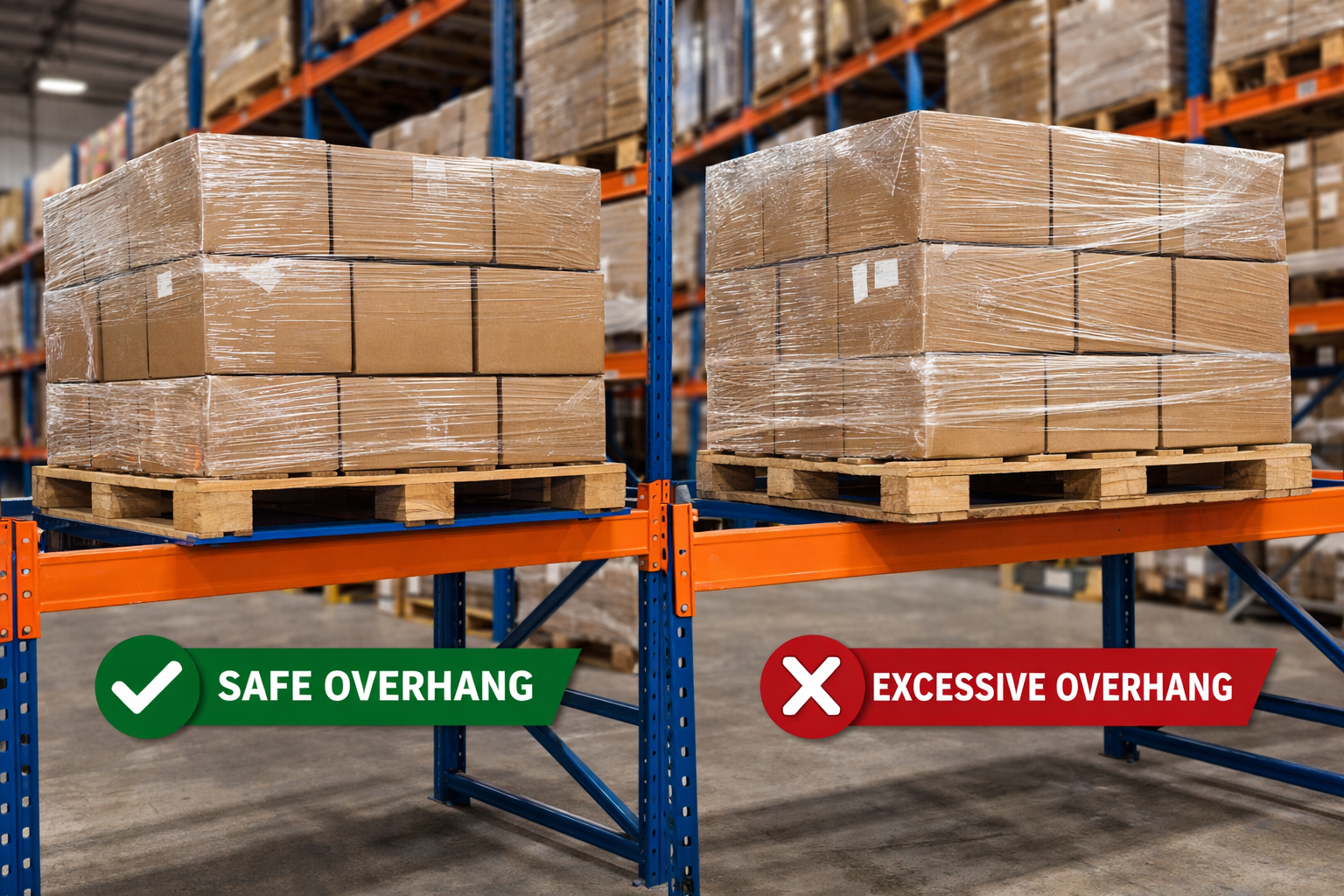
Pallet overhang safety is a crucial but often overlooked factor in warehouse operations. When pallets extend too far beyond rack beams, the risk of load instability, product damage, and worker injury increases. Proper pallet dimensions and correct beam spacing help ensure loads are supported as designed. As warehouses move more goods at higher speeds, small miscalculations in pallet fit can lead to costly and preventable incidents.
Understanding how pallet overhang affects rack performance is essential for supervisors, safety managers, and facility planners.
What Is Pallet Overhang?
Pallet overhang occurs when a pallet extends beyond the supporting rack beams. A small, controlled overhang may be acceptable in some racking systems. However, excessive overhang reduces the contact area between the pallet and the beams.
This reduced support can lead to:
- Pallet deflection or sagging
- Uneven load distribution
- Increased stress on rack beams
- Higher risk of pallet failure
According to material handling safety guidance from organizations such as OSHA and MHIA, stable load support is a foundational requirement for safe racking operations.
Why Pallet Overhang Safety Matters in Racking Systems
Load Stability Starts at the Beam
Pallet racks are engineered with specific beam lengths and load capacities. When pallets fit correctly, weight transfers evenly through the beams and uprights to the floor.
However, excessive overhang changes that load path. As a result:
- The pallet deck boards may carry more stress than designed
- Loads can tilt or shift during placement
- Forklift handling becomes less predictable
Over time, these issues can weaken pallets and increase the chance of sudden load drops.
Impact on Beam Length and Spacing
Beam length must match pallet dimensions to maintain pallet overhang safety. For example, a standard 1,200 mm pallet placed on beams that are too far apart may leave insufficient support on each side.
Safe fitting typically requires:
- Adequate bearing surface on each beam
- Consistent pallet orientation
- No unsupported pallet corners
Rack manufacturers often specify minimum support requirements, and deviating from these guidelines can void load ratings.
Common Causes of Unsafe Pallet Overhang
Even well-designed warehouses can experience pallet overhang problems. These are some frequent causes:
1. Mixed Pallet Sizes
Warehouses that receive pallets from multiple suppliers often deal with inconsistent pallet dimensions. Slight size differences can lead to unexpected overhang when stored on uniform rack beams.
2. Incorrect Pallet Orientation
Storing pallets in the wrong direction changes how deck boards rest on beams. This can reduce support and increase bending stress, even if beam spacing seems correct.
3. Damaged or Warped Pallets
Worn pallets may sag more than new ones. When combined with overhang, this increases the risk of pallet bottom board failure under load.
4. Rack Reconfiguration Without Review
Changing beam levels or spacing without rechecking pallet dimensions is a common source of pallet overhang safety issues. Small layout changes can create large safety gaps.
Engineering Guidelines for Safe Fitting
While exact requirements vary by system, several widely accepted practices help maintain pallet overhang safety:
- Ensure pallets have sufficient bearing surface on both beams
- Avoid unsupported pallet edges or corners
- Keep beam spacing aligned with standard pallet dimensions
- Follow rack manufacturer load and fit guidelines
- Inspect pallets regularly for structural damage
The Rack Manufacturers Institute (RMI) emphasizes that rack systems must be used according to design specifications. Improper pallet fit can compromise rated load capacities.
Operational Risks Linked to Excessive Overhang
Product Damage
Overhanging pallets are more likely to deflect. This movement can shift cartons and stretch wrap, increasing the chance of falling goods.
Worker Safety Hazards
Unstable loads raise the risk of falling objects. In busy aisles, even a small load shift can endanger forklift operators and nearby workers.
Rack Component Stress
When loads are not centered, beams may experience uneven bending. Over time, this can lead to permanent deformation or early component replacement.
How to Assess Pallet Overhang in Your Facility
Warehouse teams can take practical steps to check pallet overhang safety:
- Measure common pallet dimensions in use
- Compare these measurements with current beam lengths
- Observe how pallets sit when fully loaded
- Look for visible sagging or unsupported edges
- Review manufacturer documentation for fit requirements
Periodic safety audits that include pallet fit checks can help identify risks before incidents occur.
Training and Standardization
Clear operating procedures reduce overhang-related risks. Facilities often benefit from:
- Standardizing pallet types where possible
- Training forklift operators on correct pallet placement
- Marking beam levels for approved pallet sizes
- Reporting damaged pallets promptly
Consistent practices improve both safety and load performance.
Key Takeaways
Pallet overhang safety plays a direct role in rack stability, load integrity, and worker protection. Even small overhang differences can affect how weight is transferred through a racking system. By matching pallet dimensions with beam length and maintaining proper fitting practices, warehouses can reduce structural stress and prevent avoidable accidents.
FAQs
Pallet overhang safety refers to ensuring pallets do not extend excessively beyond rack beams. Proper support helps maintain load stability and prevents pallet damage or collapse. When pallets fit correctly, weight distributes evenly across beams, reducing stress on both the pallet and the racking system.
Safe overhang limits depend on pallet design, load weight, and rack manufacturer guidelines. In general, pallets should have adequate bearing surface on each beam and no unsupported corners. Facilities should follow engineering specifications provided by their racking supplier to avoid reducing system load capacity.
Excessive overhang reduces the support under a pallet, which can cause sagging, load shifting, or pallet failure. This increases the risk of falling products and injuries. It can also place uneven stress on rack beams, leading to long-term structural damage or costly repairs.
Yes, pallet orientation directly affects how deck boards rest on beams. Placing a pallet in the wrong direction can reduce the contact area and increase bending stress. Proper orientation ensures the pallet’s strongest structural elements are supported as intended by design.
Warehouses can prevent issues by standardizing pallet sizes, checking beam spacing, and training staff on proper pallet placement. Regular inspections of pallets and racking components also help identify unsafe overhang conditions before they lead to product damage or safety incidents.
