

Choosing the Right Racking Fasteners for Long-Span Racking
Selecting the correct racking fasteners is a critical step in building safe and durable long-span storage systems. These heavy-duty racks support large loads over extended widths, which places significant stress on bolts, anchoring hardware, and structural connections. Industry guidance from engineering and safety organizations consistently emphasizes that improper fastening is a leading cause of rack instability and premature failure.
Installers and warehouse planners must therefore match fastener type, material grade, and anchoring method to both the rack design and the site’s structural conditions. Making the right choice reduces maintenance needs, improves load performance, and helps facilities comply with workplace safety standards.
Why Racking Fasteners Matter in Long-Span Systems
Long-span racking differs from standard shelving because it is designed to carry bulkier items and heavier distributed loads. The extended beam lengths create additional bending forces that transfer stress to connection points.
Proper fasteners help:
- Maintain structural alignment under load
- Prevent beam dislodgement and frame separation
- Anchor racks securely to concrete slabs
- Improve performance in areas prone to vibration or seismic activity
Without the correct hardware, even high-quality steel frames can underperform.
Common Types of Fasteners Used in Racking
Installers typically work with several categories of hardware depending on rack configuration and floor conditions.
Bolts and Structural Connectors
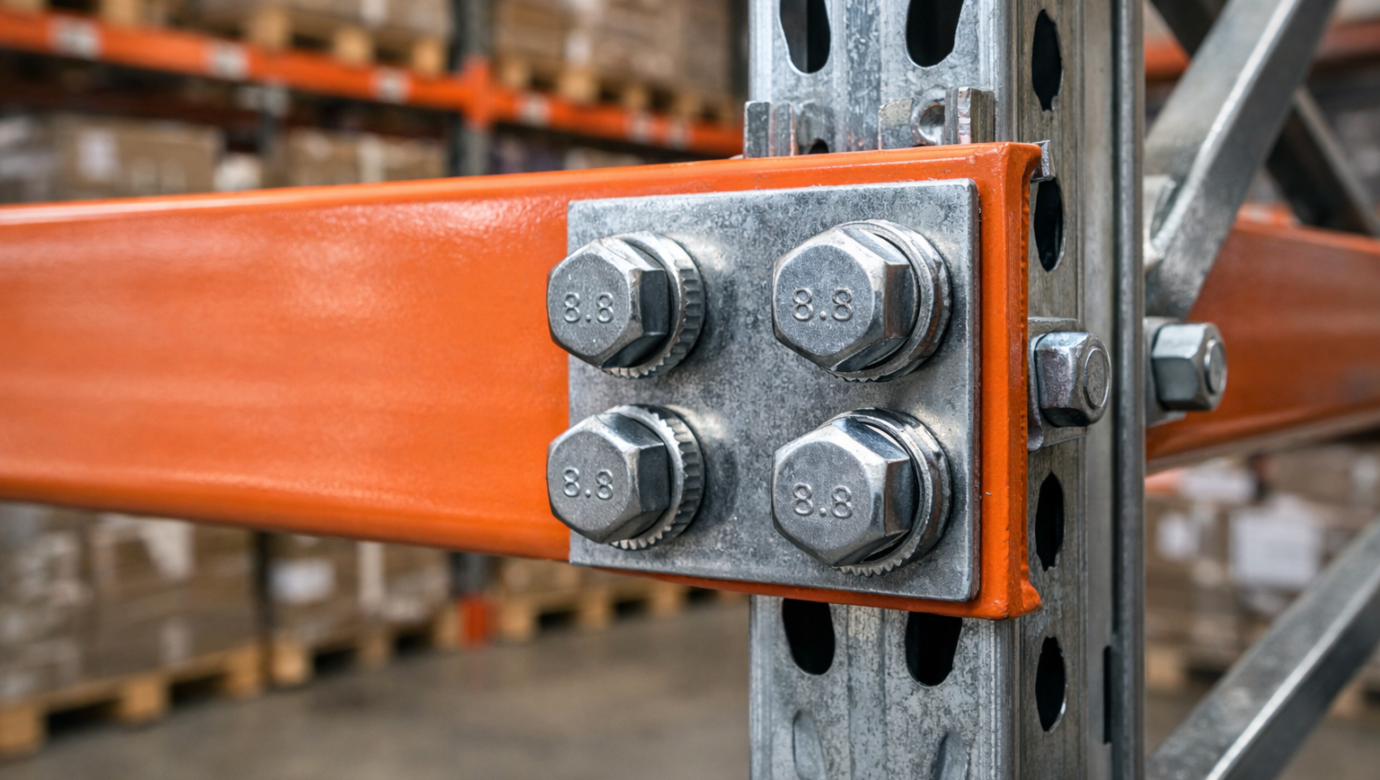
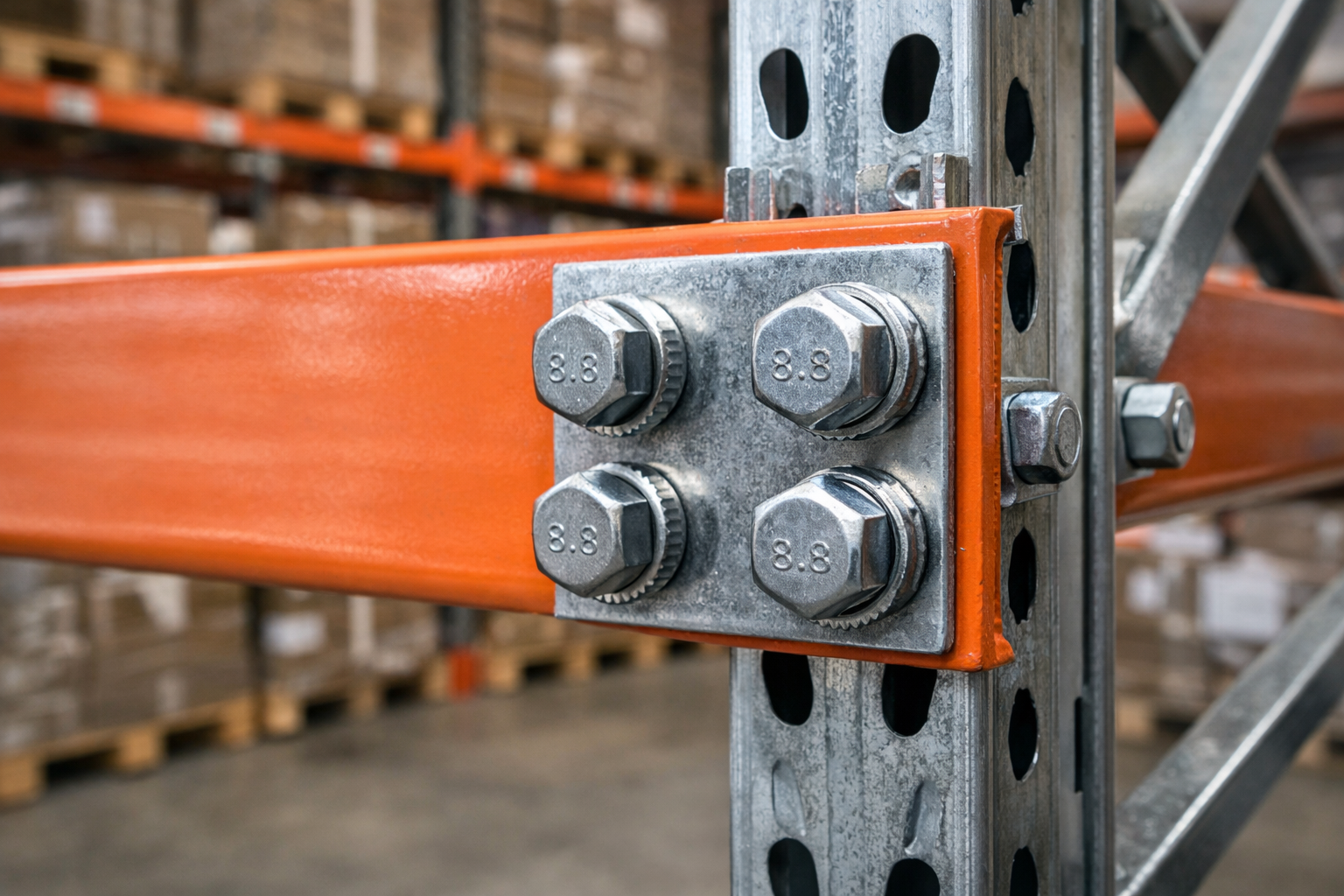
High-tensile bolts are commonly used to join upright frames, beams, and braces.
Key considerations include:
- Grade rating (such as Grade 5 or 8.8 metric)
- Shear and tensile strength requirements
- Corrosion resistance for humid or cold environments
Locking nuts and washers are often added to prevent loosening due to vibration from forklifts or equipment.
Anchoring Hardware for Floor Fixing
Anchoring hardware secures the rack base plates to the warehouse floor. Concrete anchors are the most widely used option.
Popular choices include:
- Wedge anchors for heavy-duty static loads
- Sleeve anchors for medium-load applications
- Chemical anchors for cracked or high-stress concrete
Anchor depth and spacing must align with engineering load calculations.
Seismic Anchors and Reinforced Systems
In regions with earthquake risk, seismic anchors and reinforced base connections are often required under building codes. These systems are designed to handle lateral forces that standard anchors may not withstand.
Seismic-rated hardware typically features:
- Higher pull-out resistance
- Reinforced washers or plate systems
- Compatibility with bracing upgrades
Local regulations and engineering approvals usually determine specifications.
Material and Coating Considerations
Fastener performance depends not only on strength but also on environmental resistance.
| Environment | Recommended Finish |
|---|---|
| Dry indoor warehouse | Zinc-plated steel |
| Humid or coastal | Hot-dip galvanized |
| Cold storage | Corrosion-resistant coated steel or stainless |
Cold storage areas require special attention because condensation and temperature cycling can accelerate corrosion.
Load Ratings and Engineering Compliance
Every fastener used in long-span racking must match the system’s load design. Manufacturers publish load tables, but final selection often requires input from a structural engineer.
Important factors include:
- Maximum bay load
- Beam deflection limits
- Floor slab thickness and strength
- Impact risk from material handling equipment
Using underspecified bolts or anchors can void rack warranties and violate safety guidelines such as those outlined by occupational safety authorities.
Installation Best Practices
Correct hardware selection must be paired with proper installation.
Best practices include:
- Torque bolts to manufacturer specifications
- Avoid over-tightening, which can weaken threads
- Drill anchor holes to the correct depth and diameter
- Keep base plates flush with the slab surface
Periodic inspections also help identify loosening, corrosion, or impact damage.
Key Takeaways
Choosing the right racking fasteners directly affects the strength, stability, and safety of long-span racking systems. Installers should focus on load requirements, environmental conditions, and regional safety codes when selecting bolts, anchoring hardware, and seismic anchors. Proper installation and regular inspection complete the process, ensuring reliable performance over the system’s lifespan.
FAQs
Racking fasteners connect structural rack components and secure frames to the floor. They transfer loads between beams, uprights, and concrete slabs. In long-span systems, these fasteners handle higher stress because of wider beam lengths and heavier stored goods, making correct selection essential for safety and durability.
High-tensile structural bolts with appropriate grade ratings are typically recommended for heavy-duty racks. The correct choice depends on load calculations, beam design, and environmental exposure. Engineers often specify bolt grade and diameter to ensure adequate shear and tensile strength for long-term performance.
Seismic anchors help racks resist lateral forces during earthquakes or heavy vibrations. In regions with seismic regulations, these anchors are often required by building codes. They provide greater pull-out resistance and improved stability, reducing the risk of rack collapse during ground movement.
Corrosion weakens metal fasteners over time, reducing load capacity and increasing failure risk. Humid, coastal, or cold storage environments accelerate this process. Using galvanized or stainless steel hardware and performing regular inspections helps maintain structural integrity and prolong system lifespan.
Yes. Anchors that are too short, incorrectly installed, or not rated for the load can loosen or pull out of the concrete. This may lead to rack instability or collapse, especially under dynamic loads from forklifts or seismic activity. Proper engineering and installation are essential.
