

Ergonomic Rack Layouts for Picking Zone Configuration
Ergonomic rack layouts are becoming a core element of modern warehouse design as employers respond to rising concerns around employee strain, productivity loss, and workplace safety. In picking-intensive operations, poor rack configuration can lead to repetitive stress injuries, fatigue, and higher absenteeism. By optimizing rack heights, aisle access, and picking zones, organizations can reduce physical load on workers while improving operational efficiency.
As labor availability tightens across logistics and distribution sectors, ergonomic design is no longer optional. It is increasingly viewed as a strategic investment in workforce sustainability and compliance.
Why Ergonomic Rack Layouts Matter in Picking Operations
Picking tasks account for a significant share of warehouse labor hours. According to occupational safety research, repetitive bending, overreaching, and lifting from improper heights are among the most common contributors to musculoskeletal disorders in logistics environments.
Well-planned ergonomic rack layouts aim to minimize these risks by aligning storage design with natural human movement. This approach supports both employee well-being and consistent throughput.
Key drivers behind ergonomic rack adoption include:
- Rising workplace safety regulations
- Increased focus on employee retention
- Growth of manual and semi-automated picking operations
- Higher expectations for fulfillment accuracy and speed
Ergonomic Rack Layouts and Optimal Pick Heights
Understanding the “Golden Zone” for Picking
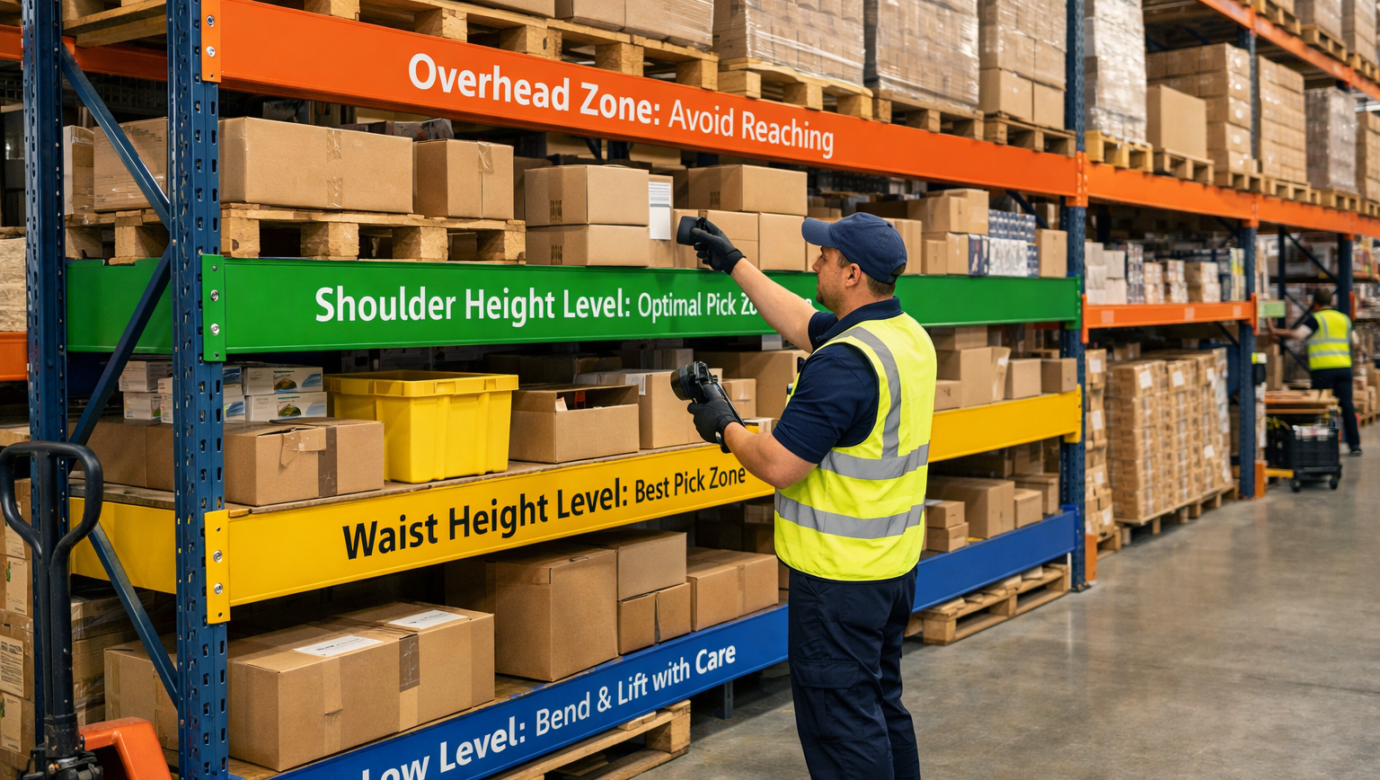
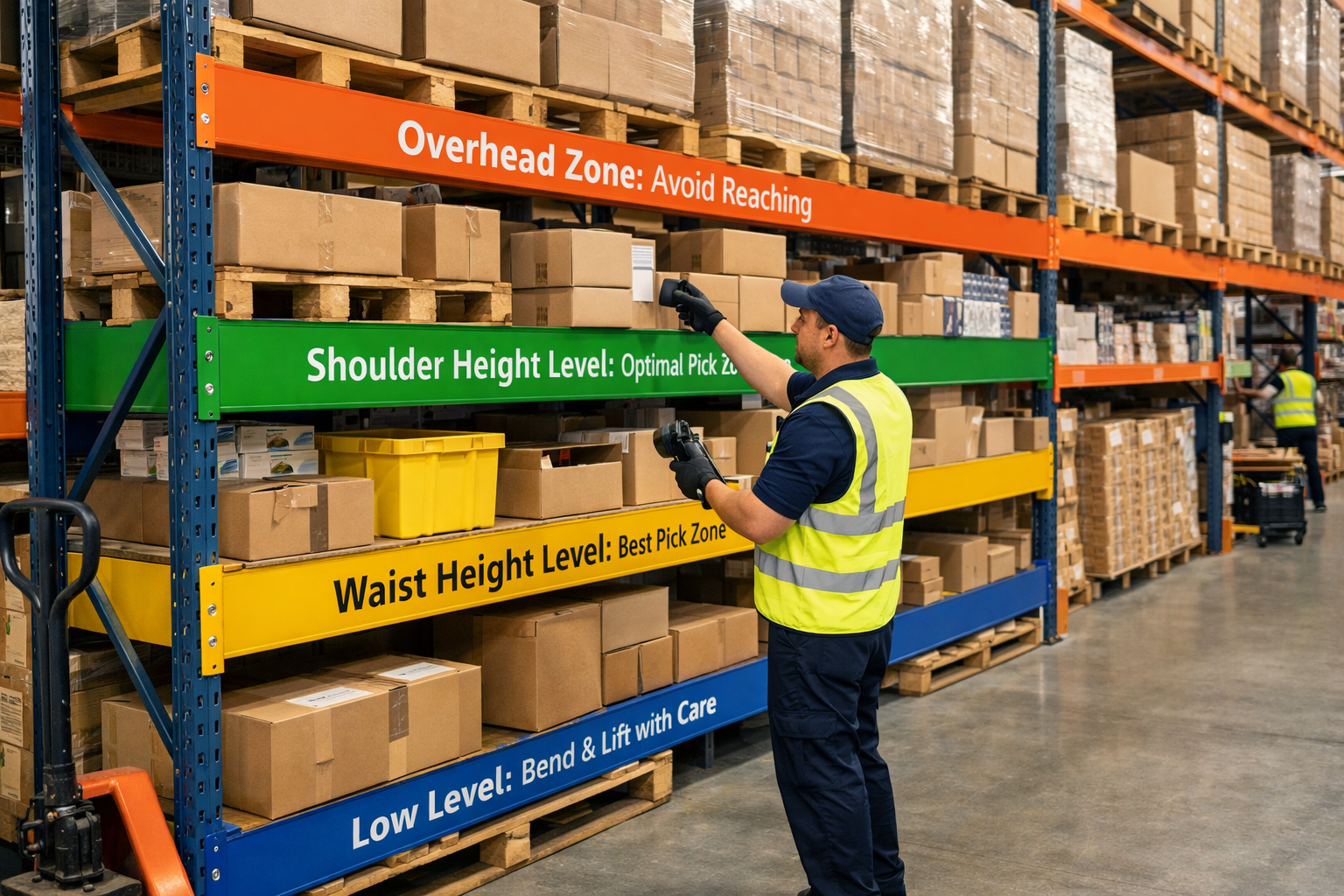
The most critical factor in ergonomic picking zone configuration is pick height. Safety experts commonly identify the optimal picking range as between mid-thigh and shoulder height for the average worker.
Storing fast-moving SKUs within this zone helps reduce:
- Excessive bending
- Shoulder strain from overhead reaching
- Fatigue during long picking shifts
Slower-moving or bulk items are typically assigned to lower or higher rack levels, often with mechanical assistance where required.
Adjusting for Workforce Diversity
Modern warehouses employ workers of varying heights and physical capabilities. Adjustable shelving, modular racking systems, and task rotation strategies are often used to accommodate this diversity while maintaining ergonomic standards.
Reducing Employee Strain Through Smart Rack Design
Aisle Width and Reach Distance
Beyond vertical positioning, horizontal reach plays a major role in employee comfort. Narrow aisles or deep shelves can force awkward body movements, increasing strain over time.
Effective ergonomic rack layouts prioritize:
- Shallow shelf depths for manual picking
- Clear access paths without obstructions
- Consistent aisle widths that support safe movement
Load Weight Distribution
Placing heavier items at waist height reduces the risk associated with lifting and lowering. Lightweight items can be stored at higher levels where occasional reaching is acceptable.
Integrating Ergonomics Into Warehouse Planning
Data-Driven Slotting Decisions
Warehouse management systems increasingly support ergonomic planning by analyzing pick frequency, item weight, and order patterns. This data helps determine which products belong in primary picking zones.
Coordination Between HR and Operations
Ergonomic rack planning is most effective when human resources and operations teams collaborate. Injury data, absenteeism trends, and employee feedback can directly inform layout adjustments.
Compliance and Long-Term Benefits
In many regions, occupational health guidelines recommend or require employers to reduce manual handling risks. While regulations vary, proactive ergonomic improvements often result in measurable benefits, including:
- Lower injury-related downtime
- Reduced workers’ compensation claims
- Improved employee morale and retention
- More consistent picking performance
Key Takeaways
- Ergonomic rack layouts help reduce physical strain in picking-intensive warehouses
- Optimal pick heights fall within a defined “golden zone” for manual handling
- Smart rack configuration supports safety, productivity, and workforce stability
- Data and cross-team collaboration strengthen ergonomic outcomes
FAQs
Ergonomic rack layouts are storage designs that align rack height, shelf depth, and access paths with natural human movement. They aim to reduce physical strain during picking tasks, lower injury risk, and support consistent productivity in manual and semi-automated warehouse operations.
Pick heights determine how often workers must bend or reach overhead. Storing frequently picked items within a comfortable vertical range reduces fatigue and musculoskeletal stress, which helps improve safety, accuracy, and long-term employee well-being.
They minimize repetitive bending, twisting, and overreaching by placing items at appropriate heights and distances. Proper aisle spacing and load distribution further reduce unnecessary physical effort during picking activities.
While requirements vary by region, many occupational health guidelines encourage ergonomic risk reduction. Employers often adopt ergonomic rack layouts proactively to align with safety standards and reduce injury-related costs.
Yes. By reducing fatigue and discomfort, workers can maintain consistent picking speed and accuracy. Over time, ergonomic improvements often lead to fewer disruptions, lower absenteeism, and smoother daily operations.
