Key Certifications to Look for in Racking Products
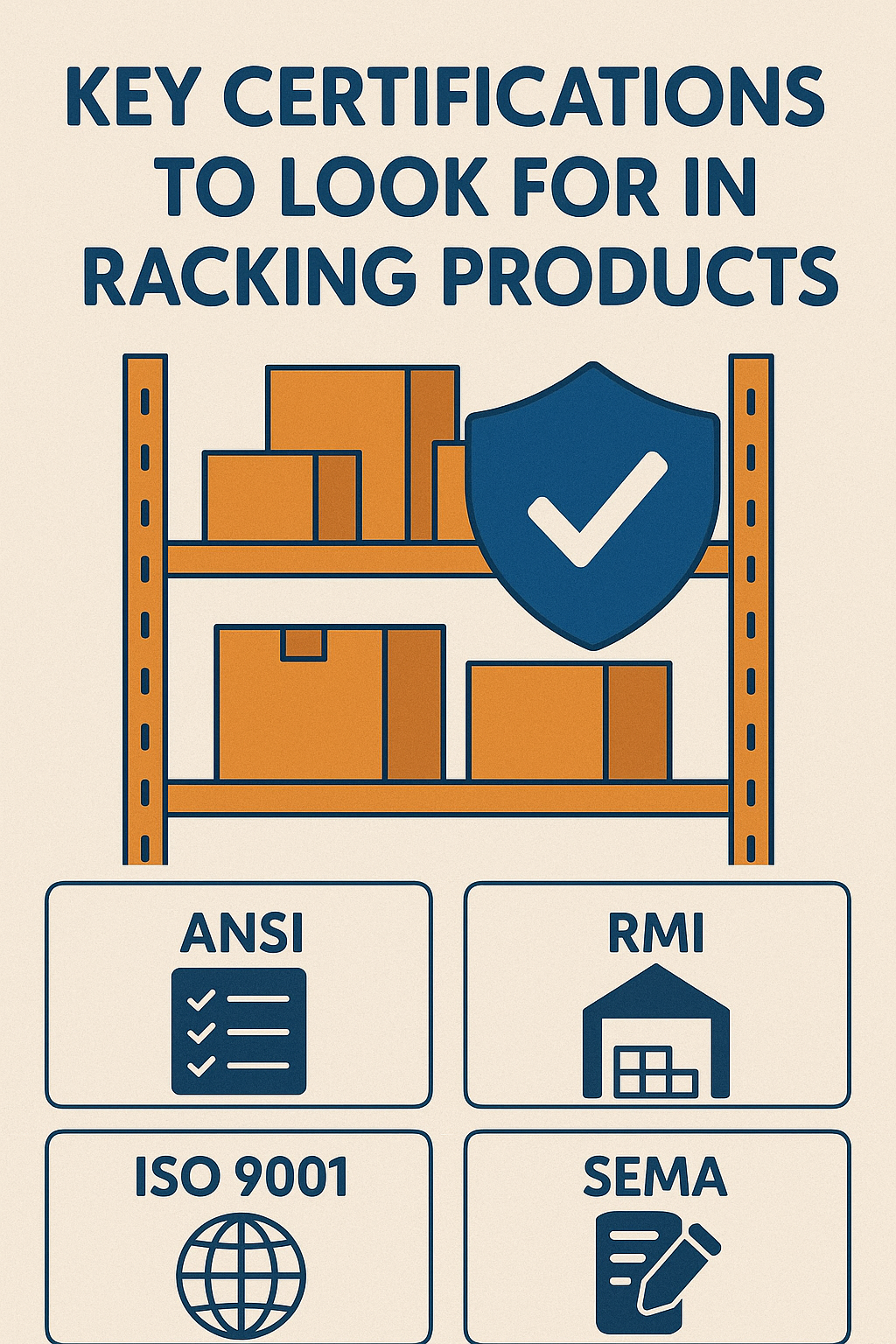
In the world of logistics, warehousing, and material handling, racking systems form the backbone of operational efficiency and safety. Whether you’re outfitting a small inventory room or a multi-tier warehouse, the quality and reliability of your racking products are non-negotiable. That’s where certifications come in — they’re more than just labels. They represent assurance, compliance, and most importantly, safety.
But with dozens of standards and acronyms thrown around, how do you know which certifications actually matter? Here’s a deep dive into the key certifications to look for when evaluating racking products.
1. RMI Certification (Rack Manufacturers Institute)
RMI is one of the most recognized standards for industrial storage racks in North America. An RMI certification ensures that the racking system has been tested according to ANSI MH16.1 standards for design, load capacity, and seismic conditions. It’s a vital certification for anyone operating in regions prone to earthquakes or heavy loads.
✅ Why it matters: Guarantees engineering excellence, load compliance, and seismic safety.
2. ISO 9001: Quality Management Systems
ISO 9001 certification is not racking-specific, but it demonstrates that the manufacturer follows rigorous quality control processes. From raw material selection to post-installation support, ISO 9001-certified suppliers have a documented system that ensures consistency and customer satisfaction.
✅ Why it matters: Ensures product consistency and supplier accountability.
3. CE Marking (EU Compliance)
For companies operating in or importing to the European Union, CE certification is a legal requirement. It shows that the racking system meets EU safety, health, and environmental protection requirements. This is especially critical for systems exposed to heavy loads or public usage.
✅ Why it matters: Legally required in the EU; demonstrates conformity with EU directives.
4. FEM Compliance (European Federation of Materials Handling)
The FEM standards provide guidance for the design, testing, and use of racking and shelving systems across Europe. Compliance with FEM 10.2.02 (static steel storage systems) or FEM 10.2.03 (dynamic storage systems) indicates that the product has undergone strict safety and durability testing.
✅ Why it matters: Recognized benchmark in Europe for high-quality racking engineering.
5. AS4084 (Australian Standard for Steel Storage Racking)
This is the definitive Australian standard for the design, fabrication, and installation of steel racking systems. If you’re sourcing products for the Australian market, AS4084 compliance is essential for legal and insurance purposes.
✅ Why it matters: Local compliance standard; critical for liability protection in Australia.
6. NSF Certification (National Sanitation Foundation)
For food storage facilities or pharmaceutical warehouses, NSF certification ensures that the racking systems are safe for use in hygienic or cleanroom environments. This includes being made from materials that resist corrosion and contamination.
✅ Why it matters: Crucial for health and food safety-related storage applications.
Why Certifications Are Not Optional
While price and load capacity are key considerations, choosing uncertified racking is a gamble. The risks? Collapse under load, injury to staff, costly fines, or even legal repercussions. Certifications act as your insurance policy, proving that the product meets the highest safety and engineering standards.
FAQs
1. What does RMI certification cover?
RMI certification ensures that racking systems meet ANSI MH16.1 standards for design, load rating, and seismic performance.
2. Is ISO 9001 relevant for racking products?
Yes. It confirms the manufacturer follows a globally recognized quality management system, ensuring consistency and traceability.
3. Can I install non-certified racking in my warehouse?
While possible, it’s risky and may violate local safety codes, especially in regulated industries like food and pharmaceuticals.
4. What’s the difference between CE and FEM standards?
CE marking shows legal compliance within the EU, while FEM standards are industry best practices for racking safety and design.
5. Is NSF certification mandatory for food-grade racking?
Not always mandatory, but strongly recommended for compliance with FDA and other health guidelines.
Final Thoughts
In a landscape where operational safety and legal compliance intersect, racking certifications are not just nice to have — they are essential. Whether you’re scaling a startup warehouse or upgrading an enterprise-grade facility, investing in certified racking systems is a smart, future-proof decision.
