
Understanding Seismic Load Requirements in UAE Racking Design
As industrial growth accelerates in the UAE, the design and implementation of warehouse racking systems must meet stringent standards—not only for performance and scalability but also for safety. One of the most critical yet overlooked aspects in warehouse infrastructure is seismic load compliance.
While the UAE is not as seismically active as other global regions, seismic considerations in racking design are still mandated under local and international building codes. Whether you’re designing a logistics hub in Jebel Ali or a storage facility in Abu Dhabi, understanding seismic load requirements is essential to protect inventory, employees, and long-term investments.
What Are Seismic Loads in Racking Systems?
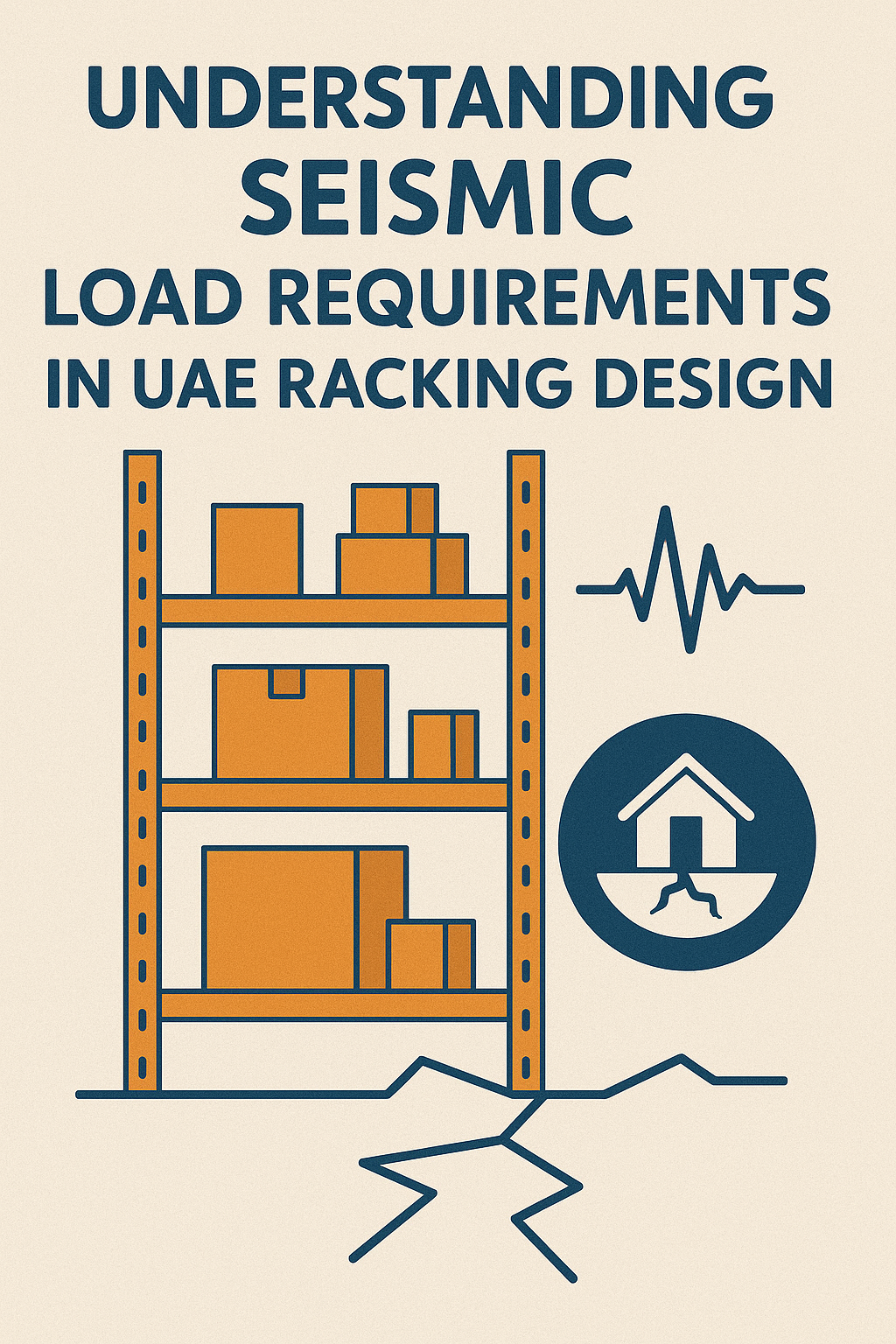
Seismic loads refer to the horizontal and vertical forces a racking system may experience during an earthquake. These forces can cause racks to sway, tilt, or collapse if they aren’t properly anchored or designed. The goal is to ensure that racks can absorb or resist these forces without structural failure.
Why Seismic Compliance Matters in the UAE
While seismic activity in the UAE is generally low, the country falls under seismic zone classifications according to international standards like the UBC (Uniform Building Code) and IBC (International Building Code).
The Emirates Authority for Standardization and Metrology (ESMA) and Dubai Municipality have also adopted these provisions. As such, racking systems—especially tall, heavy-duty industrial structures—must be designed to meet specific seismic load calculations.
Key Factors That Affect Seismic Design in UAE Warehouses
- Soil Type
The soil at the construction site plays a major role in how seismic energy is transmitted. Soft soil amplifies shaking, while rocky ground may dampen it. Soil surveys are critical during planning. - Building Importance Category
Warehouses that store critical inventory, food, or hazardous materials are often subject to higher safety margins. - Rack Height and Load Distribution
Tall, narrow racks or unevenly distributed loads are more vulnerable to collapse during tremors. - Seismic Zone Classification
Even within the UAE, seismic risk varies slightly. Dubai and Fujairah, for instance, are considered more susceptible due to proximity to regional fault lines. - Anchoring and Bracing
Proper anchoring to the slab and cross-bracing are non-negotiables in seismic zones. They prevent racks from tipping or collapsing sideways.
How to Ensure Seismic Safety in Racking Design
1. Conduct a Seismic Risk Assessment
Work with licensed structural engineers to evaluate the building location, usage, and potential seismic risk. A site-specific risk assessment will guide your design decisions.
2. Choose a Racking System Rated for Seismic Loads
Look for racking systems certified under RMI (Rack Manufacturers Institute) or EN 15512, which test for seismic resilience.
✅ Pro Tip: Avoid using non-engineered or imported racking systems without proper seismic certification—they may be cheaper but are far riskier.
3. Implement Professional Installation and Anchoring
No matter how strong a rack is, poor anchoring can make it a hazard. Use heavy-duty anchor bolts and chemical anchors if necessary, as per structural recommendations.
4. Follow Local Compliance Guidelines
Dubai Municipality, Abu Dhabi Civil Defense, and other UAE regulatory bodies provide seismic compliance checklists for industrial buildings. Make sure your supplier or contractor adheres to these.
5. Schedule Regular Audits
Seismic compliance isn’t one-and-done. Have your racking systems audited annually to detect rust, loosened anchors, or structural fatigue.
FAQs
1. Is seismic compliance mandatory for all UAE warehouses?
Yes, particularly for warehouses above a certain size or those storing sensitive or hazardous goods.
2. What happens if my racks aren’t seismic-compliant?
Non-compliance can lead to permit denials, insurance claim issues, or worse—complete rack failure during tremors.
3. Do I need a special engineer for seismic design?
Yes. Hire structural engineers or warehouse design specialists familiar with seismic provisions under IBC or EN 1998 standards.
4. Can older racking systems be retrofitted?
Yes. Retrofitting can include additional anchoring, cross-bracing, or installing shock absorbers depending on the structure.
5. How much more does a seismic-rated system cost?
Expect a 10–20% increase in initial cost, but this is negligible compared to the risk of inventory damage or injury.
Conclusion
Seismic design is more than an engineering checkbox—it’s a safety imperative. As the UAE continues to position itself as a global logistics hub, the infrastructure must rise to international safety and durability standards. For businesses operating in warehousing, logistics, or industrial manufacturing, understanding and implementing seismic load requirements isn’t just smart—it’s the law.
By working with qualified suppliers, investing in compliant systems, and staying updated with regulatory changes, businesses can ensure that their racking structures are built to withstand not just the weight of their inventory—but the unpredictable forces of nature.
