

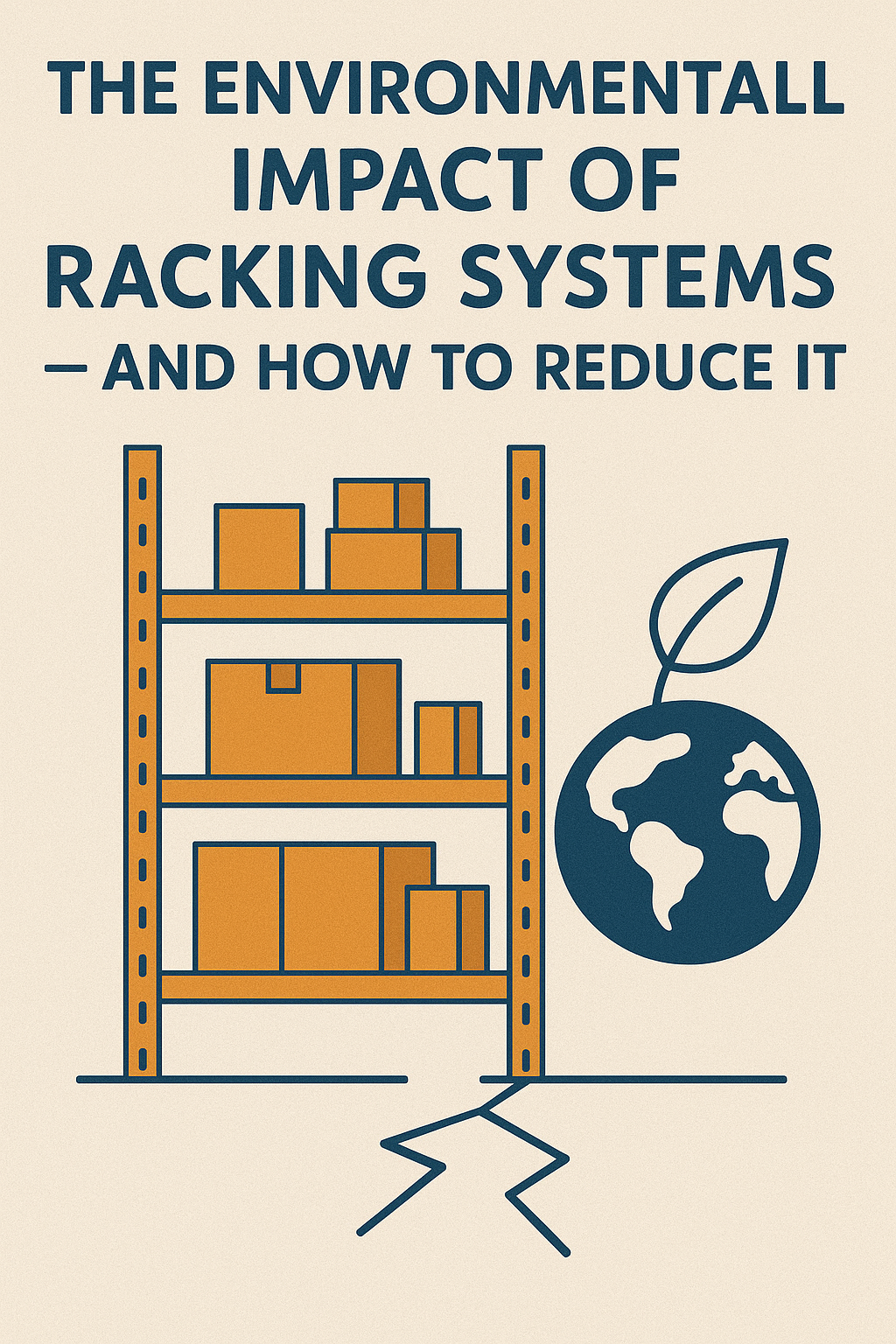
The Environmental Impact of Racking Systems — and How to Reduce It
As supply chains expand and warehouses grow taller, faster, and more complex, one critical factor is often overlooked: the environmental footprint of racking systems. Traditionally viewed as inert storage infrastructure, racking systems actually play a significant role in the sustainability — or lack thereof — of warehouse operations.
From steel production and energy usage to waste generation and recyclability, racking systems impact the environment in more ways than most realize. In today’s climate-conscious business landscape, it’s time for organizations to treat their storage systems not just as cost centers, but as opportunities for eco-innovation.
Let’s explore the hidden environmental costs of traditional racking and how your business can reduce its impact while maintaining efficiency and safety.
What Makes Racking Systems Environmentally Impactful?
Racking systems may appear static, but their manufacturing, maintenance, and end-of-life processes involve substantial environmental resources. Here’s why:
- Steel Production is Carbon-Intensive
Most industrial racks are made from cold-rolled steel, the production of which contributes significantly to CO₂ emissions and energy consumption. - Powder Coatings and Paints May Emit VOCs
Some protective finishes used in racking manufacturing release volatile organic compounds (VOCs), which contribute to indoor air pollution and ozone depletion. - High Transportation Footprint
Shipping bulky racking components over long distances adds to the carbon footprint — especially if they’re sourced internationally. - Short Lifecycle Due to Improper Use or Redesigns
Without long-term planning, companies often replace racks due to layout changes, load mismatches, or expansions, generating waste and unnecessary re-investment. - Difficult-to-Recycle Components
Composite materials, rubber end caps, or plastic labels can make disassembly and recycling more difficult.
How to Reduce the Environmental Impact of Racking Systems
Here’s what progressive businesses are doing to green their warehouse storage:
1. Choose Recycled or Certified Steel
Racking systems made from recycled steel or certified under standards like LEED or ISO 14001 significantly reduce emissions from raw material extraction. Some manufacturers now use up to 80% recycled content in their steel products.
2. Design for Reusability and Modularity
Instead of tearing down racks during layout changes, choose modular designs that allow easy adjustments, extensions, or relocation. This reduces waste and makes scaling operations more sustainable.
3. Source Locally Whenever Possible
Working with local or regional racking providers minimizes emissions from long-haul transport. It also allows for better oversight of sustainability practices in fabrication.
4. Opt for Low-VOC Coatings
Request eco-friendly powder coatings or paints that are free from harmful VOCs. These are safer for warehouse workers and contribute less to environmental degradation.
5. Plan Lifecycle Assessments
Incorporate life cycle analysis (LCA) into your racking procurement process. Understanding the total impact — from raw material to disposal — helps you choose smarter and more sustainable options.
6. Repurpose or Donate Used Racks
When racks are no longer suitable for your facility, consider donation, resale, or refurbishment rather than disposal. Many smaller facilities can benefit from second-hand racking.
7. Implement Smart Warehouse Design
Sustainable racking is part of a bigger picture. Combine smart racking with LED lighting, energy-efficient HVAC, and automated systems to minimize energy use throughout your warehouse.
FAQs
1. Can racking systems be recycled?
Yes, especially those made from pure steel. However, they must be disassembled properly and free from contaminants like plastic or paint coatings.
2. Is there an eco-certification for racking systems?
While there’s no universal “green racking” label, some manufacturers comply with LEED guidelines or maintain ISO 14001 certifications for environmental management.
3. Are there financial benefits to eco-friendly racking?
Absolutely. Long-term cost savings come from energy efficiency, longer rack life, fewer replacements, and potential government incentives.
4. Do sustainable racks perform as well as standard ones?
Yes. Eco-conscious racking systems are engineered to meet the same — or even higher — safety and durability standards as traditional racks.
5. How can I convince stakeholders to invest in green racking?
Highlight the ROI in sustainability, such as long-term cost reduction, brand value, compliance with ESG standards, and alignment with future regulations.
Final Thoughts
In an era of environmental accountability, every element of your operations — including your racking systems — should reflect your brand’s commitment to sustainability. By adopting more thoughtful design, smarter sourcing, and responsible end-of-life planning, you can dramatically reduce the carbon footprint of your warehouse.
Sustainable racking isn’t just about doing less harm. It’s about building smarter, stronger, and greener infrastructure for the future.
