
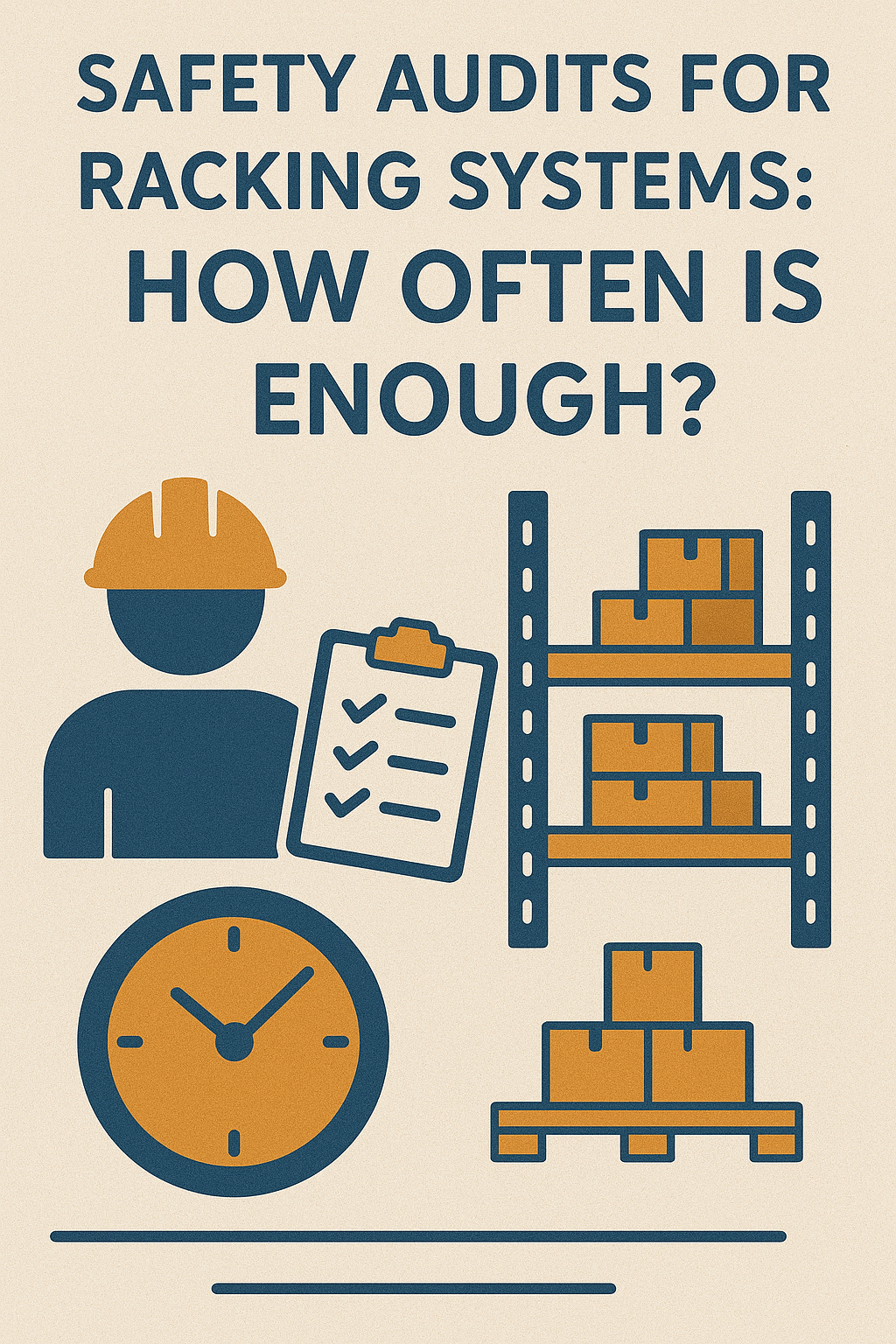
Safety Audits for Racking Systems: How Often is Enough?
In the world of warehousing and logistics, safety is not a luxury — it’s a non-negotiable. Among the many elements that ensure safe operations, racking systems are often overlooked until disaster strikes. These towering steel structures bear immense weight, and even minor damage or instability can trigger catastrophic collapses, endangering lives and disrupting supply chains.
That’s where racking system safety audits come into play. But how often should they be performed? Once a year? After every forklift collision? In this article, we break down the when, why, and how of safety audits — and the real cost of skipping them.
Why Racking Safety Audits Are Essential
Warehouse racking systems are dynamic infrastructures. They’re subjected to:
- Heavy loads
- Frequent forklift interactions
- Environmental changes (humidity, temperature, seismic activity)
- Expansion or layout changes
Over time, this wear and tear leads to:
- Bent uprights
- Misaligned beams
- Overloaded bays
- Missing safety pins or anchoring bolts
If these issues go unchecked, they compromise both worker safety and inventory protection.
📉 According to OSHA and HSE reports, racking failures are responsible for thousands of warehouse injuries annually — most of which are preventable with regular inspections.
How Often Should You Conduct Racking System Audits?
There’s no one-size-fits-all answer — but here’s a breakdown of best practices:
🔁 Daily Visual Checks (In-House)
Who: Trained warehouse staff
What to check: Obvious damage, missing bolts, dislodged beams
Why: Early detection of hazards before they escalate
Tip: Keep a checklist at each aisle or zone
📅 Monthly Walkthrough Audits
Who: Warehouse supervisor or safety officer
What to check: Impact damage, rust, signs of overloading, misalignment
Tool: Use mobile audit apps or paper checklists
Documentation: Record and photograph all findings
Why: Reinforces accountability and maintenance discipline
🛠️ Annual Professional Racking Inspection (Mandatory)
Who: Certified rack safety inspector (e.g., SEMA approved in UK, OSHA-certified in the U.S., or third-party structural engineers in the UAE)
What to expect:
- Load calculations review
- Damage grading (green/yellow/red zones)
- Compliance with local codes (Dubai Municipality, DCD in the UAE)
- Recommendations for replacement or reinforcement
✅ UAE Compliance Note: Annual racking inspections are required by many Dubai free zones and are often mandatory for insurance coverage and DCD approval.
⚠️ After Any Forklift Collision or Major Event
When: Immediately
What to do: Quarantine the affected area, assess visible and hidden damage
Who to involve: In-house safety officer and external inspector if required
Why: Impacts can create invisible structural weaknesses — like hairline cracks or beam fatigue
How to Prepare for a Racking Audit
Preparation ensures accuracy and reduces disruption:
- Maintain up-to-date rack load plans and safety documentation
- Label all racking zones clearly
- Train staff to report and tag damage
- Keep past audit reports organized for trend analysis
A well-prepared audit also reflects positively during insurance or authority inspections.
What Happens If You Skip Regular Audits?
- Legal Liability: In case of injury, lack of audits could place full responsibility on the warehouse operator.
- Insurance Issues: Claims may be denied if safety documentation is outdated.
- Inventory Loss: Rack collapses often destroy goods worth tens or hundreds of thousands of dollars.
- Reputation Damage: Brands seen as neglecting safety may lose B2B partnerships.
FAQs: Safety Audits for Racking Systems
1. Who is qualified to conduct a professional racking audit?
A certified rack inspector or structural engineer with expertise in storage systems and local safety codes.
2. Are there international standards for rack inspections?
Yes. Standards like SEMA (UK), RMI (U.S.), and FEM (Europe) provide global frameworks. In the UAE, inspections must comply with Dubai Municipality and DCD regulations.
3. How long does a professional audit take?
For a mid-sized warehouse (10,000–50,000 sq ft), typically 1–2 days, depending on complexity.
4. Can racking inspections be automated with technology?
Partially. Drones and AI-based scanners can identify physical damage, but human expertise is still essential for structural assessment and compliance verification.
5. How much does a professional racking audit cost?
Costs range from $500 to $2,500, depending on warehouse size, number of racks, and the auditor’s credentials.
Conclusion: Safety Is a System, Not a One-Time Task
Your racking systems are the silent backbone of your warehouse. Treating their safety as an afterthought is a risk no modern logistics operation can afford. By implementing a structured audit schedule — from daily checks to yearly inspections — you ensure not only compliance and safety, but also operational continuity and peace of mind.
