
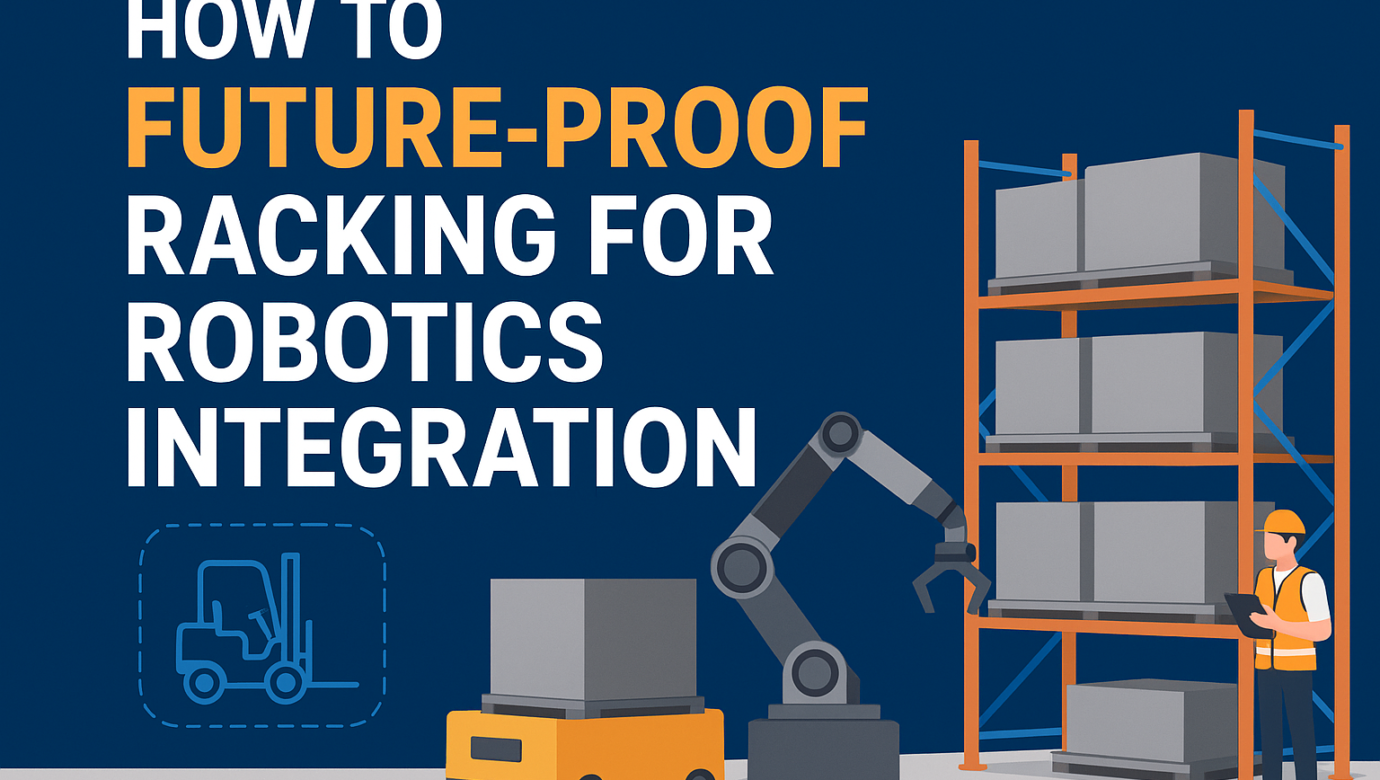
How to Future Proof Racking for Robotics Integration

The global warehouse automation market is projected to surpass $69 billion by 2028, and robotics will be at the core of this growth. While software and robots get most of the attention, the physical racking systems in your warehouse play an equally critical role.
Poorly designed racks can limit robot efficiency, cause integration issues, or require costly retrofits later. By adopting robotics warehouse racking principles now, you can future-proof your facility for smooth automation transitions.
1. What is Robotics Warehouse Racking?
Robotics warehouse racking refers to storage systems designed or adapted to work seamlessly with automated equipment like:
- Autonomous Mobile Robots (AMRs)
- Automated Guided Vehicles (AGVs)
- Automated Storage and Retrieval Systems (AS/RS)
- Robotic Picking Arms
Key differences from traditional racking:
- Optimized pick-face design for robotic grippers.
- Precise aisle widths for autonomous navigation.
- Height calibration for robotic reach.
- Sensor-friendly structure for obstacle detection.
2. Why Future-Proof Racking Now?
2.1 Avoid Costly Retrofits
Retrofitting racks for robotics later can be 3–5 times more expensive than building them automation-ready from the start.
2.2 Stay Competitive
UAE and GCC e-commerce growth demands faster fulfillment robotics integration can cut order cycle times by up to 50%.
2.3 Increase Asset Lifespan
Robot-compatible racking designs are more precise, durable, and resistant to wear from automation hardware.
3. Core Design Considerations for Robot-Compatible Racking
3.1 Standardized Dimensions
Ensure rack spacing aligns with robot reach parameters and sensor detection zones.
3.2 Load Consistency
Robots perform best with predictable load weights and sizes avoid mixed pallets on the same level.
3.3 Floor & Pathway Readiness
Flat, debris-free floors ensure AGVs and AMRs navigate without downtime.
3.4 Sensor Accessibility
Avoid overhanging beams or dark storage areas that can interfere with machine vision.
4. Types of Racking Suitable for Robotics
| Racking Type | Best For | Robotics Integration Advantage |
|---|---|---|
| Pallet Shuttle Racking | High-density storage | Compatible with shuttle robots |
| VNA (Very Narrow Aisle) Racking | Space optimization | Works with automated turret trucks |
| Mobile Racking | Cold storage or high-value goods | AGV-compatible for dynamic layouts |
| Carton Flow Racking | Small-item picking | Supports goods-to-person robots |
5. Steps to Future-Proof Your Warehouse Racking
- Audit Current Layout – Identify rack types, dimensions, and load ratings.
- Define Robotics Goals – Picking, pallet transport, or full AS/RS?
- Consult with Automation Engineers – Match racks to robot specs.
- Upgrade in Phases – Begin with critical zones like fast-moving SKUs.
- Plan for Scalability – Keep expansion and technology upgrades in mind.
6. Common Mistakes to Avoid
- Designing racks without considering future automation clearances.
- Over-customizing rack dimensions that limit vendor flexibility.
- Ignoring power and data cable routing for robotics systems.
- Neglecting safety measures like emergency stops and fencing.
7. Case Study: GCC Logistics Company
A Dubai-based logistics provider pre-emptively invested in robotics warehouse racking before installing AMRs.
Result:
- Reduced installation time by 40%
- Zero downtime during robot deployment
- Increased picking speed by 32%
8. The Future of Robotics-Compatible Racking
- AI-driven slotting integration with rack layouts.
- Dynamic rack height adjustment for multi-size SKU handling.
- Robotic maintenance drones for rack inspection and repair.
FAQs
Q1: Can existing racks be adapted for robotics?
Yes, but modifications like adjusting beam heights, adding sensors, and widening aisles may be needed.
Q2: Are all robots compatible with all racking types?
No, compatibility depends on robot design, load capacity, and navigation system.
Q3: What’s the best racking type for cold storage automation?
Mobile racking paired with AGVs offers flexibility and temperature efficiency.
Q4: How do I prepare my warehouse for both human and robot operations?
Design hybrid zones — wide aisles for forklifts, narrow for AMRs, with clear signage and barriers.
Q5: What’s the ROI for investing in robot-compatible racking?
ROI varies, but many warehouses see payback within 3–5 years from labor savings and higher throughput.
