
How Augmented Reality (AR) is Used in Racking Inspections
Warehouse operations in the UAE are evolving at an unprecedented pace. From automation to AI-driven logistics, technology continues to redefine how efficiency and safety are achieved. Among these innovations, Augmented Reality (AR) has emerged as a transformative tool especially in racking inspections.
For businesses handling large-scale storage systems, safety inspections are critical. Traditional inspection methods, while reliable, are often time-consuming, manual, and prone to human error. This is where AR-powered inspections are revolutionizing the process combining real-time data visualization, precision, and safety insights like never before.
In this article, we explore how AR is transforming racking inspections, its benefits for UAE warehouses, use cases, and the future of AR in the logistics industry.
1. Understanding AR in the Context of Racking Inspections
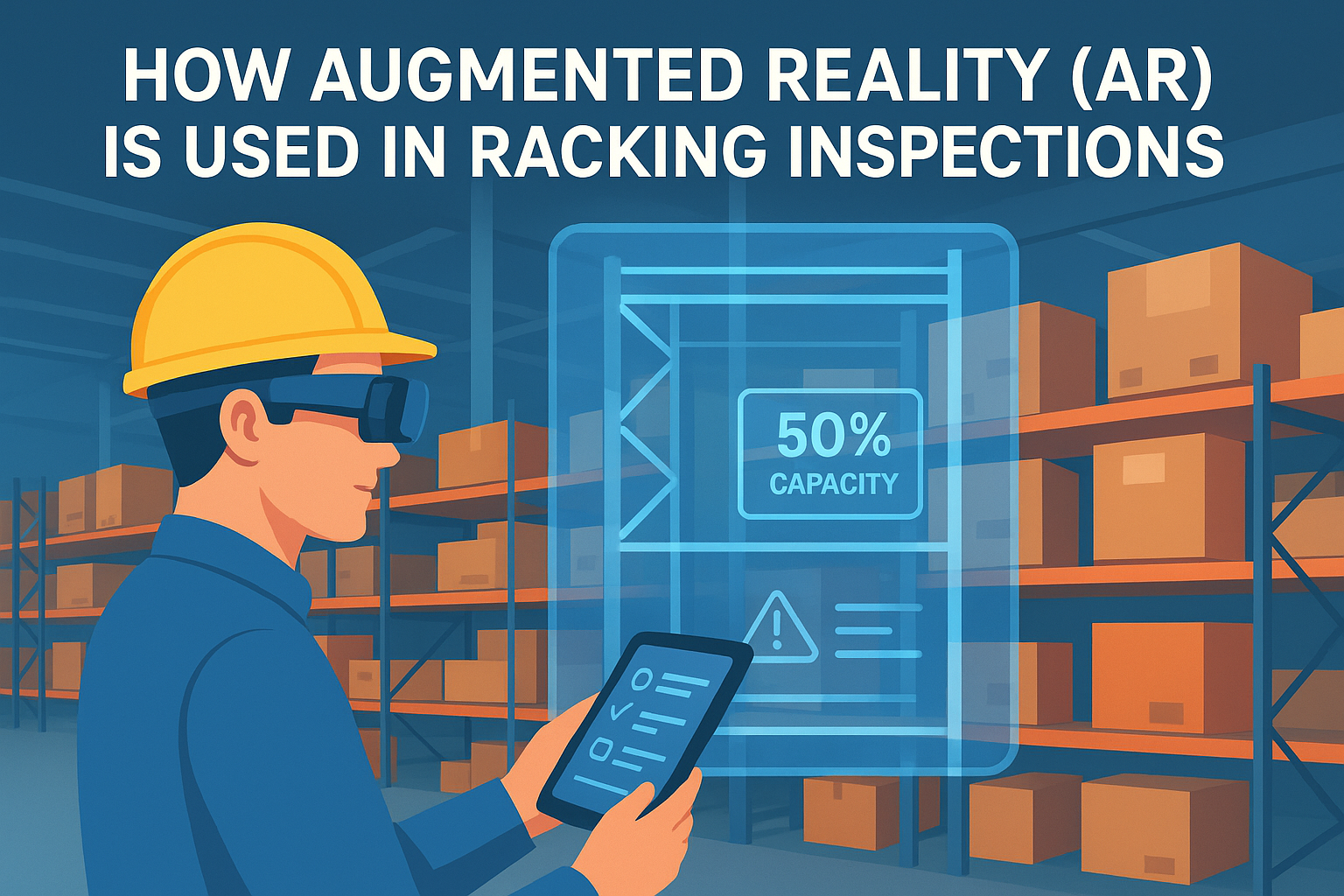
Augmented Reality (AR) overlays digital information onto the real world through devices like smart glasses, tablets, or mobile apps. In warehouse management, AR enables inspectors to see digital data such as rack load limits, maintenance records, and structural alerts — directly overlaid onto the actual racking systems.
In simple terms, AR acts as a digital assistant that helps warehouse managers identify safety issues, log data, and visualize repair needs all in real-time.
Example:
Imagine walking through a warehouse in Dubai with AR smart glasses. As you look at a pallet rack, the AR display highlights:
- Load-bearing capacity
- Date of the last inspection
- Areas showing signs of corrosion or misalignment
- Instant checklist for compliance
This eliminates guesswork and ensures 100% accuracy in racking maintenance.
2. The Traditional Challenges in Racking Inspections
Before AR integration, racking inspections often involved:
- Manual data recording on paper or spreadsheets
- Limited visibility into historical data
- Difficulty accessing hard-to-reach rack areas
- Time delays in reporting and maintenance scheduling
These issues led to inconsistent inspections, higher risks of accidents, and non-compliance with warehouse safety standards.
Given the UAE’s rapid industrial growth and the government’s focus on smart logistics and workplace safety, companies are now turning to AR-based solutions for better visibility and control.
3. How AR Enhances Racking Inspections
Here’s how AR technology revolutionizes the inspection workflow:
a. Real-Time Data Visualization
AR displays racking data on the spot inspectors can instantly see load limits, rack conditions, and maintenance history. This visual overlay reduces inspection time by up to 40%.
b. Digital Checklists and Compliance
Instead of manual paperwork, AR tools generate interactive checklists. Inspectors can verify each rack segment, capture photos, and upload reports to a cloud dashboard in seconds.
c. Automated Fault Detection
AR integrated with AI and IoT sensors can automatically detect:
- Rack misalignments
- Damaged beams or uprights
- Temperature fluctuations in cold storage areas
- Unbalanced pallet loads
This predictive capability prevents potential collapses before they happen.
d. Hands-Free Operations
With AR headsets or smart glasses, inspectors can work hands-free. This is especially beneficial for high-rack systems or large warehouses, where mobility and visibility are crucial.
e. Improved Safety and Training
AR can simulate hazard zones, display safety alerts, and guide new employees through virtual training modules enhancing both knowledge retention and workplace safety.
4. AR Integration in UAE Warehouses
UAE’s logistics and warehousing sector particularly in Dubai Industrial City, Jebel Ali Free Zone (JAFZA), and Abu Dhabi’s KIZAD has seen rapid adoption of digital warehousing technologies.
Companies are integrating AR-based inspection software with their existing Warehouse Management Systems (WMS) for better efficiency. Examples include:
- AR-powered inspection apps for maintenance teams
- Digital twins of warehouse layouts for real-time monitoring
- Remote collaboration tools that allow off-site supervisors to inspect racks virtually
This transformation aligns with the UAE’s Vision 2031 initiative, which emphasizes smart technology adoption in logistics to enhance safety, efficiency, and sustainability.
5. Benefits of AR-Powered Racking Inspections
Let’s break down the major advantages of implementing AR in warehouse inspections:
| Benefit | Impact |
|---|---|
| Higher Accuracy | Minimizes human error through automated data capture |
| Faster Inspections | Reduces inspection time by 30–50% |
| Enhanced Safety | Identifies hazards instantly |
| Predictive Maintenance | Prevents costly rack failures |
| Data Transparency | Cloud reports accessible to all departments |
| Regulatory Compliance | Simplifies alignment with UAE safety standards |
| Lower Operational Costs | Cuts down manual reporting and downtime |
6. Case Study: AR Racking Inspections in Dubai
Scenario:
A logistics provider in Dubai South Free Zone implemented AR-powered racking inspections across its 250,000 sq. ft warehouse.
Results after 6 months:
- Inspection time reduced from 5 days to 2 days
- Defect identification accuracy improved by 45%
- Safety incidents decreased by 28%
- ROI achieved within 9 months due to reduced downtime and faster maintenance scheduling
This case clearly demonstrates the potential of AR to elevate warehouse performance while maintaining world-class safety standards.
7. Tools and Technologies Used in AR Racking Inspections
Popular AR platforms and tools used for warehouse inspection include:
- Microsoft HoloLens 2 – for interactive visualization and field operations
- PTC Vuforia – for AR-based maintenance and training
- TeamViewer Frontline – remote inspection and collaboration
- Scope AR – enterprise-grade AR for manufacturing and logistics
- Custom AR apps – built for warehouse-specific racking layouts
Integration with IoT sensors, AI analytics, and cloud dashboards makes these solutions ideal for UAE-based logistics operations.
8. Implementation Guide: How UAE Businesses Can Adopt AR Inspections
Step 1: Assess Inspection Needs
Identify critical areas of your warehouse that face frequent inspection challenges such as cold storage racks or high-bay systems.
Step 2: Choose the Right AR Solution
Select a scalable AR platform that integrates with your existing WMS or ERP systems.
Step 3: Train Your Inspection Team
Invest in hands-on AR training. This ensures smooth adoption and safety compliance.
Step 4: Pilot and Measure
Start with a pilot project in one section of the warehouse. Monitor improvements in time, accuracy, and safety.
Step 5: Scale Up
After successful pilot testing, roll out AR inspections across all warehouse zones.
9. Future of AR in Warehouse Safety and Inspections
The future of warehouse management in the UAE is data-driven and immersive. With AR, AI, and IoT convergence, racking inspections will evolve into predictive, automated, and self-learning systems.
Emerging trends include:
- Digital twins of warehouses for real-time 3D inspection
- AR-assisted drones for high-rack evaluations
- Voice-guided AR checklists for maintenance staff
- Integration with robotics for autonomous inspections
By 2030, most large-scale UAE warehouses are expected to completely digitize inspection and safety operations using AR-based ecosystems.
10. Why UAE Businesses Should Invest Now
With the UAE’s logistics market projected to surpass USD 30 billion by 2027, early adopters of AR inspection technology gain a strategic advantage.
Benefits include:
- Reduced operational downtime
- Improved customer trust through consistent safety records
- Easier compliance with Dubai Municipality and Civil Defense regulations
Simply put, AR is not just an innovation it’s becoming a necessity for modern warehouse operations.
Augmented Reality is redefining the future of racking inspections in UAE warehouses. By enabling real-time visibility, predictive maintenance, and data-driven decisions, AR empowers businesses to achieve the highest levels of efficiency and safety.
As warehouses grow smarter and supply chains more complex, AR-based inspections are set to become the gold standard for warehouse safety management in the UAE.
Frequently Asked Questions (FAQs)
1. What is AR in racking inspections?
AR (Augmented Reality) overlays digital data onto real-world racking systems, allowing inspectors to visualize issues, record data, and enhance accuracy during warehouse inspections.
2. How does AR improve warehouse safety?
AR detects structural defects, displays load data, and provides visual alerts, reducing accident risks and ensuring compliance with safety standards.
3. Is AR inspection expensive to implement?
Initial setup costs may be higher, but AR drastically reduces long-term expenses through improved efficiency, reduced downtime, and fewer safety incidents.
4. Can AR integrate with my existing WMS?
Yes. Most AR inspection systems integrate seamlessly with Warehouse Management Systems and ERP tools to synchronize inspection data and reports.
5. Are AR inspections suitable for all warehouse types?
Absolutely. AR technology benefits cold storage, retail distribution, e-commerce, and industrial racking systems making it adaptable for any storage environment.
