

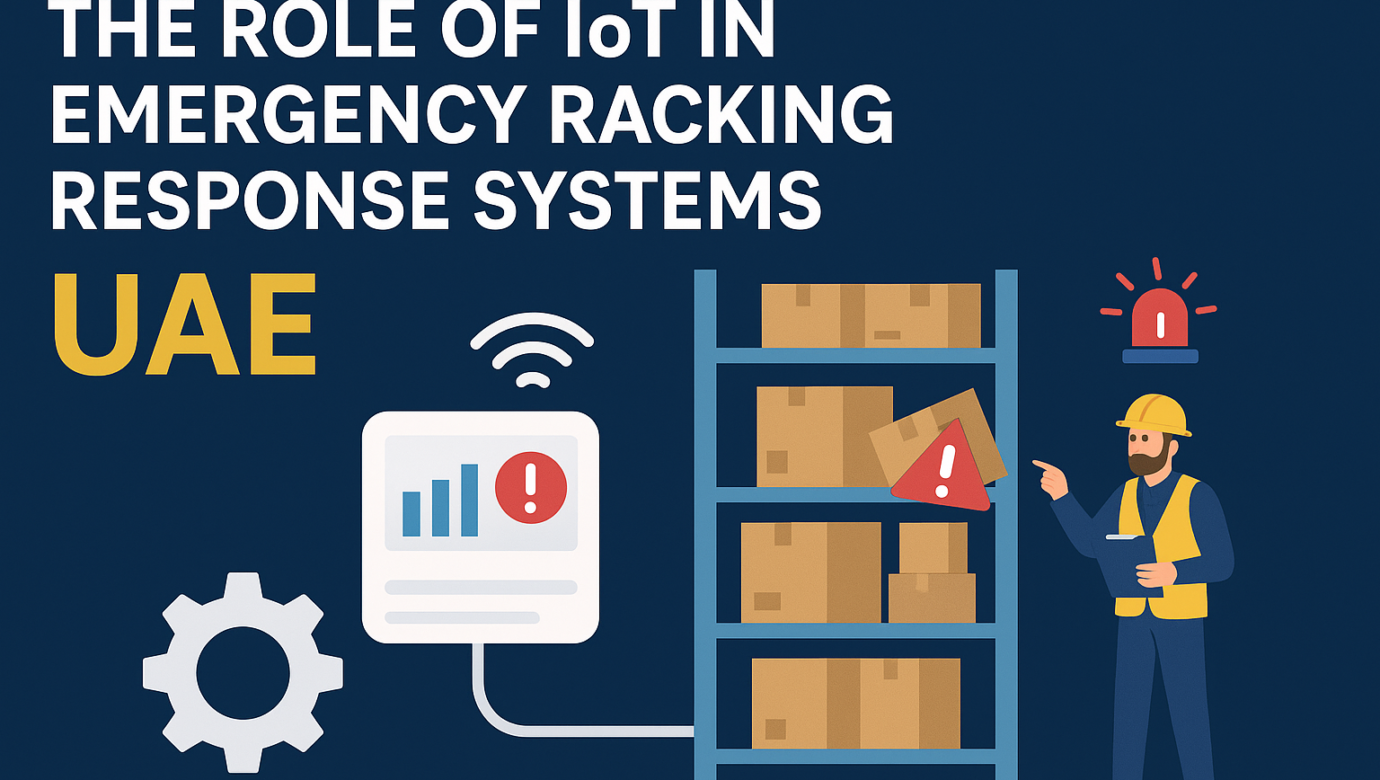
The Role of IoT in Emergency Racking Response Systems
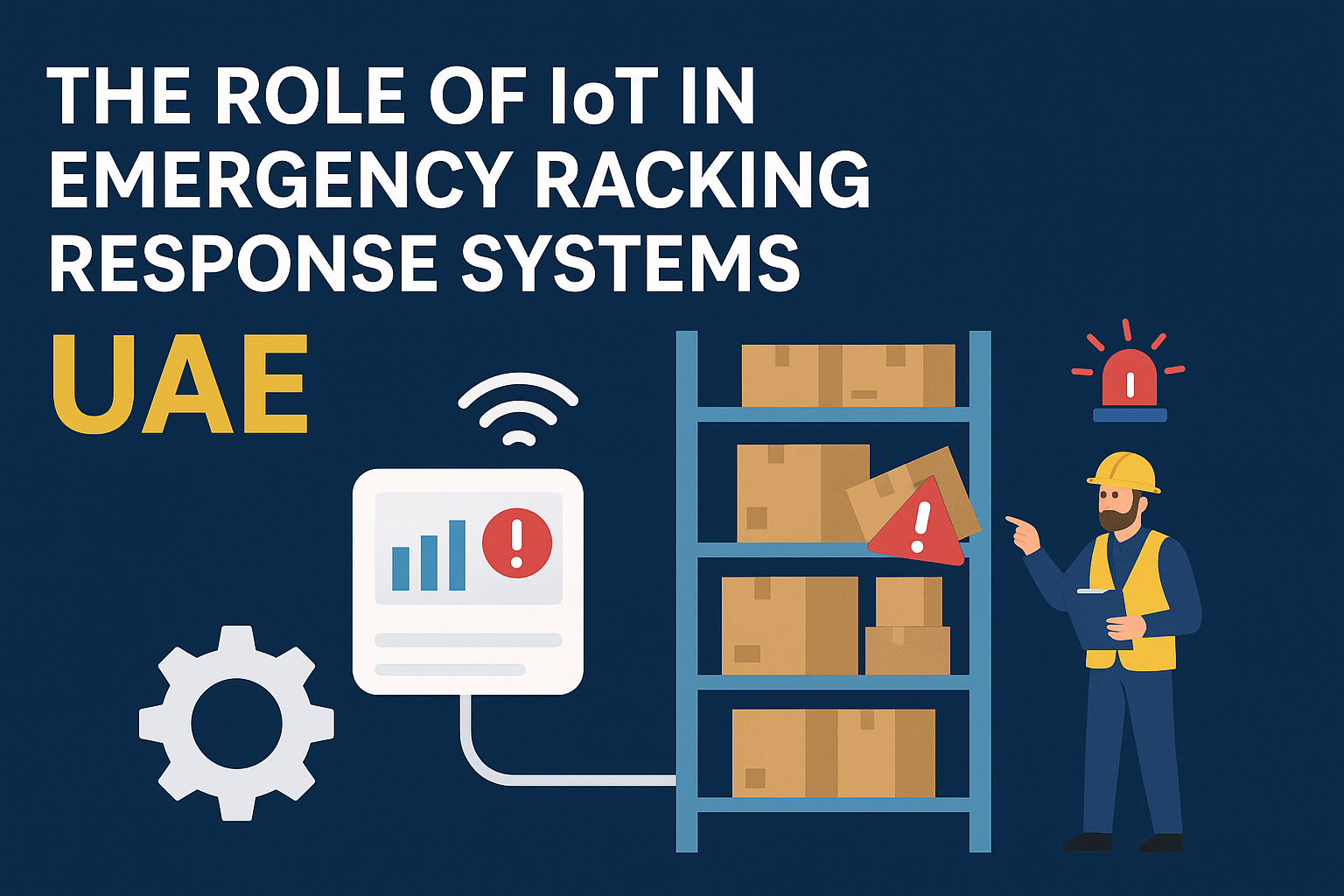
The Future of Warehouse Safety Lies in IoT
In today’s fast-evolving logistics landscape, warehouse safety has become a top priority across the UAE’s booming industrial sector. As e-commerce, cold storage, and retail logistics continue to expand, the need for real-time monitoring of racking systems is growing rapidly.
This is where the Internet of Things (IoT) steps in, transforming how companies detect, respond to, and prevent racking emergencies.
IoT-based emergency racking response systems integrate sensors, data analytics, and automation to ensure instant detection of potential rack failures and immediate alert systems for safety teams. In a market like the UAE, known for its stringent warehouse regulations and advanced logistics infrastructure, IoT is becoming an operational necessity.
1. Understanding Racking Emergencies in Modern Warehouses
Before exploring IoT’s role, it’s essential to understand the root causes of racking emergencies and their impact on warehouse operations.
Common Causes of Racking System Failures
- Overloading: Exceeding the load-bearing limit leads to structural fatigue.
- Improper installation: Misalignment or uneven flooring increases instability.
- Forklift collisions: One of the leading causes of racking collapses in UAE warehouses.
- Corrosion and wear: Environmental factors like humidity in coastal areas such as Dubai and Sharjah can weaken metal components.
- Neglected inspections: Without regular maintenance, small cracks can evolve into major hazards.
Consequences of Racking Emergencies
- Employee injuries and fatalities
- Loss of goods and inventory
- Disruption of supply chain operations
- Insurance liabilities and reputational damage
These risks have prompted warehouse operators in the UAE to seek smarter, faster, and more reliable monitoring systems, pushing IoT adoption to the forefront of industrial safety.
2. How IoT is Revolutionizing Racking Safety Systems
The Internet of Things connects physical warehouse components such as racks, forklifts, and pallets through sensors, connectivity modules, and analytics platforms.
IoT’s integration into warehouse racking brings real-time visibility and predictive emergency response capabilities that were impossible with manual systems.
IoT Components in Emergency Racking Systems
- Smart Sensors: Measure vibration, tilt, temperature, and structural strain on racks.
- Connectivity Modules: Transmit sensor data to a centralized monitoring dashboard via Wi-Fi or 5G.
- Analytics Platforms: Use AI algorithms to identify abnormal readings and predict potential failures.
- Automated Alerts: Notify warehouse supervisors or safety managers instantly through mobile apps or smart devices.
Real-Time Monitoring and Alerts
IoT-enabled racking systems continuously track the integrity and stability of every rack beam and column. If any sensor detects unusual stress or vibration, an alert is sent immediately to maintenance personnel. This allows for instant action, reducing downtime, preventing collapse, and saving lives.
3. Predictive Maintenance: Preventing Disasters Before They Happen
Traditional racking maintenance relies on scheduled inspections, often quarterly or biannually. However, these checks might miss the subtle signs of structural wear that occur between inspections.
IoT brings a predictive maintenance model where AI algorithms process live sensor data to:
- Predict when and where a rack might fail
- Schedule maintenance only when needed
- Prioritize high-risk zones within the warehouse
This data-driven approach not only improves safety but also reduces maintenance costs by up to 40%, according to industry estimates.
4. IoT in Emergency Response: A Game-Changer for UAE Warehouses
In the UAE, where warehouse automation is advancing rapidly under initiatives like Dubai Industrial Strategy 2030, IoT-based emergency systems are key to achieving zero-incident operations.
Key Benefits in the UAE Context
- Instant Response: IoT sensors can trigger automatic safety shutdowns and activate alarms in case of rack instability.
- Integration with Fire & Safety Systems: IoT platforms can communicate with fire suppression systems and emergency evacuation alarms, providing a synchronized response.
- Regulatory Compliance: The UAE’s growing focus on smart infrastructure encourages IoT implementation for safety compliance and certification.
- Energy Efficiency: IoT systems often tie into energy management, helping warehouses optimize both safety and operational costs.
Example Use Case: Dubai Free Zone Warehouses
A logistics operator in Jebel Ali Free Zone (JAFZA) implemented IoT-enabled racking with integrated vibration sensors. Within the first six months, the system detected two minor rack deformations before failure occurred, preventing potential losses worth over AED 500,000.
5. The Technology Behind IoT Emergency Racking Systems
Let’s dive deeper into the technical framework that powers these smart safety systems.
A. Sensor Types
- Strain Gauges: Measure tension and compression forces on beams.
- Accelerometers: Detect abnormal vibrations or impacts.
- Tilt Sensors: Identify rack misalignment or uneven settling.
- Load Sensors: Ensure weight distribution remains within safe limits.
B. Communication Protocols
IoT systems in UAE warehouses commonly use:
- LoRaWAN: For long-range, low-power communication.
- NB-IoT: For secure, reliable connectivity within industrial zones.
- 5G Networks: For real-time monitoring and ultra-low latency data transmission.
C. Data Analytics Layer
Once data is collected, it’s analyzed by machine learning algorithms that can:
- Classify stress levels (normal, warning, critical)
- Generate predictive failure models
- Recommend immediate maintenance actions via dashboards
6. Integration with Warehouse Management Systems (WMS)
IoT racking systems don’t work in isolation. They integrate with Warehouse Management Systems (WMS) to create a unified digital ecosystem.
This integration enables:
- Automated work orders when a rack issue is detected
- Real-time inventory relocation to prevent product damage
- Enhanced traceability for compliance audits
For large-scale logistics hubs in Abu Dhabi or Dubai South, this synergy between IoT and WMS ensures seamless safety operations.
7. Economic and Safety ROI of IoT-Enabled Racking
While IoT integration may initially seem costly, the long-term ROI is significant.
Financial Benefits
- Reduced equipment downtime
- Lower maintenance and inspection costs
- Minimized accident-related losses
- Extended rack lifespan
Safety Benefits
- Faster emergency response times
- Lower employee injury rates
- Enhanced regulatory compliance
- Improved operational confidence
IoT-driven safety isn’t just a compliance measure; it’s a strategic investment for long-term profitability.
8. Challenges and Considerations
Despite its benefits, implementing IoT for emergency racking requires addressing certain challenges:
- Data Security: Protecting real-time warehouse data from cyber threats.
- System Integration: Compatibility with legacy warehouse systems.
- Initial Costs: High setup cost for small-scale facilities.
- Skill Gap: Need for trained IoT engineers and technicians.
To overcome these hurdles, UAE companies are increasingly turning to specialized industrial IoT service providers who offer end-to-end setup, monitoring, and training.
9. The Future of IoT Racking in the UAE
The UAE’s Vision 2031 emphasizes technology-driven infrastructure, and IoT is set to become standard in warehouse design.
Emerging trends include:
- AI-powered anomaly detection for faster predictive alerts
- Digital twins of warehouse structures for virtual safety simulations
- Integration with robotics for automatic damage inspection
- Blockchain traceability for maintenance records and incident reporting
By 2030, the majority of UAE logistics hubs are expected to adopt fully connected smart racking systems, ensuring safety, efficiency, and sustainability.
IoT as the Backbone of Safe, Smart Warehousing in the UAE
As warehouses grow taller, faster, and more automated, the role of IoT in emergency racking response becomes indispensable. From predictive maintenance to real-time alerts, IoT ensures every rack in your facility is continuously monitored, safeguarding both assets and lives.
For warehouse operators in the UAE, embracing IoT racking systems isn’t just about modernization; it’s about building a future-ready, safety-first supply chain.
FAQs About IoT Racking Emergency Systems in the UAE
1. What is an IoT-based racking emergency system?
It’s a network of sensors and software that monitors rack stability in real time, detecting potential structural issues and sending instant alerts for preventive action.
2. How does IoT improve warehouse safety in the UAE?
IoT enables continuous monitoring, predictive maintenance, and automated alerts, aligning with UAE’s smart industry and warehouse safety standards.
3. Can IoT systems prevent racking collapses entirely?
While no system can guarantee zero failures, IoT drastically reduces risk by predicting and addressing problems before they escalate.
4. Is IoT integration costly for smaller UAE warehouses?
Initial costs exist, but modular systems and local IoT providers now offer affordable packages suitable for smaller operations.
5. How does IoT support compliance with UAE warehouse regulations?
IoT ensures digital record-keeping of inspections, real-time safety monitoring, and automated compliance reporting for regulatory audits.
