
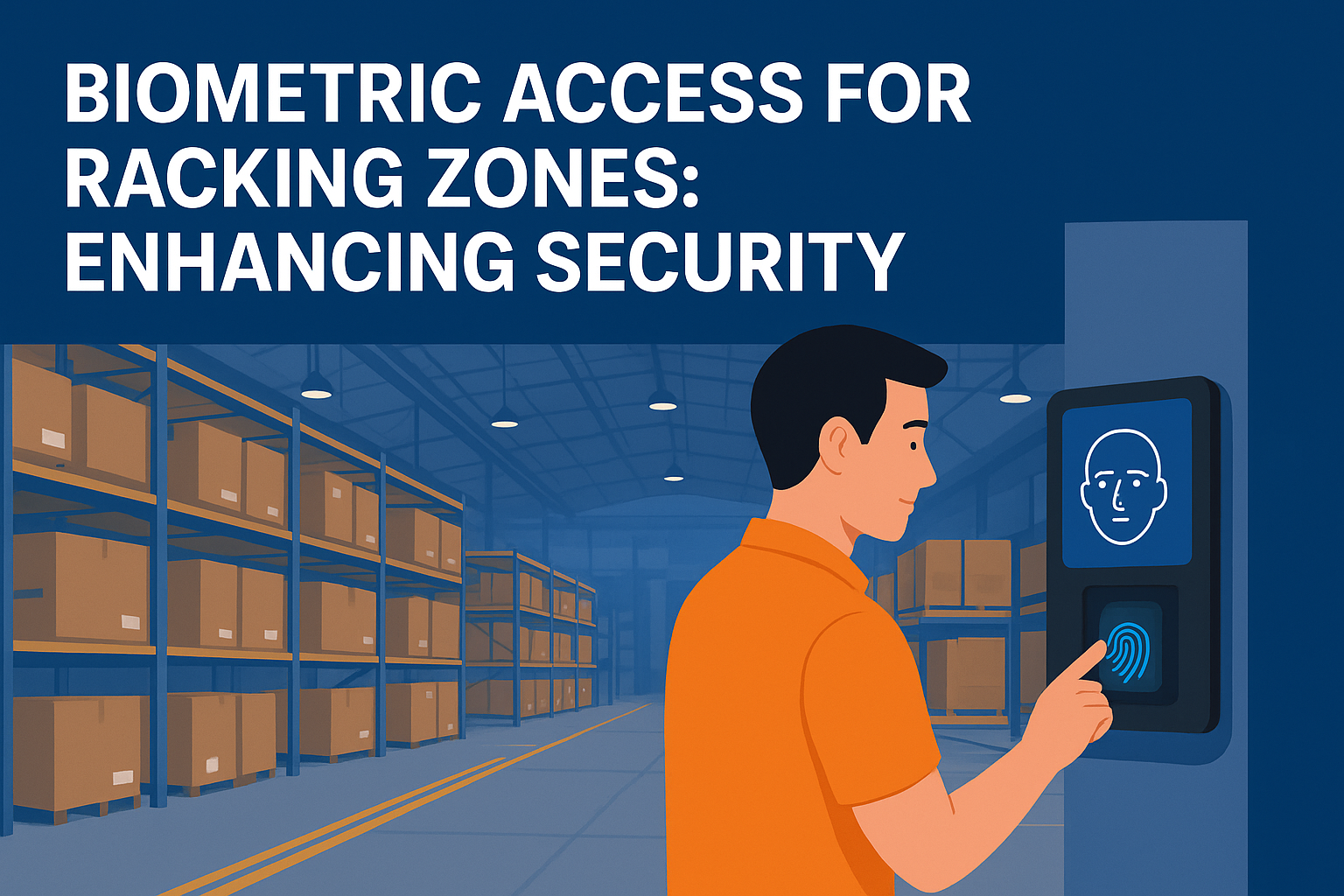
Warehousing in the UAE has evolved beyond simple storage spaces into high-tech operational hubs that rely on automation, AI, and precision control. As businesses deal with increasingly valuable goods and sensitive supply chains, warehouse security has become a top priority. Among the advanced technologies shaping the future of secure logistics, biometric access systems are taking center stage.
In particular, biometric access for racking zones is revolutionizing how warehouses manage personnel movement, protect valuable inventory, and maintain compliance with safety and operational standards. This technology ensures that only authorized staff can access specific storage areas, creating a secure, trackable, and efficient warehouse environment.
This article explores how biometric racking security in UAE warehouses is enhancing control, minimizing theft, and ensuring accountability in an industry where precision and safety are non-negotiable.
1. Understanding Biometric Security in Warehousing
Biometric security refers to systems that use unique biological traits—such as fingerprints, facial recognition, or iris scans—to verify identity. Unlike keycards or passwords, which can be stolen or shared, biometric credentials are inherently tied to the individual, making them much more secure and reliable.
In a warehouse setting, biometrics are used for:
- Controlling access to sensitive areas like racking zones, cold storage units, or chemical storage spaces.
- Monitoring staff attendance and shift changes.
- Tracking who entered or exited specific areas and when.
- Enhancing safety by preventing unauthorized or untrained personnel from handling specific equipment or materials.
With the UAE’s growing emphasis on smart warehousing and logistics digitalization, biometric systems are becoming an essential layer of modern warehouse infrastructure.
2. Why Security in Racking Zones Matters
Racking zones are the backbone of warehouse operations, serving as organized systems for storing goods safely and efficiently. These areas often hold high-value inventory, confidential client products, or temperature-sensitive goods. Without proper access control, warehouses face several risks:
- Theft or inventory loss: Unauthorized individuals might access valuable goods.
- Operational disruptions: Untrained personnel entering restricted areas may cause errors or damage.
- Safety violations: Certain racking areas might contain hazardous materials requiring certified handling.
- Compliance issues: Many industries in the UAE, such as pharmaceuticals and cold storage logistics, require strict access monitoring.
Implementing biometric access for racking zones ensures that only authorized employees can enter these areas, reducing the chance of internal theft and accidental damage.
3. Types of Biometric Technologies Used in UAE Warehouses
Modern warehouses in the UAE employ various biometric modalities based on the level of security and the layout of their facilities:
a. Fingerprint Recognition
Fingerprint scanners are the most common and cost-effective option. They are ideal for small to medium-sized warehouses where employees access a few defined zones.
b. Facial Recognition
Facial recognition systems use cameras and AI to match faces with stored data, providing touchless and quick verification. This is especially useful in hygienic environments like food-grade warehouses or during health-conscious times.
c. Iris Scanning
For high-security environments such as defense or pharmaceutical logistics, iris scanning provides extremely accurate authentication, unaffected by physical wear or dirt.
d. Palm Vein Recognition
This advanced technology reads the vein patterns in a person’s palm, offering both accuracy and hygiene, as it is non-contact based.
Each system can be integrated with the warehouse’s access control software to record entry logs, generate reports, and connect with other management systems.
4. Benefits of Biometric Racking Security in UAE Warehouses
a. Enhanced Security and Accountability
Every access attempt is logged, creating a digital audit trail. This ensures that management always knows who accessed which zone and when, promoting transparency and accountability.
b. Reduction in Theft and Loss
Biometric systems eliminate the possibility of key or access card sharing. Only authorized personnel can unlock secure racking areas, reducing the risk of internal theft.
c. Seamless Integration with Warehouse Management Systems (WMS)
Biometric access systems can be integrated with Warehouse Management Systems (WMS) to synchronize security data with operational workflows. This integration allows real-time tracking of personnel movement and activity.
d. Improved Safety Compliance
For sectors like pharmaceuticals, food, or chemicals, maintaining controlled access to specific zones is often a regulatory requirement. Biometric systems ensure only certified staff handle sensitive inventory.
e. Efficient Workforce Management
Access data can help analyze workforce productivity. For example, if one team consistently spends longer in a racking area, managers can identify potential workflow inefficiencies or training needs.
f. Contactless and Hygienic Access
With the rise of touchless technologies post-pandemic, facial and iris-based systems allow for hygienic entry without compromising security.
5. How Biometric Access Systems Work in Racking Zones
A biometric racking access system is more than just a scanner at the door. It is an integrated solution involving hardware, software, and analytics tools.
Here’s a typical workflow:
- Enrollment: Employees register their biometric data (fingerprint, face, or iris).
- Authentication: When accessing a racking zone, they verify their identity using a biometric reader.
- Verification: The system cross-checks the live biometric input with the stored data.
- Access Granted or Denied: Authorized users gain entry; unauthorized attempts are logged or trigger alerts.
- Data Logging: All access activity is stored in a central database for audits, reports, or investigations.
These systems can be deployed at multiple racking entry points, connected via networked controllers that synchronize with the warehouse’s central management platform.
6. Integration with Other Security Systems
Biometric access is most effective when combined with other security technologies, such as:
- CCTV surveillance: Records entry and exit events simultaneously for visual verification.
- RFID tagging: Ensures that inventory movement matches the access logs.
- IoT sensors: Detect motion, temperature changes, or unauthorized presence.
- Alarm systems: Trigger alerts if access attempts fail repeatedly or occur outside authorized hours.
This multi-layered approach forms a complete warehouse security ecosystem, ensuring both physical and digital protection.
7. Case Study: Biometric Racking Security in a UAE Logistics Facility
A leading logistics company in Dubai implemented biometric access controls across its 30,000-square-meter warehouse. Before integration, theft and misplacement incidents accounted for 2% of inventory losses annually. After implementing fingerprint and facial recognition access to racking zones, the facility reported:
- A 70% reduction in inventory discrepancies.
- Improved operational efficiency as employees spent less time searching for access cards or waiting for manual approvals.
- Real-time access reporting integrated into their warehouse management system.
This case highlights how adopting biometric racking security in UAE warehouses is not just about protection but also about operational optimization.
8. Challenges and Considerations
While biometrics provide a robust solution, warehouse operators must also plan for practical challenges:
- Initial Cost: High-quality biometric systems and integration can be expensive, but they yield long-term ROI through loss prevention.
- Data Privacy: Storing biometric data must comply with UAE data protection regulations.
- Environmental Conditions: Dust, humidity, or extreme temperatures can affect hardware performance.
- System Redundancy: Backup methods like PIN codes or supervisor overrides are essential for system downtime.
A careful feasibility assessment and vendor consultation help ensure successful deployment.
9. The Role of Biometrics in UAE’s Smart Warehouse Vision
The UAE is rapidly becoming a regional logistics powerhouse. Government initiatives like Dubai Industrial Strategy 2030 and Abu Dhabi’s Smart Logistics Framework emphasize digital transformation and smart infrastructure.
Biometric access systems perfectly align with this vision by:
- Enabling real-time digital monitoring of warehouse activity.
- Integrating with AI-driven warehouse analytics.
- Supporting Industry 4.0 initiatives that connect physical security with digital intelligence.
In essence, biometric racking security UAE solutions contribute to the UAE’s broader strategy of building efficient, intelligent, and transparent logistics ecosystems.
10. Future of Biometric Access in Warehousing
As technology advances, we can expect more sophisticated systems that combine biometric identification with AI analytics.
Emerging trends include:
- Behavioral biometrics that analyze movement or voice patterns for authentication.
- Blockchain integration for secure storage of biometric data.
- Multi-modal biometrics combining face, iris, and fingerprint for maximum accuracy.
- Cloud-based access management allowing remote monitoring across multiple facilities.
These innovations will redefine the future of warehouse security across the UAE and beyond.
Security in warehousing is evolving from physical locks to intelligent, data-driven systems. Biometric access for racking zones offers a powerful solution for protecting assets, enhancing accountability, and ensuring compliance. For UAE warehouses, where efficiency and security are vital, biometrics are not just a trend—they are a necessity.
By integrating biometric security UAE solutions, warehouses can move toward a future of smarter, safer, and more connected operations.
Frequently Asked Questions (FAQs)
1. What is biometric racking security?
Biometric racking security uses fingerprint, facial, or iris recognition to control who can access specific racking zones within a warehouse, ensuring only authorized personnel handle valuable or sensitive goods.
2. How does biometric access control improve warehouse security?
It eliminates key sharing, reduces theft, and maintains accurate logs of entry and exit, providing full transparency and accountability across warehouse operations.
3. Is biometric access suitable for all warehouses?
Yes, but the type of biometric system depends on the warehouse’s size, environment, and security level. Smaller warehouses may prefer fingerprint systems, while large facilities benefit from facial or iris recognition.
4. How can biometric access integrate with existing warehouse systems?
Most modern biometric platforms integrate easily with Warehouse Management Systems (WMS), CCTV, and RFID networks to provide unified monitoring and reporting.
5. Are biometric systems compliant with UAE regulations?
Yes, when implemented correctly. Businesses must comply with UAE data protection laws, ensuring biometric data is encrypted, securely stored, and used only for authorized purposes.
6. What is the ROI of implementing biometric access in warehouses?
While initial costs can be high, the return comes from reduced theft, improved efficiency, and enhanced compliance, leading to significant long-term savings.