
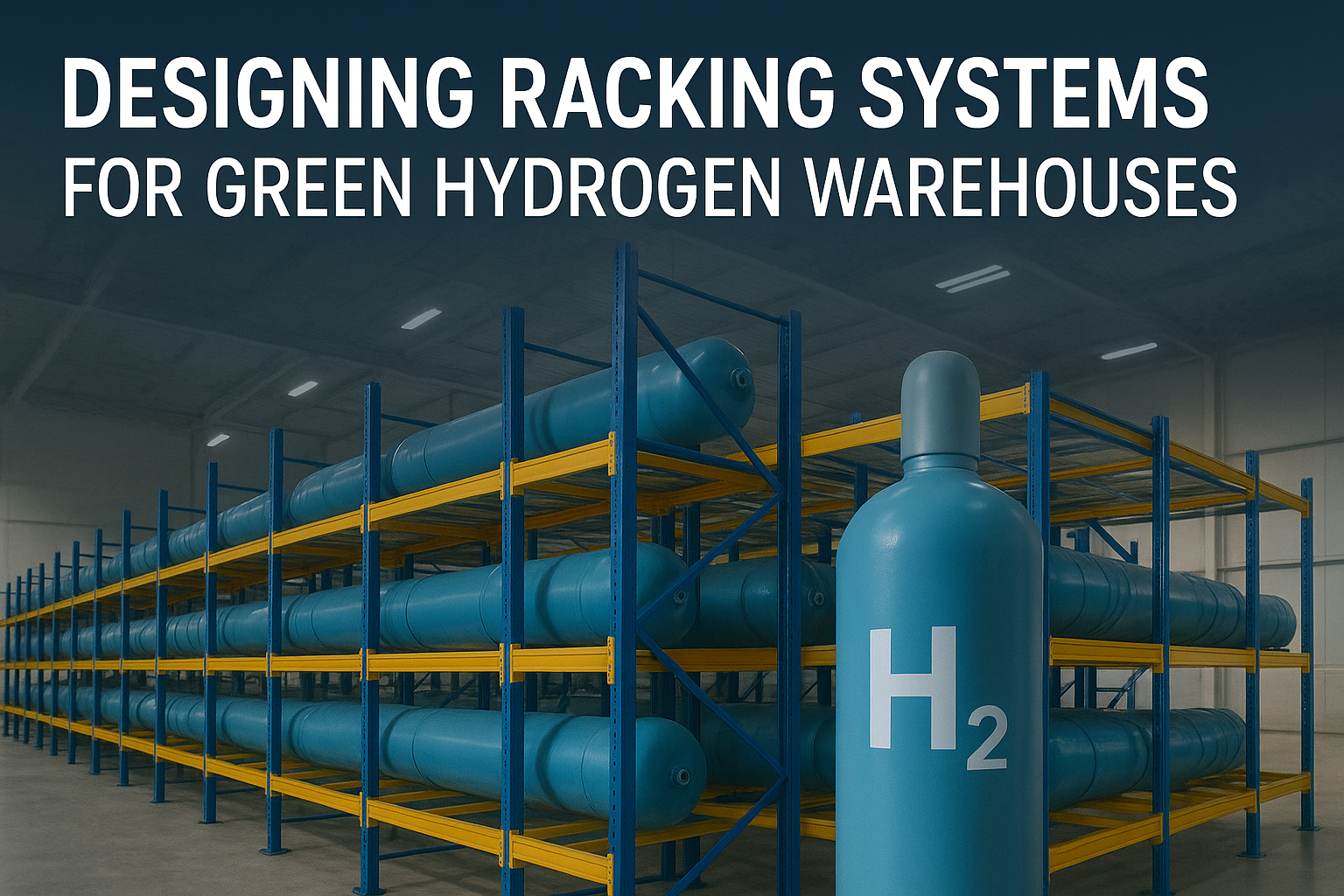
The UAE’s Leap into the Hydrogen Economy
The United Arab Emirates (UAE) has established itself as a global leader in renewable energy investment, with hydrogen emerging as a cornerstone of its sustainability strategy. As part of its Net Zero by 2050 initiative, the UAE is prioritizing green hydrogen projects to diversify its energy economy and lead the global transition away from fossil fuels.
This monumental shift demands innovative warehouse infrastructure specifically, advanced racking systems designed to safely and efficiently store hydrogen cylinders, fuel cells, and related components. For companies entering the hydrogen space, the design of a hydrogen warehouse in the UAE is not merely about storage it’s about enabling resilience, scalability, and sustainability.
Why Hydrogen Warehousing Matters in the UAE
Hydrogen isn’t just another energy source; it’s the fuel of the future. Its versatility spans across industries from powering vehicles to fueling industrial operations and stabilizing renewable grids. The UAE is positioning itself as a hydrogen hub, exporting green hydrogen to Europe and Asia.
With this vision, hydrogen warehouses in the UAE must:
- Safely store high-pressure hydrogen cylinders and tanks.
- Maintain strict compliance with international hydrogen safety codes.
- Support seamless supply chains for local and export demand.
- Integrate sustainability practices aligned with UAE’s decarbonization goals.
Challenges of Designing Racking for Hydrogen Warehouses
Unlike conventional storage facilities, hydrogen warehouses require specialized engineering.
1. Safety First: Hydrogen is Highly Flammable
- Ventilation systems must minimize hydrogen accumulation.
- Racking must allow airflow and prevent spark risks.
- Non-sparking materials such as aluminum or powder-coated steel are essential.
2. Temperature & Pressure Sensitivity
- Hydrogen storage often involves high-pressure tanks.
- Racking must be designed to withstand heavy loads and unique geometries.
- Integration of fire suppression systems is critical.
3. Regulatory Compliance in the UAE
- Alignment with UAE Fire & Safety Codes.
- Adherence to international standards such as NFPA 55 and ISO 19880-1.
- Proper labeling and hazard segregation.
4. Scalability for Future Growth
- The UAE hydrogen economy is expected to grow exponentially by 2030.
- Racking systems must be modular, adaptable, and future-proof.
Innovative Racking System Designs for Hydrogen Warehouses
1. Cylinder Racking Systems
- Designed for vertical and horizontal hydrogen cylinder storage.
- Built with high-strength steel and anti-corrosive coatings.
- Easy loading/unloading with forklifts or automated handling systems.
2. Automated Storage and Retrieval Systems (AS/RS)
- AI-driven systems for managing hydrogen containers.
- Reduces manual handling and improves worker safety.
- Tracks inventory in real-time for supply chain efficiency.
3. Seismic & Blast-Resistant Racking
- UAE facilities must be resilient against potential incidents.
- Reinforced racks minimize risks of cascading failures.
4. Temperature-Controlled Storage Racking
- Integration with cold storage environments for hydrogen derivatives like ammonia.
- Ensures safe preservation under varying thermal conditions.
5. Smart Racking with IoT Sensors
- Monitors pressure, leaks, and temperature in real-time.
- Alerts operators instantly in case of abnormalities.
- Aligns with UAE’s smart warehouse transformation goals.
Sustainability and Green Hydrogen Warehousing
Hydrogen itself is central to sustainability but how it’s stored also matters.
- Eco-friendly Materials: Racks made from recyclable metals and coatings.
- Energy Efficiency: Automated warehouses reduce lighting and HVAC needs.
- Solar-Powered Warehouses: Integration with rooftop solar aligns with UAE’s renewable energy targets.
- Circular Economy Design: Modular racks that can be repurposed as storage needs evolve.
Case Study: UAE Hydrogen Warehouse Development
In 2023, the Abu Dhabi Hydrogen Alliance announced partnerships to develop large-scale hydrogen export hubs. These warehouses are being designed with:
- Automated racking systems for scalable capacity.
- Fire-rated storage zones with independent safety measures.
- IoT-driven monitoring systems to ensure compliance with global hydrogen safety norms.
This illustrates the UAE’s commitment not only to producing green hydrogen but also to ensuring safe and innovative storage infrastructure.
Business Benefits of Optimized Hydrogen Warehouse Racking
Investing in tailored racking systems isn’t just about compliance it creates tangible business value.
- Operational Efficiency: Faster handling of hydrogen cylinders.
- Cost Savings: Reduced accidents and improved warehouse space utilization.
- Global Competitiveness: UAE companies can serve export markets with efficiency.
- Enhanced Safety Reputation: Builds trust with international partners.
The Road Ahead: Future-Proofing Hydrogen Warehouses in the UAE
As hydrogen projects scale up, UAE warehouses must prepare for increased demand, evolving safety standards, and global export logistics. Racking systems will play a pivotal role in:
- Supporting hydrogen-based mobility fleets.
- Storing liquid hydrogen derivatives.
- Enabling automated hydrogen logistics corridors in the Middle East.
FAQs on Hydrogen Warehouses in the UAE
1. What is a hydrogen warehouse in the UAE?
A hydrogen warehouse is a specialized storage facility designed to handle hydrogen cylinders, tanks, and derivatives, ensuring safety, compliance, and efficiency in alignment with UAE’s hydrogen economy.
2. Why do hydrogen warehouses need special racking systems?
Because hydrogen is highly flammable and stored under high pressure, racking systems must provide ventilation, load-bearing strength, and compliance with fire safety standards.
3. How does racking design support hydrogen sustainability goals?
Racking made from recyclable materials, combined with automation and energy-efficient designs, reduces environmental impact while supporting green hydrogen storage.
4. What regulations must UAE hydrogen warehouses follow?
They must comply with UAE Fire & Life Safety Codes, international hydrogen standards like NFPA 55, and occupational safety regulations.
5. Can hydrogen warehouses in the UAE be automated?
Yes. Automated Storage & Retrieval Systems (AS/RS) and IoT-enabled racks are increasingly being deployed to reduce risks and improve efficiency.
6. How will hydrogen warehouses evolve in the UAE by 2030?
They will expand in capacity, integrate smart technologies, and align with the UAE’s ambition to be a global hydrogen export hub.