
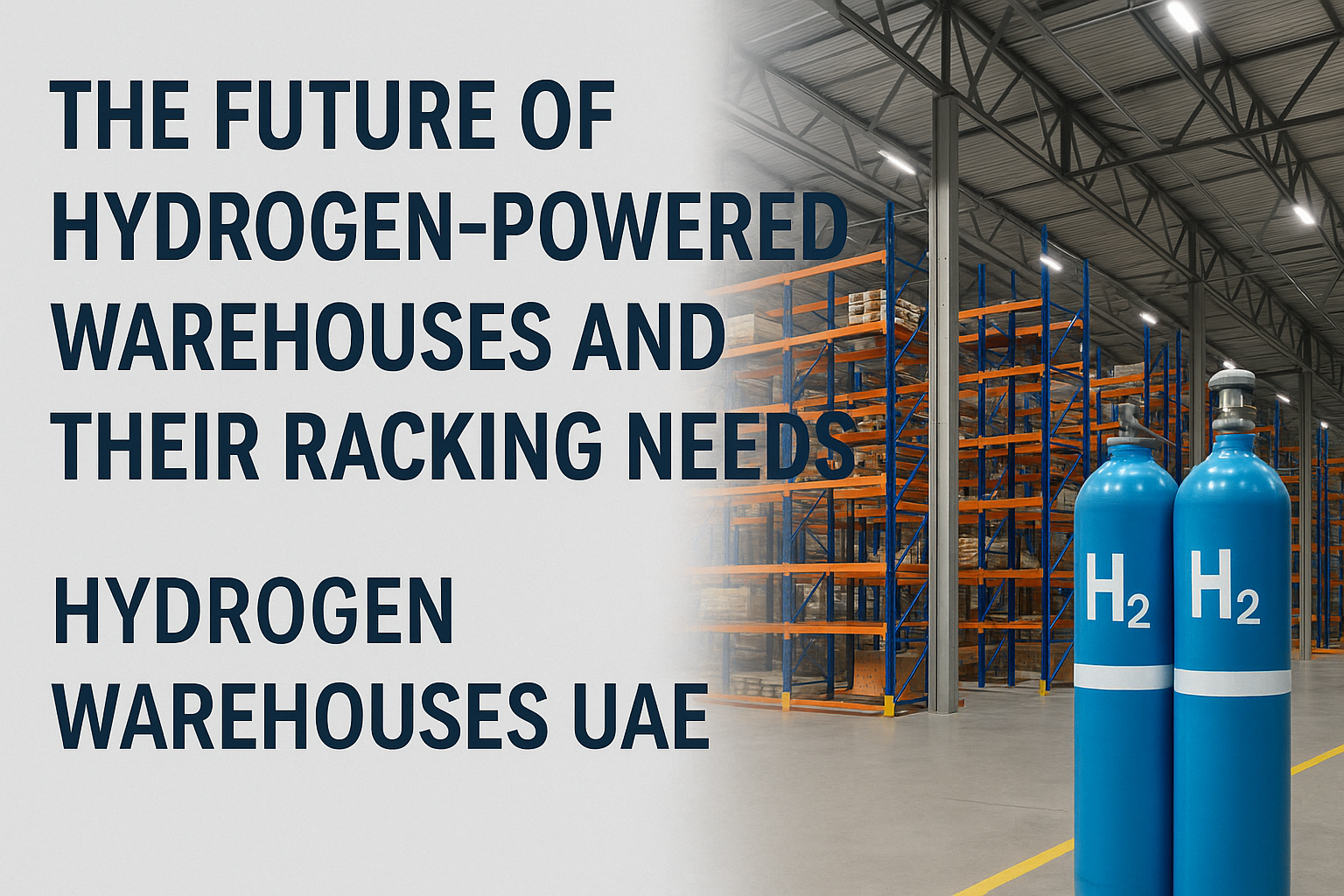
The Hydrogen Revolution Meets Warehousing
As the global logistics industry races toward decarbonization, hydrogen powered warehouses are emerging as the next major disruptor in industrial sustainability. In the UAE, where green energy ambitions are central to Vision 2031, hydrogen is being positioned as a cornerstone fuel and its influence is now extending into the design and infrastructure of warehouses, including the racking systems that sustain high volume operations.
Hydrogen warehouses promise cleaner energy use, reduced carbon emissions, and enhanced energy efficiency. But this shift also demands a fresh look at racking system requirements, safety standards, and spatial layouts tailored for hydrogen fuel storage and operations.
This article explores the future of hydrogen powered warehouses, examining how their evolution will shape racking design, materials, and installation practices in the UAE and beyond.
1. The Rise of Hydrogen Powered Warehouses in the UAE
1.1 UAE’s Hydrogen Vision and Its Impact on Logistics
The UAE has set ambitious targets to become a global hydrogen hub by 2031. Massive investments in green and blue hydrogen production from Abu Dhabi’s Masdar City to Dubai’s Clean Energy Strategy are paving the way for hydrogen integration into supply chains.
Logistics operators are beginning to explore hydrogen fuel cell forklifts, hydrogen powered material handling vehicles, and warehouse energy systems based on fuel cell technology. These innovations drastically reduce operational emissions while improving efficiency in warehouse operations.
“Hydrogen technology will transform the industrial logistics landscape, reshaping energy management and infrastructure design,” says Dr. Ahmed Al Falasi, energy economist at the UAE University.
2. Hydrogen Warehouses: A New Paradigm for Energy and Storage
2.1 What Is a Hydrogen Powered Warehouse?
A hydrogen powered warehouse uses hydrogen fuel cells or hydrogen combustion systems to power operations including forklifts, conveyors, lighting, and HVAC. The facility may also integrate on site hydrogen generation or storage systems.
2.2 Why Hydrogen?
- Zero Emissions: Produces only water vapor as a by product
- Higher Energy Density: Hydrogen stores three times more energy per kilogram than diesel
- Scalability: Ideal for large facilities with round the clock energy needs
- Fast Refueling: Hydrogen forklifts refuel in minutes compared to hours for electric charging
3. Racking Challenges in Hydrogen Powered Environments
3.1 Material Safety and Compatibility
Hydrogen poses unique risks since it is highly flammable and diffuses rapidly through materials. This means racking systems must be designed using materials resistant to hydrogen embrittlement, such as:
- Galvanized or stainless steel
- Powder coated finishes
- Non corrosive composite materials
3.2 Ventilation and Structural Design
Hydrogen’s light molecular structure means leaks rise quickly to the ceiling. Thus, warehouse racking must be integrated with ventilation pathways, ensuring:
- Open racking layouts for airflow
- Non obstructive shelving tops
- Ceiling vents positioned above racking clusters
3.3 Weight and Load Adjustments
Hydrogen cylinders and fuel systems add extra weight to vehicles and sometimes to storage modules. Hence, dynamic load bearing capacity is critical. Adjustable or reinforced pallet racking becomes essential to handle varying loads safely.
4. Designing Racking Systems for Hydrogen Warehouses
4.1 Modular and Adaptive Racking
Hydrogen warehouse design favors flexible, modular racking systems that can be adjusted to accommodate evolving technology. As hydrogen infrastructure advances, storage zones and refueling areas may need reconfiguration.
4.2 Fire and Explosion Safety Compliance
In compliance with NFPA 2 (Hydrogen Technologies Code) and UAE Civil Defence standards, racking must:
- Maintain safe distances from hydrogen storage tanks
- Use anti static coatings and fire rated materials
- Feature open frame designs that do not trap gas
4.3 Integration with Smart Sensors
Smart warehousing merges perfectly with hydrogen technology. IoT enabled rack sensors can:
- Monitor temperature and hydrogen concentration
- Detect corrosion or metal fatigue
- Alert operators about unsafe pressure levels or leaks
5. Sustainability and the Circular Economy in Hydrogen Warehousing
5.1 Green Logistics Alignment
Hydrogen powered warehouses directly contribute to the UAE’s Net Zero 2050 Initiative. By replacing fossil fuel systems, they:
- Cut CO₂ emissions by up to 90 percent
- Lower energy costs long term
- Enhance ESG compliance for global trade partners
5.2 Sustainable Racking Materials
Sustainability extends to storage infrastructure. Eco friendly racking systems made from recycled steel or low carbon alloys reduce the overall footprint of warehouse construction.
5.3 End of Life Recycling
Hydrogen warehouse operators are encouraged to adopt closed loop recycling models, ensuring racks, pallets, and metal components can be reprocessed and reused, aligning with circular economy principles.
6. Case Studies: Hydrogen Warehousing Innovations
6.1 Abu Dhabi’s Green Hydrogen Logistics Pilot
In collaboration with Masdar and DP World, Abu Dhabi launched a pilot hydrogen warehouse using fuel cell forklifts. Early data shows a 25 percent efficiency boost and a 30 percent reduction in operational emissions.
6.2 Global Example: Toyota’s Hydrogen Logistics Center (Japan)
Toyota’s Motomachi plant uses hydrogen fuel cells for forklifts and autonomous guided vehicles (AGVs). Its racking infrastructure is lightweight, corrosion resistant, and equipped with integrated gas sensors.
6.3 Lessons for the UAE
These models underscore the need for:
- Racking systems designed for energy integration
- Advanced safety zoning
- Continuous monitoring through IoT and AI systems
7. The Economics of Hydrogen Warehousing
7.1 Initial Costs vs Long Term Returns
While the upfront cost of hydrogen systems and specialized racking is high, ROI improves over five to seven years due to:
- Lower energy consumption
- Reduced downtime
- Fewer emissions penalties
7.2 Incentives and Green Financing
The UAE government is offering green financing programs for sustainability driven industries, making hydrogen warehouses a strategic investment for future proof logistics.
8. The Role of Racking Manufacturers in the Hydrogen Era
8.1 Custom Engineering
Manufacturers like Planet Racking are developing custom engineered racking systems tailored for hydrogen warehouses, focusing on:
- Enhanced durability
- Smart integration
- Lightweight but high strength frames
8.2 Future Materials and Innovations
Expect to see carbon fiber reinforced steel, AI assisted layout design, and embedded sensor networks becoming standard in hydrogen storage infrastructure.
9. Preparing for the Hydrogen Future in UAE Warehousing
Hydrogen powered warehouses are not a futuristic concept, they are already taking shape across the UAE. For logistics operators, now is the time to invest in adaptive infrastructure, especially racking systems that can evolve alongside hydrogen technologies.
Companies that embrace this transition will enjoy operational resilience, compliance with green mandates, and a competitive edge in a rapidly decarbonizing market.
Hydrogen warehousing represents a transformational leap in sustainable logistics. As UAE’s hydrogen economy matures, racking systems will serve as the backbone of safe, efficient, and scalable hydrogen storage operations.
Future warehouses will be defined not just by automation and robotics but by the seamless integration of clean energy, intelligent design, and resilient racking systems built to support a greener tomorrow.
Frequently Asked Questions (FAQs)
1. What is a hydrogen powered warehouse?
A hydrogen powered warehouse operates using hydrogen fuel cells to power vehicles, lighting, and equipment, reducing carbon emissions and improving energy efficiency.
2. How does hydrogen affect warehouse racking design?
Hydrogen requires materials resistant to embrittlement and corrosion, open structures for ventilation, and strict compliance with fire safety and explosion codes.
3. Are hydrogen warehouses feasible in the UAE?
Yes. With the UAE’s national hydrogen strategy and logistics hubs in Dubai, Abu Dhabi, and Sharjah, hydrogen powered warehouses are both viable and encouraged through sustainability initiatives.
4. What kind of racking materials are best for hydrogen facilities?
Galvanized or stainless steel with anti corrosive coatings is ideal to withstand hydrogen exposure and temperature fluctuations.
5. How does hydrogen warehousing align with sustainability goals?
It supports the UAE’s Net Zero 2050 goals by reducing operational carbon emissions and promoting the use of recyclable, eco friendly infrastructure materials.