
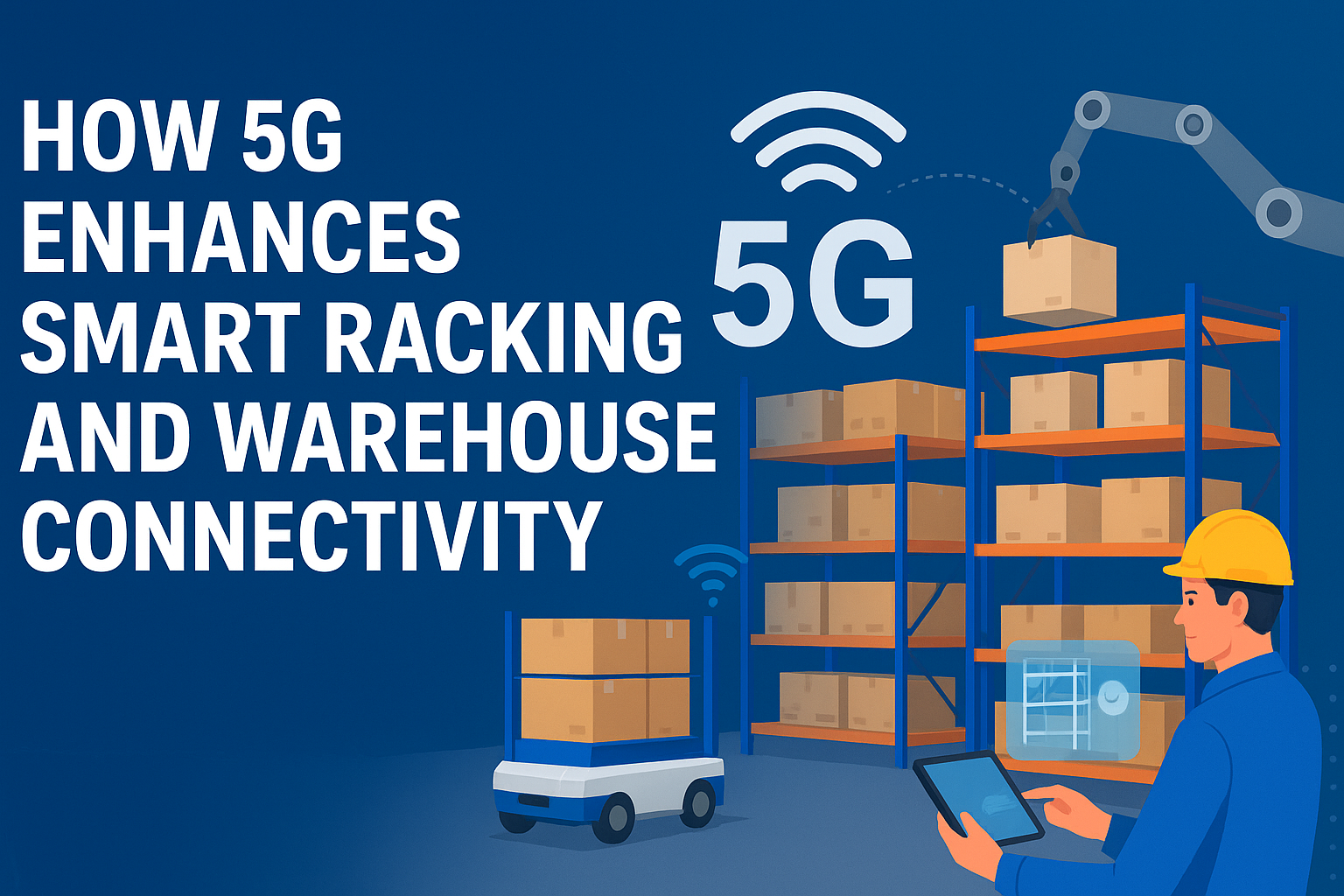
The logistics and warehousing industry in the UAE is undergoing a dramatic shift, powered by digital transformation and advanced connectivity solutions. Among these, 5G warehouse racking has emerged as a game-changer, enabling real-time tracking, IoT integration, and seamless automation across smart warehouses.
As the UAE cements itself as a global logistics hub with Dubai and Abu Dhabi leading in supply chain innovation warehouses are no longer just storage spaces. They are data-driven ecosystems that rely on high-speed, ultra-low latency networks like 5G to function at optimal levels.
This article explores how 5G enhances smart racking systems, the technologies it integrates with, and the future of warehouse connectivity in the UAE.
The Rise of 5G in Warehousing
Why Warehouses Need 5G Connectivity
Modern warehouses face challenges that demand instant communication between systems and equipment. Traditional 4G or Wi-Fi networks often struggle with high device density, signal interference, and data transmission delays.
5G solves these challenges by providing:
- Ultra-low latency (milliseconds in delay) for real-time decisions.
- Massive device connectivity (IoT sensors, robots, drones, and racking systems).
- High bandwidth to handle huge volumes of operational data.
UAE’s Push for Smart Warehousing
The UAE government’s “Digital Economy Strategy” and Dubai’s Logistics 4.0 vision are driving adoption of smart infrastructure. This makes 5G-enabled racking systems in UAE warehouses a natural progression for companies looking to stay competitive.
How 5G Enhances Smart Racking Systems
1. Real-Time Inventory Tracking
With IoT sensors embedded in racks, every item can be tracked with pinpoint accuracy. 5G connectivity ensures that data is transmitted instantly to warehouse management systems (WMS), reducing errors and improving stock visibility.
Example: A cold chain warehouse in Dubai can monitor perishable goods in real time, ensuring temperature compliance while tracking movement across racks.
2. Automation and Robotics Integration
Automated Guided Vehicles (AGVs) and robotic arms rely heavily on fast, reliable communication. With 5G-powered racking systems, robots can coordinate movements seamlessly, preventing collisions and speeding up order fulfillment.
Impact:
- 30% faster picking and packing.
- Improved accuracy in e-commerce logistics.
- Reduced manpower costs in UAE warehouses.
3. Predictive Maintenance of Racks
Smart racks equipped with 5G-enabled IoT sensors can predict when they need maintenance. This prevents downtime, reduces risks, and ensures warehouse safety compliance.
Benefit: UAE logistics operators can avoid costly delays by fixing issues before breakdowns occur.
4. Augmented Reality (AR) for Warehouse Staff
5G allows warehouse workers to use AR glasses or devices for navigation, picking, and training. With racks digitally mapped, staff can see visual cues overlaying real-time data, improving efficiency.
5. Supply Chain Visibility & Integration
5G-powered racking systems in UAE warehouses enable seamless integration with ERP, blockchain, and AI platforms. This creates a transparent, secure, and efficient supply chain ecosystem.
5G vs Traditional Warehouse Connectivity
| Feature | Wi-Fi | 4G | 5G |
|---|---|---|---|
| Latency | High | Moderate | Ultra-low |
| Device Capacity | Limited | Better | Massive IoT scalability |
| Reliability | Interference issues | Stable | Ultra-reliable |
| Speed | Moderate | High | Ultra-high |
| Use Case | Small-scale ops | Mobile connectivity | Smart warehouses, IoT racking |
The UAE Advantage in 5G-Driven Smart Warehousing
- Dubai’s free zones (JAFZA, DAFZA) are early adopters of 5G-based logistics solutions.
- The Etisalat & du 5G rollout is enabling warehouses to embrace next-gen IoT applications.
- UAE’s strategic position as a logistics hub makes it essential for companies to invest in 5G smart racking systems.
Challenges in Implementing 5G in Warehouses
While promising, 5G adoption in warehouses comes with challenges:
- High initial investment in infrastructure.
- Cybersecurity risks with more connected devices.
- Skill gap training staff to handle advanced systems.
However, given the UAE’s rapid digital adoption, these barriers are expected to reduce in the coming years.
Future of 5G Warehouse Racking in UAE
- AI + 5G-powered autonomous warehouses will become standard.
- Blockchain + IoT integration will enhance traceability.
- Digital twins of warehouses will optimize layouts in real-time.
- Green logistics 5G efficiency will reduce energy use and carbon emissions.
5G warehouse racking in the UAE is more than just a technology upgrade it’s a strategic shift toward intelligent, connected, and sustainable logistics ecosystems. By combining IoT, AI, robotics, and AR, 5G transforms warehouses into high-performance hubs that can meet the fast-paced demands of global trade.
For businesses in the UAE, investing in 5G-enabled smart racking systems is not optional it’s the future of competitive logistics.
FAQs
Q1: What is 5G warehouse racking?
5G warehouse racking refers to smart racking systems connected via 5G networks, enabling real-time inventory tracking, predictive maintenance, and seamless automation in warehouses.
Q2: How does 5G improve smart warehouse connectivity?
5G provides ultra-low latency, high bandwidth, and the ability to connect thousands of IoT devices simultaneously, ensuring efficient warehouse operations.
Q3: Why is 5G important for UAE warehouses?
As the UAE positions itself as a global logistics hub, 5G ensures warehouses remain competitive by adopting advanced automation and IoT-powered racking systems.
Q4: What industries benefit most from 5G warehouse racking in UAE?
E-commerce, retail, pharmaceuticals, and cold chain logistics benefit the most, thanks to enhanced real-time tracking and automation.
Q5: Is 5G warehouse racking cost-effective?
Though initial costs are high, long-term benefits like reduced errors, faster fulfillment, and predictive maintenance make it cost-effective for UAE businesses.