
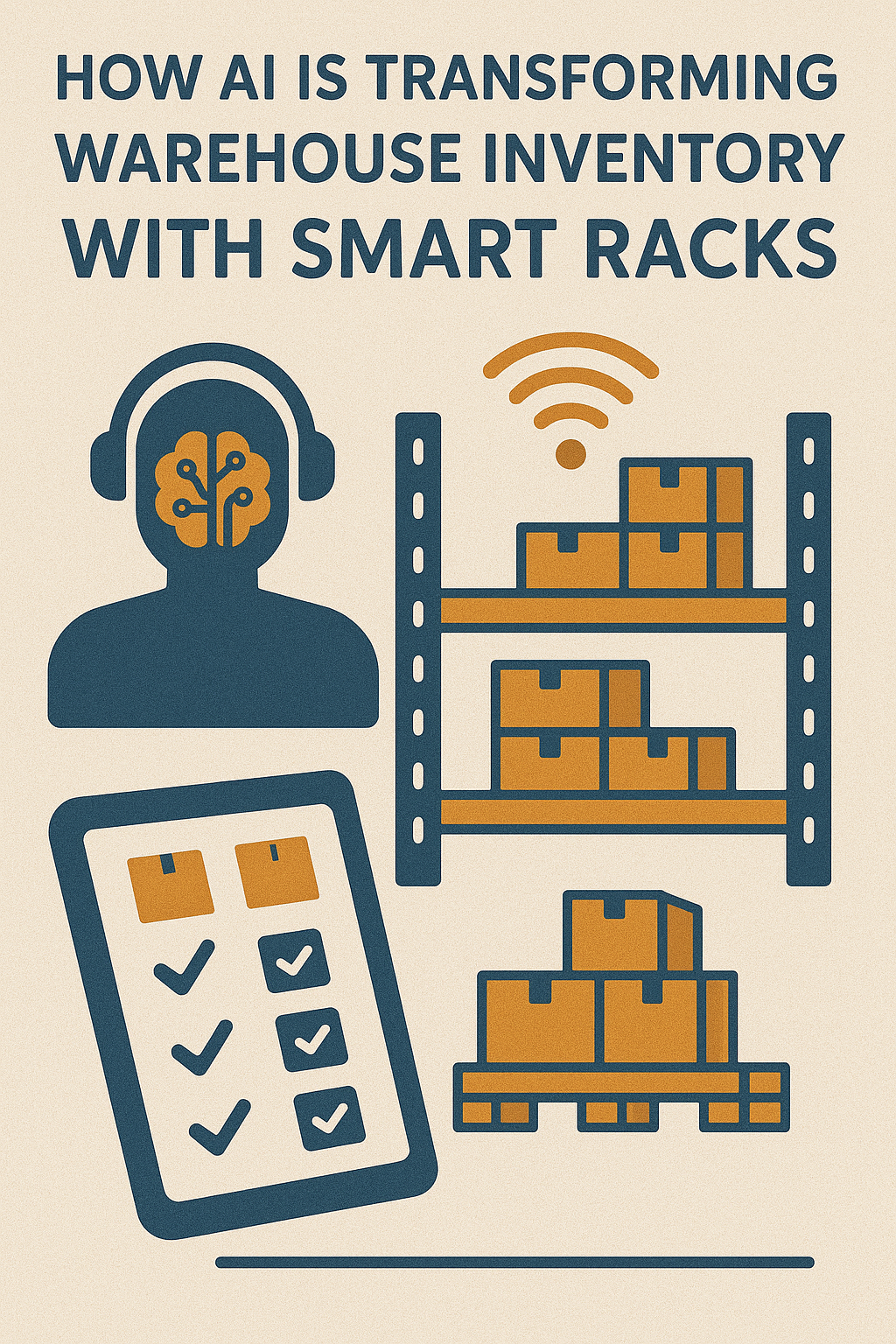
In an age where speed, accuracy, and efficiency are the gold standards of supply chain success, artificial intelligence (AI) is revolutionizing how warehouses operate — and it’s not stopping at automated forklifts or predictive software. The latest evolution? Smart racks powered by AI.
Once seen as simple storage systems, warehouse racks are now evolving into intelligent, sensor-enabled platforms that monitor, communicate, and optimize inventory in real time. This transformation isn’t just futuristic — it’s already happening, and it’s redefining how we manage inventory.
What Are Smart Racks?
Smart racks are AI-enabled storage systems embedded with sensors, RFID tags, IoT devices, and cloud connectivity. These racks do more than just hold goods — they analyze and interact with your inventory.
Think of it as giving your racking system eyes, ears, and a brain.
With this technology, warehouse operators can:
- Track real-time inventory levels
- Detect misplaced or expired products
- Predict restocking needs
- Monitor load weights and structural stress
- Prevent overloading or unsafe stacking
The Role of AI in Smart Racking
AI acts as the cognitive engine behind the racks’ decision-making. Here’s how:
🔍 1. Inventory Visibility and Forecasting
AI-powered racks can sync with warehouse management systems (WMS) to automatically log every item placed, moved, or removed — eliminating human error and providing real-time inventory data. AI also uses historical trends and sales velocity to predict demand and signal replenishment.
📦 2. Automated Slotting and Picking
AI identifies the most efficient bin or shelf placement based on item dimensions, turnover rate, and picking frequency. This dynamic slotting reduces travel time for pickers and increases fulfillment speed.
📈 3. Load and Capacity Optimization
Smart racks track weight distribution and alert staff if a bay is being overloaded. AI algorithms can recommend optimal pallet configurations, helping reduce rack damage and collapse risk.
🧠 4. Predictive Maintenance
Using AI, smart racks detect structural fatigue, corrosion, or impact damage before it becomes hazardous. This enables condition-based maintenance rather than scheduled checks — saving time and money.
Why It Matters for Modern Warehousing
✅ Reduced Human Error
Manual inventory checks and stock misplacements are among the top causes of operational delays. AI smart racks ensure every product is tracked with near-perfect accuracy.
🔄 Seamless Integration with Robotics
Smart racks are designed to work alongside autonomous mobile robots (AMRs) and robotic arms, enabling fully automated picking and replenishment.
📊 Better Decision-Making
Real-time data from smart racks gives warehouse managers actionable insights — from optimizing rack layout to reducing deadstock.
Global Leaders Embracing AI-Driven Racking
Major logistics hubs and tech-forward warehouses in Dubai, Singapore, Germany, and the U.S. are already piloting AI-integrated storage. Amazon, Alibaba, and Maersk have adopted smart infrastructure to enhance their fulfillment speed and inventory precision.
In Dubai, for example, free zones and smart logistics parks are actively investing in AI-powered racking systems to stay aligned with Vision 2030 and global green warehousing standards.
Challenges and Considerations
While the benefits are clear, businesses must also weigh:
- Initial investment costs
- Integration with legacy WMS
- Cybersecurity of IoT-enabled systems
- Staff training for AI interfaces
However, as with most innovations, the long-term ROI outweighs the upfront cost — especially when you factor in labor savings, error reduction, and customer satisfaction.
FAQs: Smart Racks and AI in Warehousing
1. What makes a rack “smart”?
A smart rack is equipped with sensors, IoT devices, and software that enable real-time tracking, AI analysis, and system integration.
2. Can smart racks work in older warehouses?
Yes, many systems are modular and can be retrofitted to existing racking infrastructure, though compatibility with WMS is key.
3. Are AI-powered racks cost-effective for small warehouses?
While initial costs may be high, scalable solutions now exist for SMEs, especially those with frequent stock turnover or eCommerce operations.
4. What industries benefit most?
eCommerce, pharmaceuticals, automotive, food and beverage, and logistics hubs see the greatest impact due to their inventory complexity.
5. How secure is the data collected by smart racks?
Modern AI systems use encrypted cloud protocols and role-based access controls to ensure security and compliance.
Conclusion: Racking Up the Future
Warehouse racks are no longer static storage — they are becoming intelligent assets that learn, adapt, and improve operational efficiency. With AI-driven smart racking, the future of inventory management is faster, safer, and smarter.
The companies that embrace this innovation now will outpace the competition — not just by a few percentage points, but by transforming how inventory is tracked, managed, and scaled.