
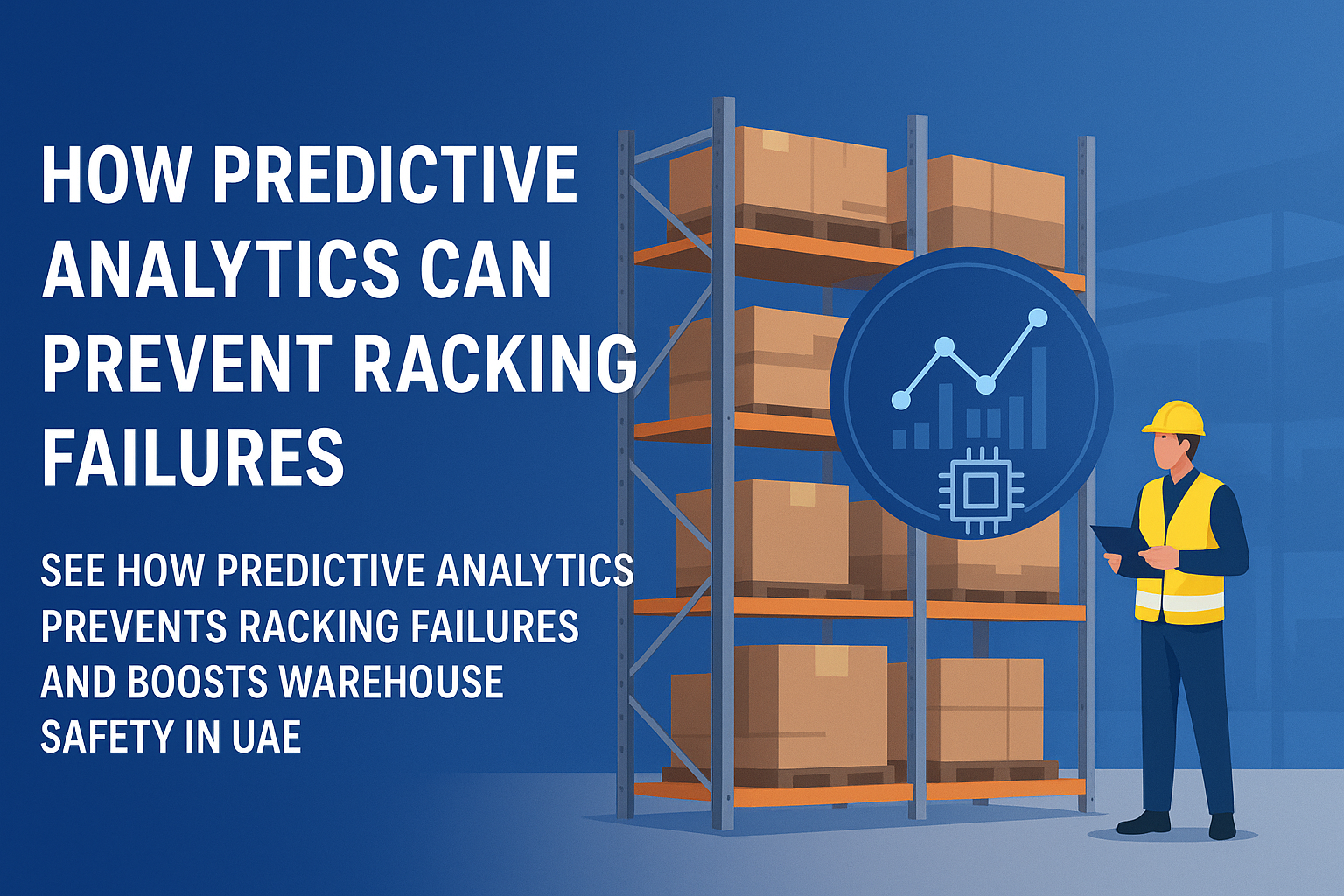
Modern warehouses in the UAE are evolving rapidly, driven by digital transformation and advanced technologies. As logistics operations expand, so do the complexities associated with warehouse safety and asset management. One critical concern in this evolving landscape is racking failure an issue that can lead to costly downtime, damaged inventory, and serious safety risks.
Fortunately, predictive analytics is emerging as a game-changing solution that can transform how warehouse operators anticipate and prevent racking-related incidents. By leveraging data-driven insights, predictive analytics enables businesses to detect structural weaknesses, predict maintenance needs, and minimize risks before failure occurs.
Understanding Racking Failures: The Hidden Threat in Warehouses
Racking systems form the backbone of any warehouse operation. They support tons of materials, streamline storage efficiency, and influence overall productivity. However, racking failures are more common than many warehouse operators realize.
A failure can occur due to various reasons:
- Overloading of shelves beyond their rated capacity
- Corrosion or metal fatigue
- Poor installation or uneven flooring
- Forklift collisions and repeated impacts
- Environmental stress, especially in cold storage facilities in the UAE
Even a minor racking collapse can result in major consequences damaged goods, employee injuries, and financial losses. According to industry studies, over 25% of warehouse accidents worldwide are linked to racking system failures, often caused by preventable issues.
The Role of Predictive Analytics in Racking Safety
Predictive analytics combines the power of AI, IoT sensors, and big data to forecast potential equipment failures before they occur. By continuously monitoring parameters like vibration, temperature, load distribution, and structural integrity, predictive systems can identify patterns that precede a racking failure.
In simpler terms, predictive analytics acts like a digital guardian for warehouse infrastructure. Instead of waiting for a rack to bend, buckle, or break, it sends early alerts when something is amiss.
Key components of predictive analytics in racking include:
- Sensors and IoT Devices: Collect real-time data from racking structures.
- AI and Machine Learning Models: Analyze trends, stress points, and anomalies.
- Predictive Maintenance Dashboards: Present actionable insights for supervisors.
- Automated Alerts: Notify maintenance teams before failures occur.
This proactive approach transforms warehouse management from reactive maintenance (fixing problems after they happen) to predictive maintenance (preventing problems before they start).
How Predictive Analytics Works in Warehouse Environments
Implementing predictive analytics in a racking system involves a combination of hardware sensors, AI algorithms, and cloud-based analytics platforms.
Here’s a step-by-step breakdown of how it works:
1. Data Collection
IoT sensors are installed across critical racking points—beams, uprights, and connectors. These sensors continuously collect data on:
- Weight loads
- Vibrations from machinery
- Temperature and humidity
- Structural deformation
- Frequency of impacts
2. Data Processing
The collected data is sent to a central analytics platform. Using machine learning algorithms, the system identifies normal vs. abnormal patterns. For instance, if a specific rack consistently experiences higher vibration than the others, the system flags it for inspection.
3. Predictive Modeling
AI models forecast potential failure points based on historical data. They can estimate when and where a failure might occur if corrective action isn’t taken.
4. Maintenance Scheduling
The predictive analytics dashboard automatically generates maintenance schedules and sends real-time alerts to warehouse managers. This ensures repairs are conducted before any safety hazard arises.
5. Continuous Improvement
Over time, the system becomes smarter. As it collects more data, it refines its predictions, reducing false alarms and improving precision.
Benefits of Predictive Analytics for Racking Systems
1. Enhanced Safety
Predictive analytics significantly reduces the risk of catastrophic racking collapses by identifying early warning signs. It safeguards both employees and inventory.
2. Cost Savings
Instead of replacing entire racks or dealing with expensive accident-related downtime, predictive maintenance allows for targeted repairs, lowering long-term costs.
3. Operational Efficiency
Real-time insights help managers plan maintenance without disrupting operations. This means fewer interruptions and higher productivity.
4. Longer Equipment Lifespan
Regular monitoring prevents overuse and ensures racking systems remain in top condition for years, improving the ROI on warehouse infrastructure.
5. Regulatory Compliance
Warehouses in the UAE must comply with strict health and safety standards. Predictive analytics ensures ongoing compliance by maintaining proper documentation of maintenance activities.
Predictive Analytics in the UAE: Local Applications
The UAE’s logistics and warehousing sector particularly in Dubai, Abu Dhabi, and Sharjah has been quick to adopt smart technologies. Predictive analytics is now being integrated into automated warehouses, cold chain facilities, and E-commerce fulfillment centers.
Companies are leveraging AI-driven racking maintenance systems to achieve:
- Reduced downtime in temperature-controlled storage
- Improved worker safety in high-density racking zones
- Sustainability through optimized material usage
For instance, a leading logistics provider in Dubai implemented IoT-based sensors across its pallet racking systems. Within months, predictive analytics helped them detect early metal fatigue in several racks, preventing a potential structural collapse and saving thousands in damages.
Implementing Predictive Analytics: A Step-by-Step Guide
Warehouses interested in adopting predictive analytics should follow these steps:
Step 1: Assessment
Begin with a full audit of the current racking infrastructure. Identify potential risk zones, such as high-traffic areas or older racks.
Step 2: Sensor Deployment
Install IoT sensors on racking components. Choose sensors that measure load, tilt, vibration, and temperature.
Step 3: Data Integration
Connect sensors to a cloud-based analytics platform compatible with existing warehouse management systems (WMS).
Step 4: AI Training
Use historical data to train predictive models. This improves accuracy in forecasting failures.
Step 5: Actionable Dashboards
Create user-friendly dashboards that highlight risk areas and send maintenance alerts to responsible teams.
Step 6: Continuous Optimization
Regularly review system performance and fine-tune AI algorithms to improve predictive precision over time.
Challenges in Adopting Predictive Analytics
While the benefits are clear, adoption does come with challenges:
- Initial Investment: Sensor installation and AI platform integration require upfront costs.
- Data Overload: Managing vast volumes of sensor data can overwhelm traditional IT systems.
- Skill Gap: Warehouse teams need training to interpret predictive analytics insights.
- Integration Issues: Legacy warehouse systems may not easily connect with modern predictive tools.
However, these challenges are temporary. As technology becomes more affordable and accessible, predictive analytics will soon become a standard practice in UAE’s logistics sector.
The Future of Predictive Maintenance in Warehousing
The future of warehouse safety lies in AI-powered predictive ecosystems. Soon, we’ll see:
- Autonomous drones inspecting racks for visible damage.
- Digital twins simulating racking stress under various load conditions.
- 5G-enabled real-time monitoring for large-scale warehouses.
Predictive analytics isn’t just a technology it’s a mindset shift from reacting to problems to proactively preventing them.
Warehouses that invest in predictive analytics today will enjoy fewer disruptions, higher safety standards, and stronger profitability in the long run.
In the dynamic logistics landscape of the UAE, predictive analytics in racking is not just a technological upgrade it’s a strategic necessity. By merging data, AI, and intelligent sensors, warehouses can transform their maintenance operations, reduce risks, and protect both people and products.
Racking failures are preventable. The key lies in foresight, and predictive analytics offers precisely that the power to see problems before they happen.
FAQs
1. What is predictive analytics in racking systems?
Predictive analytics uses AI and data from sensors to monitor racking health and predict when a failure might occur, enabling proactive maintenance.
2. How can predictive analytics prevent racking failures?
By analyzing stress, vibration, and load data, predictive systems detect irregularities that signal early signs of damage, allowing timely repairs before collapse.
3. Is predictive analytics expensive to implement?
While the initial setup involves investment in sensors and software, the long-term savings from reduced downtime and accidents outweigh the costs.
4. Can predictive analytics be used in cold storage warehouses?
Yes, predictive analytics is ideal for cold storage. It can monitor structural changes due to temperature fluctuations and prevent corrosion-related failures.
5. What industries in the UAE benefit most from predictive racking analytics?
Logistics, E-commerce, cold chain, manufacturing, and food distribution sectors benefit significantly from predictive maintenance technologies.