
The Era of Intelligent Warehousing
In the fast-evolving world of logistics and supply chain management, warehouse efficiency is no longer a competitive advantage; it’s a baseline expectation. With the surge of e-commerce, same-day delivery models, and complex SKU management, the margin for error in order fulfillment has narrowed dramatically. Every picking error, whether it’s a misplaced item or an incorrect quantity, translates directly into customer dissatisfaction, lost revenue, and operational inefficiencies.
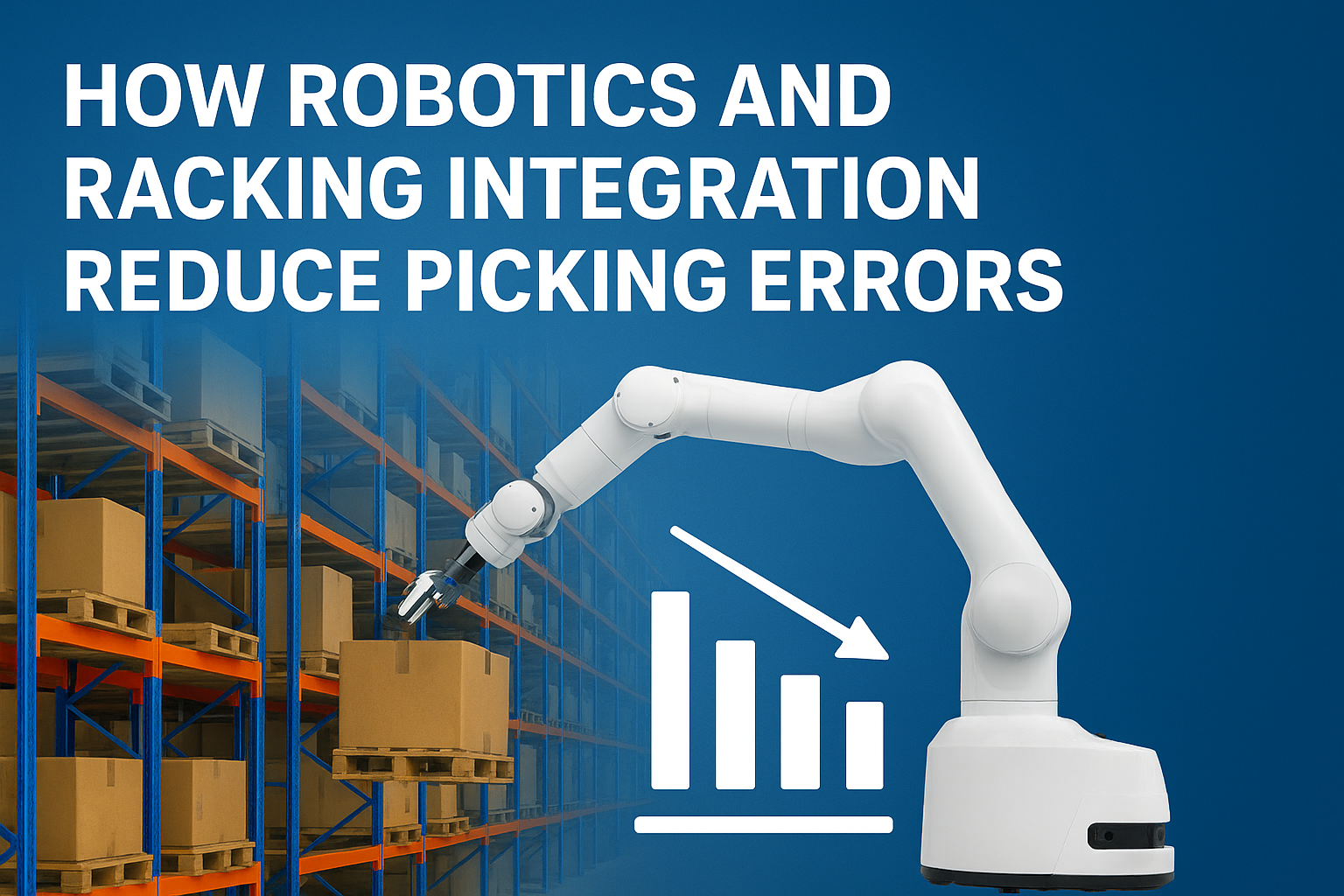
To address this, the new frontier of warehouse innovation lies in robotics racking integration, a seamless fusion of automated storage systems with intelligent robotics. Together, these technologies transform traditional warehouses into smart fulfillment ecosystems where errors are minimized, throughput is maximized, and every movement is optimized for precision.
This article explores how the integration of robotics and racking systems is redefining accuracy, particularly in high-demand logistics environments like Dubai and the broader UAE, where technological advancement is at the heart of supply chain modernization.
1. The Growing Challenge of Picking Errors in Modern Warehouses
Before understanding how technology solves the problem, it’s important to grasp the scale of the issue. Picking errors, the mistakes made when selecting products to fulfill orders, account for an estimated 55% of total warehouse mistakes. These errors can include:
- Selecting the wrong SKU
- Incorrect quantities
- Picking from the wrong location
- Missing items entirely
The impact is enormous. A single picking error can trigger a chain reaction including returns processing, restocking, refunding, and re-shipping, all of which inflate operational costs. In a high-volume robotics warehouse UAE setting, where thousands of items move daily, even a 1% error rate can be financially devastating.
2. Robotics Meets Racking: The Foundation of Automation
Robotics racking integration refers to the synchronization between automated storage and retrieval systems (AS/RS) and robotic picking units, such as autonomous mobile robots (AMRs) or robotic arms.
How It Works:
- Smart Racking Systems:
Racks are designed with sensors, barcodes, and RFID tagging to communicate in real time with the warehouse management system (WMS). - Robotic Coordination:
Robots receive digital picking instructions and navigate autonomously to the correct racking location using LiDAR, AI vision, and path optimization algorithms. - Error-Free Picking:
The robot validates the SKU and quantity before retrieval. Data is synchronized instantly with the WMS, ensuring real-time inventory accuracy.
This synergy eliminates the possibility of human misjudgment or fatigue-related mistakes, two of the most common causes of picking errors in manual operations.
3. The Role of Artificial Intelligence and Machine Learning
The true intelligence behind robotics racking integration lies in AI and machine learning (ML). These technologies enable robots to learn optimal picking paths, predict demand patterns, and even detect potential misplacements.
- Predictive Inventory Management: AI analyzes historical order data to anticipate product demand and optimize rack placement for faster access.
- Adaptive Learning: ML algorithms help robots learn the warehouse layout and continuously improve accuracy with every pick.
- Error Detection Algorithms: AI-driven cameras identify misplaced items or anomalies before they disrupt the picking process.
In leading warehouse automation Dubai projects, these capabilities are being combined with IoT-enabled racking to create self-regulating warehouse ecosystems, facilities that monitor, report, and correct themselves in real time.
4. Design Matters: Smart Racking for Robotic Efficiency
The integration of robotics isn’t just about adding robots; it starts with racking system design. To fully leverage automation, racking structures must be engineered for robotic accessibility, navigation, and precision handling.
Key Design Features:
- Uniform Slot Dimensions: Ensures robotic arms can access goods without obstruction.
- Reinforced Frames: Supports high-speed robotic movements and vibration-free operation.
- Integrated Sensors: Enable item detection and tracking across each shelf level.
- High-Density Configurations: Optimize space without sacrificing robotic movement flexibility.
At Planet Racking, advanced automated pallet racking systems are being tailored for robotics integration, combining structural durability with data intelligence, making them ideal for UAE’s smart warehouse transformation initiatives.
5. Real-World Benefits: Reducing Picking Errors and Boosting ROI
Implementing robotics racking integration delivers tangible, measurable results across every operational metric.
Key Advantages:
- Error Reduction:
Up to 99.9% picking accuracy, compared to 90–95% in manual operations. - Productivity Increase:
Robots can operate 24/7, dramatically reducing cycle times. - Enhanced Safety:
Automated racking minimizes human involvement in high-traffic areas, reducing accidents. - Inventory Visibility:
Real-time data ensures that stock levels and locations are always up to date. - Long-Term ROI:
While initial investment in robotics is significant, ROI is typically achieved within 2–4 years through savings on labor, reduced returns, and higher throughput.
In high-demand logistics hubs like Dubai’s JAFZA and Abu Dhabi’s KIZAD, warehouses equipped with robotics-integrated racking have reported up to 70% fewer errors within the first six months of deployment.
6. Integration with Warehouse Management Systems (WMS)
No robotics solution operates in isolation. The real power of robotics racking integration emerges when connected to a centralized WMS.
The WMS acts as the digital conductor, assigning tasks, monitoring progress, and validating each movement. With full integration:
- Every pick, move, and restock is logged instantly.
- Robots communicate directly with WMS for error checking.
- Managers receive real-time dashboards of accuracy metrics.
This level of control ensures end-to-end picking error reduction while offering complete transparency across warehouse operations.
7. Case Study: Smart Warehouse Success in the UAE
A leading retail fulfillment center in Dubai implemented Planet Racking’s automated storage system integrated with robotic picking arms and AI inventory tracking. Within three months:
- Picking accuracy rose from 93% to 99.8%
- Order processing time dropped by 45%
- Labor costs were reduced by 30%
The success demonstrated that robotics warehouse UAE operations can scale efficiently when technology is matched with custom-engineered racking systems.
8. The Future: Autonomous Warehouses and Predictive Accuracy
As we move toward Industry 5.0, warehouses will become even more autonomous, where robots, racks, and AI systems interact seamlessly without human intervention.
Emerging innovations include:
- Vision-guided robots capable of object recognition without barcodes.
- Digital twin modeling to simulate warehouse flows and prevent bottlenecks.
- Predictive error correction, where AI anticipates potential mistakes before they happen.
For forward-thinking logistics operators in the UAE, adopting robotics racking integration isn’t just a trend; it’s a strategic necessity to remain competitive in the next decade of global supply chain automation.
Building the Perfect Synergy
The convergence of robotics and intelligent racking systems represents a monumental leap in warehouse innovation. By eliminating manual picking errors, optimizing inventory flow, and increasing overall accuracy, this integration sets a new benchmark for operational excellence.
Whether you operate a cold chain facility, e-commerce distribution center, or industrial warehouse, investing in robotics racking integration ensures your operations are not only efficient but future-ready.
In an environment like the UAE, where logistics technology is rapidly evolving, the partnership between automation experts and racking system innovators like Planet Racking is shaping the next era of smart warehousing.
Frequently Asked Questions (FAQs)
1. What is robotics racking integration?
It’s the synchronization of robotic systems like automated pickers or AMRs with intelligent racking structures that communicate with warehouse management software to enable precise, automated picking and storage operations.
2. How does robotics reduce picking errors?
By removing human dependency in manual picking, robotics ensures consistent accuracy. Integrated AI systems validate every pick, cross-check SKUs, and prevent misplacements in real time.
3. What are the costs involved in integrating robotics with racking systems?
Costs vary depending on the scale and type of warehouse. Initial investments can be high, but companies typically see ROI within 2–4 years through savings on labor and improved accuracy.
4. Can existing racking systems be retrofitted for robotics?
Yes. Many modern automation solutions can be integrated into existing racking structures with minimal modification, especially if the racking is modular and sensor-ready.
5. Why is the UAE leading in warehouse automation?
The UAE’s strategic logistics position, government incentives for smart infrastructure, and growing e-commerce demand have accelerated adoption of robotics warehouse UAE technologies.
6. How can Planet Racking help in robotics integration?
Planet Racking specializes in custom-engineered racking systems designed for automation compatibility, ensuring structural, technical, and software readiness for seamless robotics deployment.