
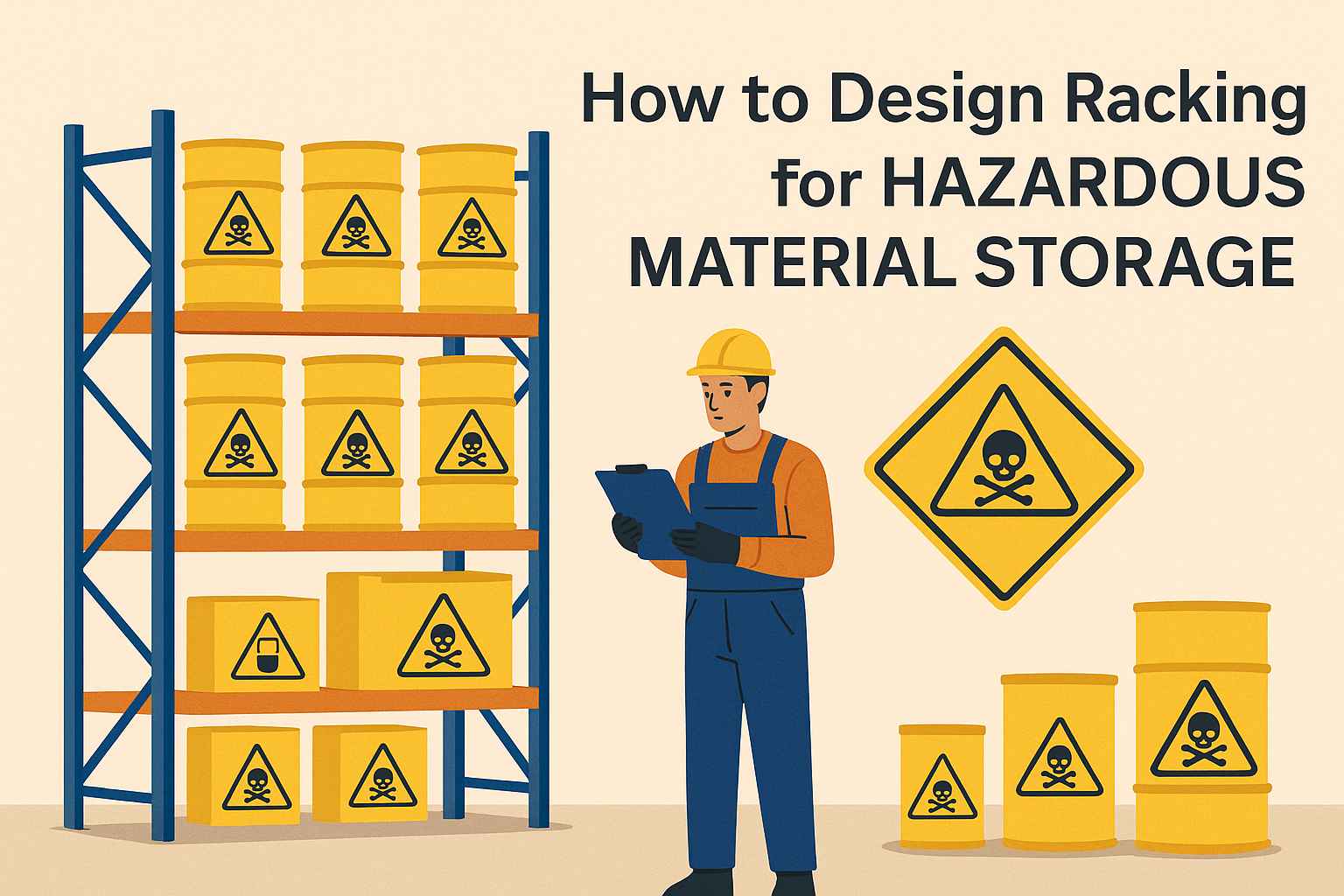
Storing hazardous materials in warehouses requires more than standard racking solutions. In Dubai, where regulatory compliance and safety standards are paramount, designing racking systems for hazardous materials demands a strategic approach. Failure to implement proper systems can lead to serious safety hazards, costly fines, and operational inefficiencies.
This guide explains best practices for designing racking systems that ensure safety, compliance, and operational efficiency in hazardous material storage.
Understand the Nature of Hazardous Materials
The first step is to categorize the hazardous materials you plan to store. Materials may be:
- Flammable or combustible
- Corrosive or toxic
- Explosive or reactive
Each type requires specialized racking materials, coatings, and safety measures to minimize risk.
Regulatory Compliance in Dubai
Adhering to Dubai Municipality, UAE Civil Defense, and international OSHA standards is non-negotiable. Key requirements include:
- Fire-resistant materials for racking
- Adequate ventilation systems
- Clearly marked safety signage and restricted access areas
Choose the Right Racking Materials
For hazardous storage:
- Use steel racking with anti-corrosion coating
- Ensure spill containment trays or bunded shelving
- Install chemical-resistant decking to handle leaks or spills
Incorporate Safety Features
Design your racking to include:
- Anti-collapse mesh to prevent falling items
- Safety barriers to segregate hazardous zones
- Automatic fire suppression systems integrated into racks
Plan for Accessibility and Emergency Response
Racking layouts should allow:
- Clear emergency exit routes
- Easy access for firefighting and spill containment teams
- Quick identification and retrieval of hazardous materials
Training and Regular Audits
Even the best racking systems fail without proper training. Staff must know how to safely handle, store, and respond to incidents involving hazardous materials. Schedule quarterly safety audits to ensure continued compliance.
Facts
Designing racking for hazardous material storage is about mitigating risks while optimizing storage efficiency. By understanding your materials, following regulations, and prioritizing safety features, Dubai warehouses can safely manage hazardous inventories and avoid operational disruptions.
Steel racks with anti-corrosion coatings and chemical-resistant decking are recommended.
Yes, integrated fire suppression systems are often required by UAE safety regulations.
Quarterly audits are ideal to ensure safety and regulatory compliance.
Yes, systems can be designed for specific chemical types, weight capacities, and containment needs.
Improper design can lead to leaks, fires, employee injuries, and regulatory fines.