
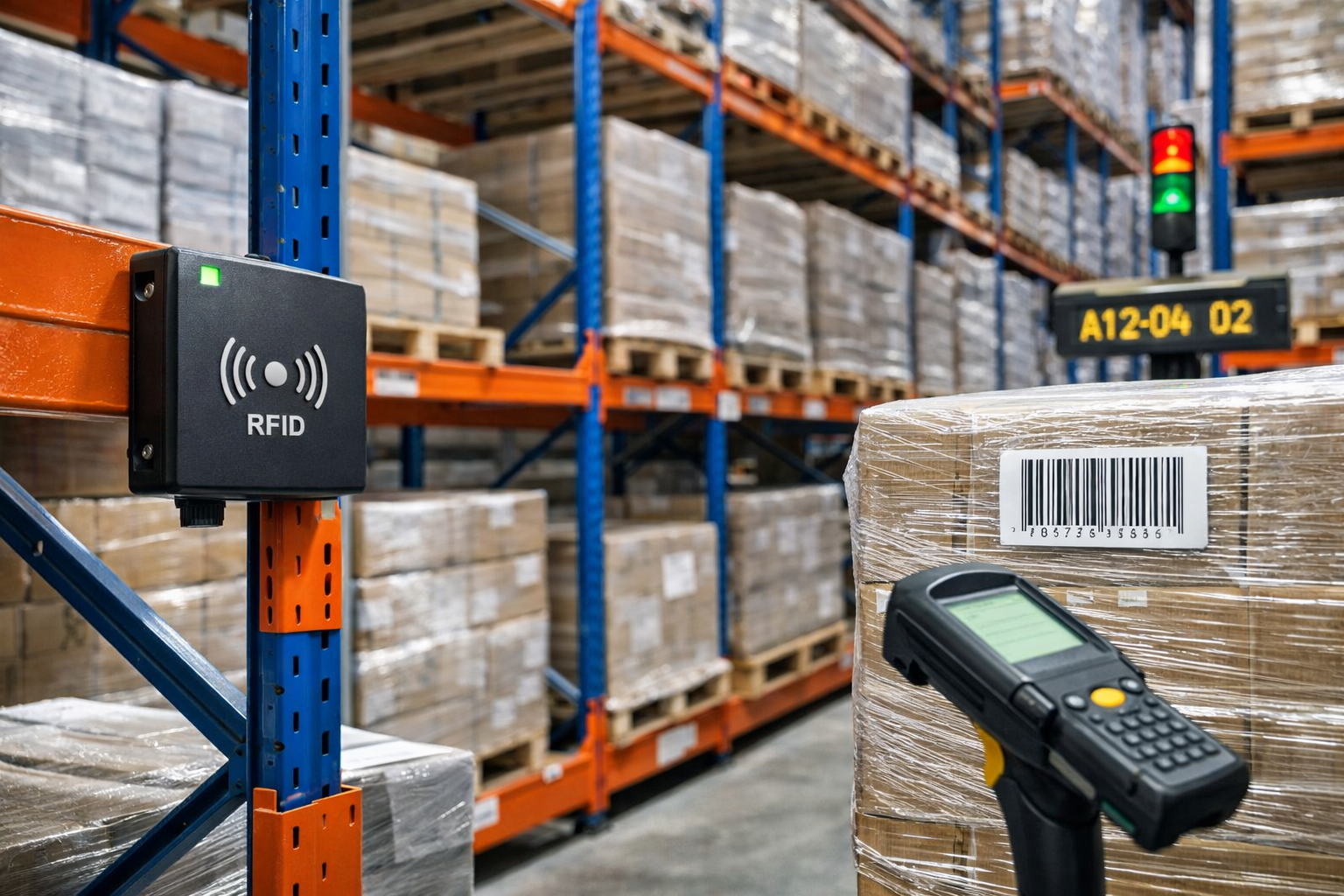
Pallet tracking systems are becoming a core component of modern warehousing and distribution operations. As supply chains grow more complex, businesses need accurate, real-time visibility of pallet movement and storage location. However, tracking technology does not operate in isolation. Its effectiveness depends heavily on rack design, layout, and compatibility with warehouse infrastructure. Understanding how pallet tracking systems integrate with racking is essential for digital warehousing teams planning long-term scalability.
Understanding Pallet Tracking Systems in Warehouses
Pallet tracking systems monitor the movement, status, and location of pallets across storage and handling processes. These systems improve inventory accuracy, reduce manual errors, and support faster order fulfillment.
Common pallet tracking technologies include:
- Barcode storage systems that rely on visual scanning
- RFID pallets with embedded or attached radio-frequency tags
- Sensor-enabled smart racks that detect pallet presence automatically
Each technology interacts differently with warehouse racks, making compatibility a critical planning factor.
How Pallet Tracking Systems Interact With Racking Layouts
Pallet tracking systems rely on predictable pallet placement and consistent rack geometry. Racking layouts influence how reliably pallets can be identified, scanned, or detected.
Key interaction points include:
- Beam spacing and upright alignment
- Pallet orientation within rack bays
- Accessibility for scanners or RFID readers
- Interference from metal rack components
Without proper alignment between tracking systems and racks, data accuracy can decline significantly.
RFID Pallets and Rack Compatibility Considerations
Signal Behavior in Metal Racks
RFID pallets offer hands-free, automated tracking, but metal racking can interfere with radio signals. Rack design plays a direct role in read accuracy.
Important factors include:
- Distance between RFID readers and pallet tags
- Shielding effects from steel uprights and beams
- Tag placement on pallet sides or bases
According to industry guidance from GS1, optimized tag positioning and reader calibration are essential when RFID operates near metal structures.
Rack Design Adjustments for RFID
Warehouses using RFID pallets often adopt:
- Consistent bay widths for predictable read zones
- Elevated reader placement to reduce signal blockage
- Non-metallic spacers where feasible
These adjustments help pallet tracking systems deliver reliable, repeatable data.
Barcode Storage Systems and Racking Alignment
Barcode storage remains widely used due to its low cost and simplicity. However, barcode-based pallet tracking systems require clear line-of-sight access.
Racking considerations include:
- Adequate aisle width for scanning equipment
- Clear labeling zones on pallets and rack beams
- Minimal obstruction from cross-bracing
In high-density racking, such as narrow aisle or double-deep systems, barcode scanning can become slower and more error-prone.
Smart Racks and Integrated Tracking Technologies
Smart racks combine structural racking with embedded sensors, load cells, or RFID readers. These racks form an integrated layer within pallet tracking systems.
Benefits of Smart Rack Integration
- Automatic pallet detection without manual scanning
- Real-time location confirmation
- Improved inventory accuracy
Smart racks work best in standardized layouts where pallet size, weight, and placement remain consistent.
Infrastructure and Data Integration
Smart racks often connect directly to warehouse management systems (WMS). Compatibility depends on:
- Power and network access within rack rows
- Uniform pallet specifications
- Clearly defined storage rules
This approach supports scalable digital warehousing environments.
Rack Types and Their Impact on Tracking Accuracy
Different racking systems present unique challenges for pallet tracking systems:
- Selective pallet racks: High compatibility with all tracking methods
- Drive-in racks: Limited visibility for barcode and RFID tracking
- Push-back racks: Variable pallet positioning affects detection
- Automated storage systems (AS/RS): Typically optimized for RFID or sensor-based tracking
Selecting the right combination of rack type and tracking technology reduces long-term operational friction.
Planning Rack Compatibility During System Design
Successful deployment of pallet tracking systems starts at the design stage, not after installation.
Best practices include:
- Aligning pallet dimensions with rack bay sizing
- Testing tracking accuracy in pilot rack zones
- Accounting for future automation or expansion
- Coordinating between IT, operations, and storage design teams
Early coordination minimizes retrofitting costs and data reliability issues.
In Summary: Why Rack Compatibility Matters
Pallet tracking systems deliver the greatest value when they work seamlessly with warehouse racking. Technology choices, rack geometry, and layout consistency all influence tracking accuracy. As warehouses continue to digitize, integrating tracking considerations into racking design is no longer optional. It is a foundational requirement for efficient, data-driven operations.
FAQs
Pallet tracking systems are used to monitor the location, movement, and status of pallets within a warehouse or distribution center. They help improve inventory accuracy, reduce manual handling errors, and support faster picking, replenishment, and auditing processes across storage and logistics operations.
Pallet tracking systems interact with racks by identifying pallet placement within specific storage locations. This can involve barcode scans, RFID signal detection, or smart rack sensors. Rack design affects visibility, signal strength, and scanning access, which directly impacts tracking reliability.
RFID pallets are generally compatible with standard pallet racks, but metal components can interfere with signal transmission. Proper tag placement, reader positioning, and consistent rack spacing help improve read accuracy when RFID operates in traditional steel racking environments.
Barcode storage systems do not require special rack designs, but they benefit from clear labeling zones and accessible scanning paths. Adequate aisle width, consistent pallet orientation, and unobstructed rack beams help maintain scanning efficiency and reduce operator errors.
Smart racks are storage systems equipped with sensors, RFID readers, or load-detection technology. They automatically confirm pallet presence and location without manual scanning. Smart racks integrate with warehouse management systems to provide real-time inventory visibility and operational insights.