
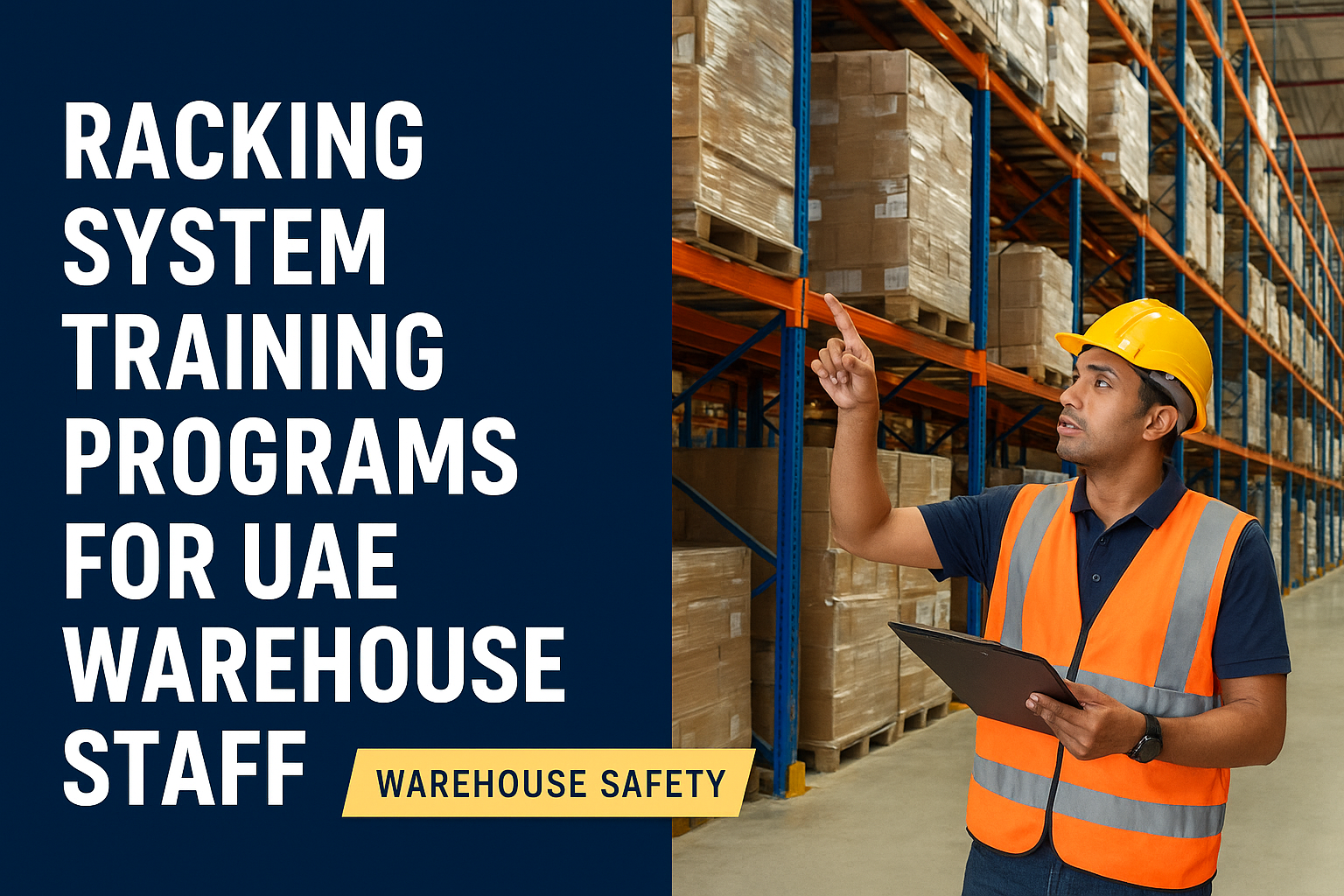
Warehouses are the backbone of the UAE’s booming logistics, retail, and manufacturing sectors. From Dubai’s Jebel Ali Free Zone to Abu Dhabi’s industrial hubs, efficient warehouse management directly impacts supply chain performance. Among the most critical components inside a warehouse is the racking system the structural framework that supports thousands of tons of goods daily.
But while warehouses invest heavily in racking systems, many overlook an equally vital factor: training staff to handle and maintain those systems properly. Poorly trained employees can cause rack collapses, safety hazards, and inventory loss, costing businesses millions.
This is where racking training in the UAE becomes indispensable. A well-structured training program ensures staff understand load capacities, safe stacking, inspection routines, and emergency protocols ultimately improving both safety and efficiency.
In this article, we will explore:
- Why racking system training is essential for UAE warehouses.
- What training modules typically cover.
- UAE laws and compliance requirements.
- Benefits of investing in workforce education.
- How companies can implement training effectively.
The Growing Importance of Racking Training in the UAE
The UAE has positioned itself as a global logistics hub, with a warehouse market expected to grow exponentially due to e-commerce, retail, and free-trade zones. According to recent industry reports, the warehousing sector in Dubai alone is projected to see double-digit growth annually.
With this growth comes increased complexity in operations higher storage volumes, advanced automation, and more diverse racking systems such as selective pallet racking, drive-in racking, push-back systems, and cold storage racks.
This complexity makes employee training in racking systems not optional, but essential. A single mistake, such as overloading racks or misusing forklifts, can cause catastrophic collapses.
Why Racking Training is Critical
1. Safety and Accident Prevention
Unsafe racking practices are one of the leading causes of workplace accidents in warehouses. Training ensures staff know:
- How to load pallets correctly.
- How to avoid uneven weight distribution.
- How to identify damaged racks and report them immediately.
2. Regulatory Compliance in the UAE
The UAE enforces strict health and safety regulations. Authorities such as Dubai Municipality and Abu Dhabi Occupational Safety and Health Center (OSHAD) require warehouses to implement proper training and safety measures. Non-compliance can result in fines, license suspension, or even facility shutdowns.
3. Improved Efficiency
Trained staff operate forklifts more carefully, reduce product damage, and minimize downtime caused by accidents or rack failures. This leads to higher productivity and reduced costs.
4. Asset Protection
Racking systems are expensive infrastructure. Training ensures they are used within load limits and maintained properly, prolonging their lifespan.
What Racking Training in UAE Warehouses Covers
A comprehensive racking training UAE program usually includes the following modules:
1. Introduction to Racking Systems
- Types of racking (pallet racking, cantilever, drive-in, mezzanine).
- Load limits and design specifications.
2. Safety Procedures
- Identifying damaged racks.
- Safe forklift operations around racking.
- Emergency evacuation in case of rack collapse.
3. Load Management
- Correct pallet placement.
- Even weight distribution.
- Prohibited loading practices.
4. Rack Inspection and Maintenance
- Daily checks by operators.
- Scheduled inspections by trained supervisors.
- Documentation and reporting standards.
5. Legal & Regulatory Awareness
- UAE warehouse safety laws.
- Compliance with international racking standards (e.g., SEMA, FEM).
6. Practical Hands-On Training
- Real-time demonstrations in warehouses.
- Mock drills for emergency response.
- Certification after skill assessments.
Compliance and Legal Considerations in the UAE
In the UAE, warehouse operators have a legal responsibility to protect staff and maintain workplace safety. Racking-related accidents can lead to liability claims, especially if training records are missing.
Some key compliance points:
- Dubai Municipality’s Code of Construction Safety mandates training for warehouse staff.
- OSHAD in Abu Dhabi requires risk assessments and worker safety education.
- Insurance companies in the UAE often demand documented training records before approving warehouse coverage.
By investing in racking training UAE, companies not only avoid fines but also secure lower insurance premiums.
Benefits of Racking Training for UAE Companies
- Fewer Workplace Injuries – Staff handle racks more carefully, reducing accidents.
- Higher Productivity – Less downtime from accidents and damages.
- Reduced Inventory Loss – Proper handling minimizes product breakage.
- Enhanced Employee Confidence – Trained employees feel safer and perform better.
- Improved Reputation – Compliance with safety standards builds trust with clients and regulators.
How to Implement Racking Training in Your UAE Warehouse
- Partner with Certified Trainers
Work with accredited training providers in the UAE specializing in warehouse safety. - Customize the Program
Tailor modules based on your warehouse setup (cold storage, e-commerce fulfillment, automotive spare parts, etc.). - Schedule Regular Refreshers
Training should not be a one-time event. Regular refresher courses keep staff updated on best practices. - Combine Theory and Practice
Classroom learning must be followed by practical, hands-on exercises inside the warehouse. - Document and Certify
Keep proper records of training completion, certification, and assessments.
Future of Racking Training in the UAE
As UAE warehouses adopt automation, AI, and robotics, training programs will also evolve. Staff will need to learn how to safely interact with automated storage and retrieval systems (AS/RS) and hybrid warehouse environments.
Forward-thinking companies are already integrating virtual reality (VR) and simulation-based training to make racking safety more engaging and realistic.
In a fast-growing logistics hub like the UAE, racking training is no longer optional it’s a necessity. Properly trained staff not only ensure safety and compliance but also drive efficiency, cost savings, and long-term growth.
By prioritizing racking training in UAE warehouses, businesses can create safer workplaces, protect assets, and maintain their competitive edge in the region’s thriving logistics landscape.
FAQs
Q1: Why is racking training important for UAE warehouses?
Racking training reduces accidents, ensures compliance with UAE safety laws, and improves warehouse efficiency.
Q2: How often should warehouse staff undergo racking training?
At least once a year, with refresher courses every 6–12 months depending on warehouse operations.
Q3: Who can provide certified racking training in the UAE?
Accredited training institutes, safety consultancies, and racking manufacturers with certified trainers.
Q4: What happens if a warehouse in the UAE doesn’t train its staff?
It can face heavy fines, operational shutdowns, insurance issues, and liability for accidents.
Q5: Can training reduce insurance costs for warehouses?
Yes. Many insurers in the UAE offer reduced premiums for warehouses with documented staff training programs.