
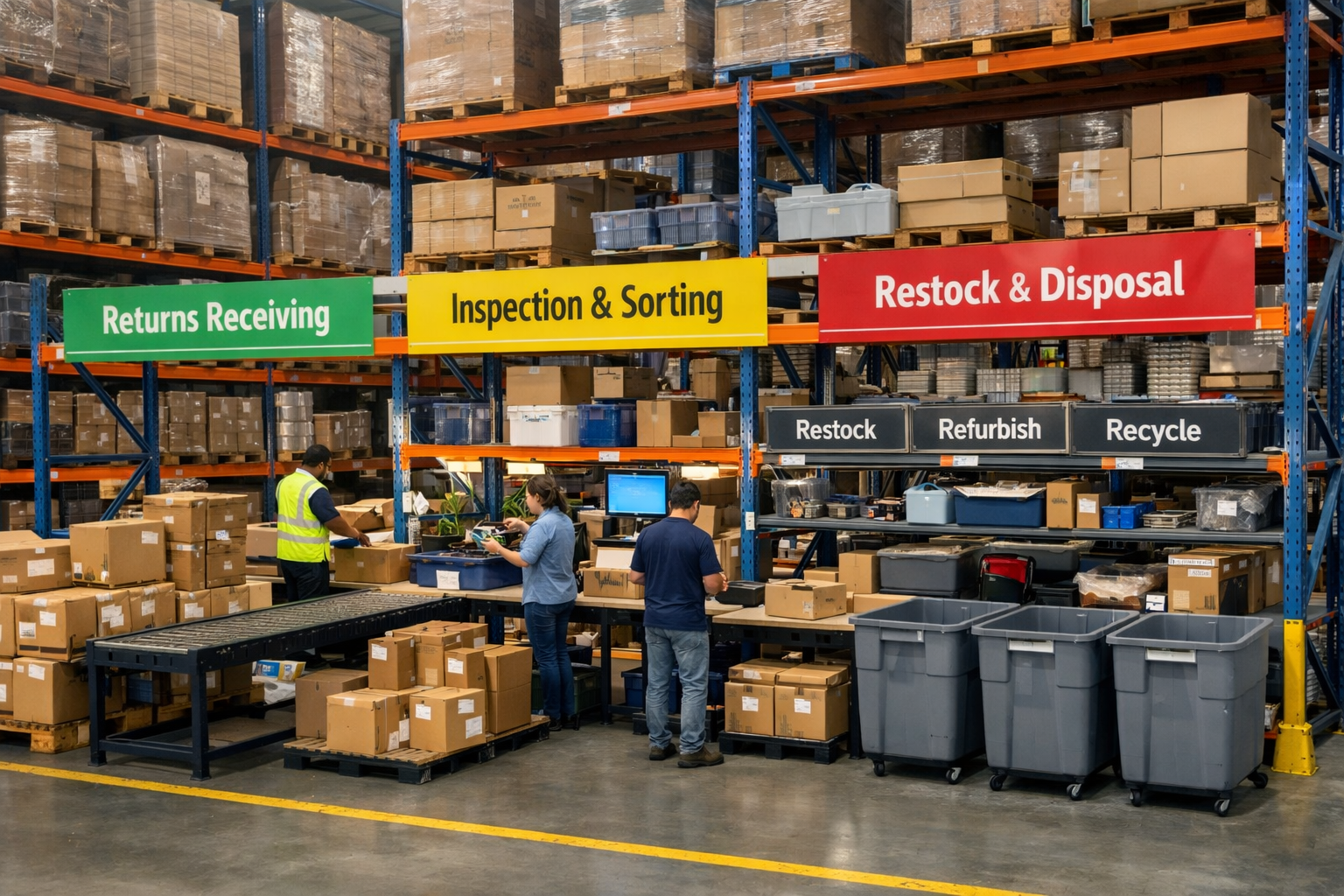
Reverse logistics racking has become a critical component of modern supply chain operations as retailers and e-commerce companies face rising product return volumes. According to industry data from the National Retail Federation, return rates continue to grow year over year, placing pressure on warehouse layouts originally designed for outbound fulfillment. As a result, storage systems must now support faster returns handling, inspection, and redistribution without disrupting forward logistics.
Why Reverse Logistics Requires Specialized Racking
Unlike traditional storage, reverse logistics involves unpredictable product conditions, mixed SKUs, and varying disposition outcomes. Returned items may be reshelved, repaired, repackaged, recycled, or discarded. Therefore, warehouse racking must support flexibility rather than fixed, high-density storage alone.
Key challenges include:
- Irregular inventory flow
- Short dwell times for returned goods
- Increased handling and inspection steps
- Space constraints in existing facilities
Reverse Logistics Racking and Space Allocation Strategies
Effective reverse logistics racking starts with thoughtful space allocation. Facilities must designate zones that separate returned items from new inventory to prevent cross-contamination and inventory errors.
Zoned Storage for Returns Handling
Warehouses commonly divide reverse logistics areas into:
- Initial receiving zones for intake and registration
- Inspection and sorting areas for quality checks
- Disposition zones for resale, refurbishment, or disposal
Selective pallet racking, shelving systems, and mobile racking are often used to adapt quickly to fluctuating volumes.
Flexible Racking Configurations
Adjustable racking systems allow operators to reconfigure storage levels as return profiles change. This flexibility supports seasonal spikes, promotional returns, and product recalls without requiring structural modifications.
Design Considerations for High-Volume Returns
When return volumes are high, racking design must prioritize accessibility and speed. Deep-lane storage may reduce space efficiency if frequent access is required. Instead, shallow-depth racking and carton flow systems can improve picking and put-away efficiency.
Integration With Warehouse Operations
Reverse logistics racking should align with:
- Warehouse management systems (WMS)
- Barcode or RFID scanning workflows
- Material handling equipment pathways
Clear aisle widths and ergonomic access points reduce handling time and worker fatigue.
Compliance, Safety, and Product Integrity
Returned goods often include damaged or non-compliant items. Racking systems must support safe segregation to meet regulatory and quality standards. Dedicated racks for hazardous, recalled, or quarantined products help prevent accidental redistribution.
In Summary
As returns continue to reshape supply chain operations, reverse logistics racking is no longer optional. Thoughtful design, flexible layouts, and clear zoning allow warehouses to process returns efficiently while maintaining inventory accuracy and operational flow. For retailers and e-commerce businesses, optimized racking can significantly reduce costs associated with reverse logistics.
FAQs
Reverse logistics racking refers to storage systems designed specifically for handling returned goods. These systems support inspection, sorting, repair, resale, or disposal processes while keeping returned inventory separate from outbound stock to maintain accuracy and efficiency.
E-commerce businesses experience higher return rates than traditional retail. Reverse logistics racking helps manage fluctuating return volumes, reduces processing time, and improves inventory visibility, which is essential for maintaining service levels and controlling operational costs.
Standard racking focuses on long-term storage and outbound picking. Reverse logistics racking prioritizes accessibility, flexibility, and short dwell times, allowing workers to quickly inspect and redirect returned items through multiple processing stages.
Common systems include selective pallet racking, adjustable shelving, carton flow racks, and mobile racking. These options allow facilities to adapt storage layouts based on product size, return volume, and handling requirements.
Yes, many warehouses retrofit existing layouts by reallocating space and installing adjustable racking systems. This approach allows businesses to support reverse logistics without expanding facilities, making it a cost-effective solution.