
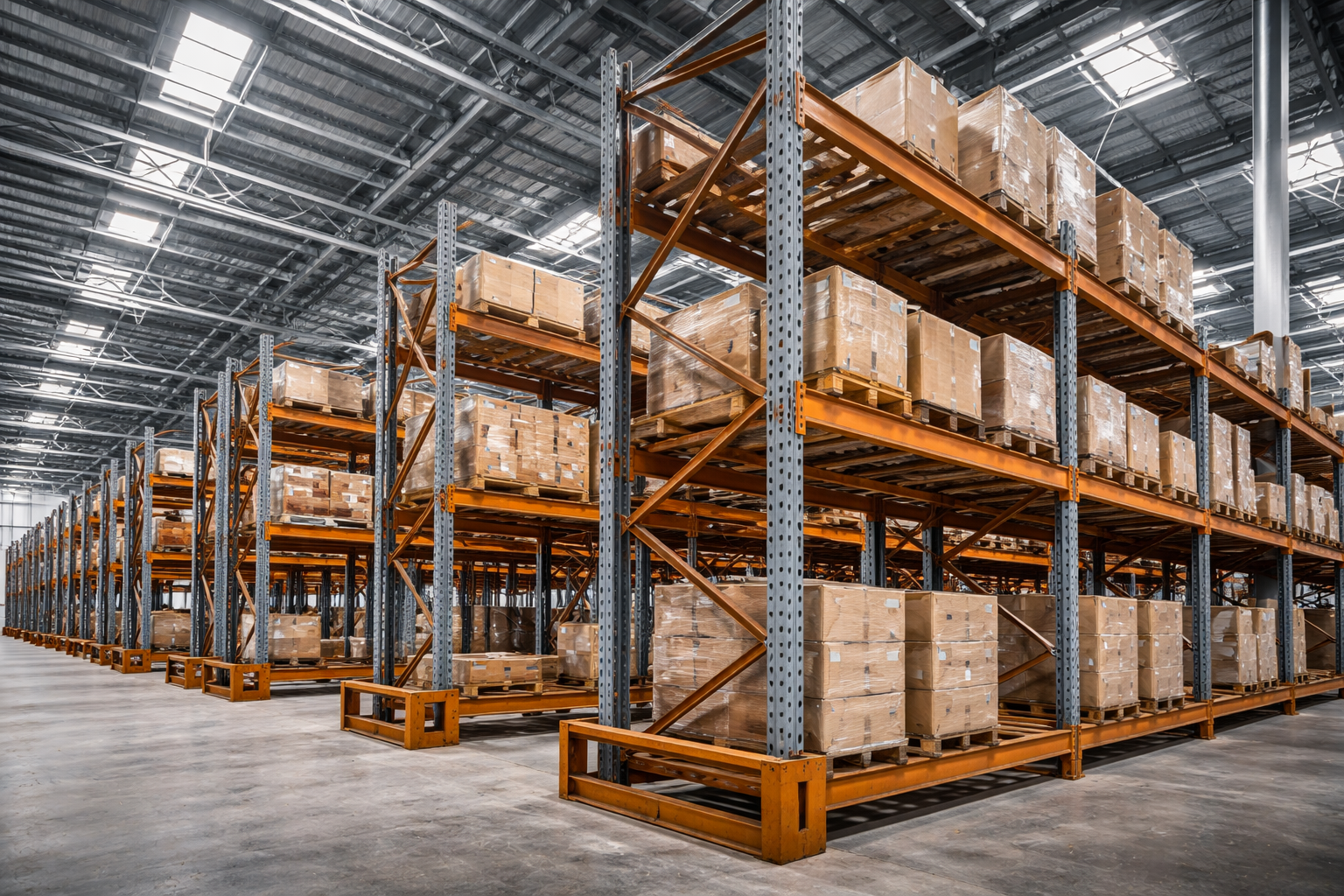
Weathering steel racking is increasingly discussed in the context of warehouse infrastructure across the UAE. Industrial operators face a challenging combination of heat, humidity, airborne salts, and dust, all of which accelerate metal corrosion. As a result, understanding how weathering steel performs in UAE warehouse environments has become a practical concern for long-term storage planning and asset durability.
Unlike conventional carbon steel, weathering steel is designed to form a protective oxide layer. This characteristic directly affects its corrosion resistance, maintenance needs, and suitability for harsh regional climates such as those found in the United Arab Emirates.
Understanding Weathering Steel and Its Properties
Weathering steel is a group of low-alloy steels developed to improve atmospheric corrosion resistance. It contains controlled amounts of elements such as copper, chromium, nickel, and phosphorus.
Key material characteristics include:
- Formation of a stable protective patina
- Reduced corrosion rate over time
- Structural strength comparable to standard steel grades
- Lower long-term surface degradation under suitable conditions
The protective patina develops when the steel is exposed to alternating wet and dry cycles. Once formed, it limits oxygen and moisture penetration, slowing further corrosion.
Weathering Steel Racking and the UAE Climate
Environmental factors in UAE warehouses
Warehouses in the UAE operate under unique environmental stresses, including:
- High ambient temperatures exceeding 45°C in summer
- Coastal humidity and salt-laden air
- Fine dust and sand particles
- Rapid temperature fluctuations between day and night
These conditions significantly influence how weathering steel racking behaves over time.
Corrosion performance in arid and coastal zones
In inland and arid regions, weathering steel can perform consistently when ventilation allows moisture evaporation. However, in coastal or high-humidity zones, persistent moisture and salt exposure may delay or disrupt patina stabilization.
According to materials research published by ASTM International, weathering steel performs best in environments with regular dry cycles and limited chloride exposure. This distinction is critical when assessing suitability for UAE warehouse locations.
Comparing Weathering Steel to Conventional Steel Grades
Selecting racking materials often involves comparing weathering steel with galvanized or painted carbon steel.
Key differences include:
- Corrosion resistance: Weathering steel relies on patina; galvanized steel relies on zinc coating
- Maintenance requirements: Weathering steel typically requires fewer surface treatments
- Surface appearance: Natural oxidation versus coated finishes
- Performance variability: Strongly influenced by environmental conditions
While galvanized steel offers predictable corrosion protection, weathering steel racking may provide long-term durability advantages in controlled warehouse environments with appropriate airflow and drainage.
Structural Integrity and Load Performance
From a structural standpoint, weathering steel maintains mechanical properties similar to traditional structural steel grades. Load-bearing capacity, stiffness, and fatigue resistance remain within industry standards when manufactured and installed correctly.
Engineering assessments indicate that corrosion-related section loss in stabilized weathering steel occurs at a slower rate than in unprotected carbon steel. This contributes to consistent racking performance over extended service life.
Maintenance and Lifecycle Considerations
Weathering steel racking does not eliminate maintenance, but it changes its nature.
Typical lifecycle considerations:
- Initial surface runoff during patina formation
- Monitoring patina uniformity in enclosed spaces
- Ensuring adequate ventilation
- Avoiding constant condensation or water pooling
Industry studies from the World Steel Association note that improper environmental conditions can reduce the expected corrosion resistance benefits. Therefore, warehouse design plays a direct role in performance outcomes.
Regulatory and Industry Standards
In the UAE, warehouse racking systems must align with:
- International steel material standards (ASTM, EN)
- Local building and fire safety regulations
- Industrial safety guidelines for storage systems
Weathering steel grades used in racking applications are typically tested under recognized global standards, ensuring traceability, consistency, and predictable performance when correctly specified.
Key Takeaways
Weathering steel racking offers a technically sound option for certain UAE warehouse environments, particularly where moisture exposure is intermittent and environmental control is feasible. Its corrosion resistance depends heavily on climate conditions, airflow, and location. Careful material selection and engineering assessment remain essential for long-term reliability.
FAQs
Weathering steel racking refers to storage systems manufactured from weathering steel alloys designed to resist atmospheric corrosion. The steel forms a protective oxide layer that slows rust progression, reducing surface degradation under suitable environmental conditions.
Weathering steel can perform well in UAE warehouses with controlled humidity and proper ventilation. However, in coastal or high-salt environments, continuous moisture exposure may affect patina formation and reduce corrosion resistance.
Weathering steel protects itself through a natural oxide layer, while galvanized steel relies on a zinc coating. Galvanized steel offers consistent protection in high-humidity areas, whereas weathering steel performance depends more on environmental conditions.
Yes, but maintenance needs are generally lower. Periodic inspections are required to ensure the patina remains stable and that moisture does not accumulate, especially in enclosed warehouse spaces.
Key factors include humidity levels, salt exposure, airflow, temperature cycles, and surface drainage. Proper warehouse design and environmental control significantly influence long-term corrosion performance.