
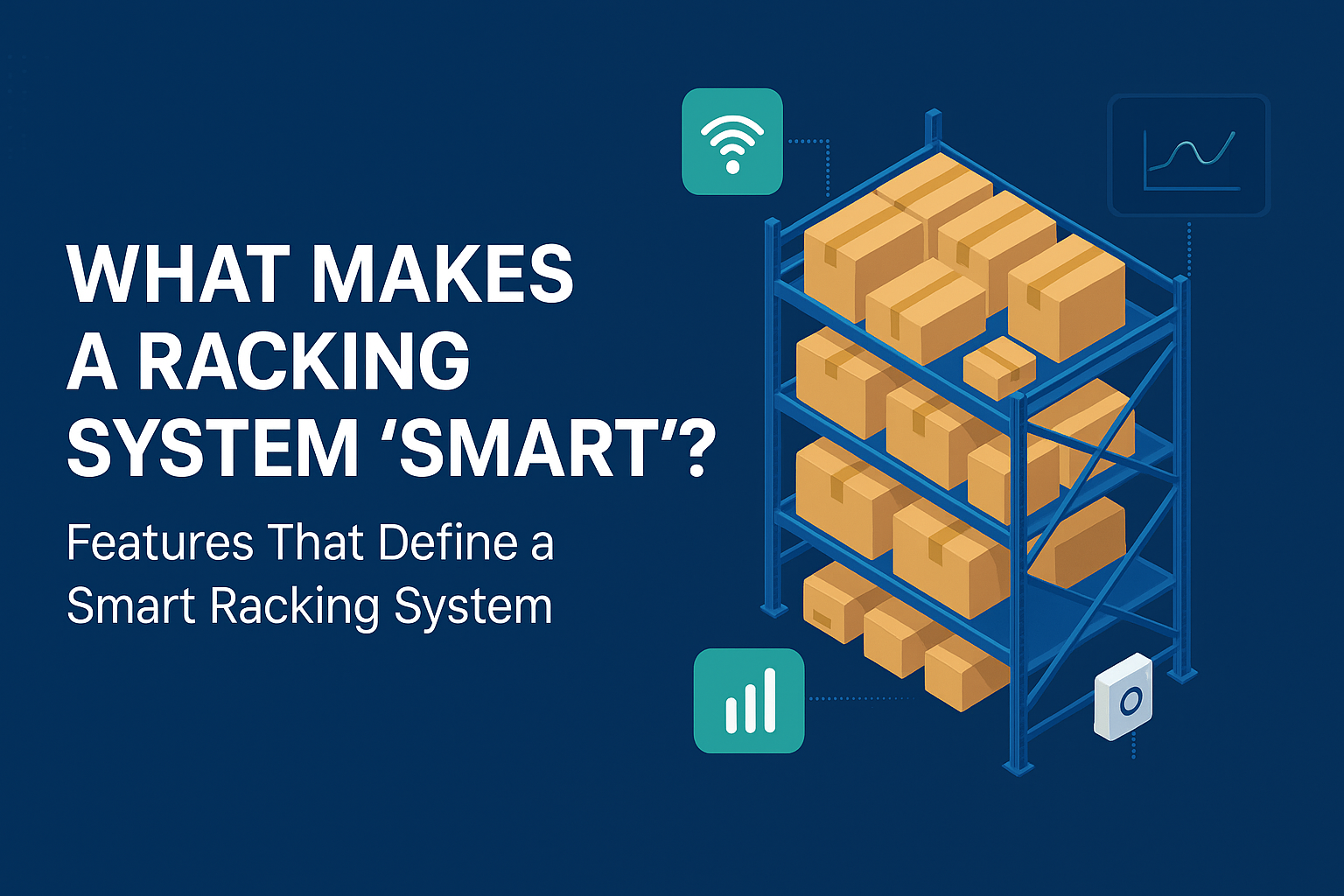
The Rise of Smart Racking in Modern Warehouses
In the era of Industry 4.0, warehouses are no longer static storage facilities they are dynamic, data-driven ecosystems. The adoption of smart racking systems is transforming the way businesses in Dubai and across the UAE manage their inventory, streamline operations, and cut costs.
A smart racking system isn’t just a shelf with sensors it’s an integrated network of automation, IoT devices, data analytics, and AI-driven controls designed to enhance efficiency, safety, and scalability.
In this guide, we’ll explore:
- The core features that define a smart racking system
- How IoT and automation integrate into warehouse storage
- Advantages for UAE-based businesses
- Implementation challenges and solutions
- Real-world applications and case studies
1. Understanding Smart Racking Systems
A smart racking system is a technology-enabled storage solution that uses a combination of hardware (sensors, actuators) and software (warehouse management systems, AI, predictive analytics) to optimize warehouse operations.
Unlike traditional racks, smart racking systems can:
- Track inventory in real-time
- Automatically adjust shelves for different product sizes
- Detect safety hazards before they cause downtime
- Integrate with WMS/ERP systems for streamlined workflows
2. Core Smart Racking Features
2.1 IoT Integration
- Sensors & RFID tags for real-time inventory tracking
- Temperature & humidity sensors for sensitive goods
- Remote monitoring via cloud-based dashboards
Example: In Dubai’s cold chain logistics, IoT racking ensures perishable goods remain within strict temperature ranges.
2.2 Automation & Robotics
- Automated storage and retrieval systems (AS/RS)
- Robotic shuttles that navigate racks for order picking
- Conveyor-belt integration for faster throughput
2.3 AI-Powered Analytics
- Predictive restocking based on demand patterns
- Space optimization algorithms to maximize storage capacity
- AI-driven maintenance alerts for equipment health
2.4 Safety & Compliance Features
- Load sensors to prevent overstocking
- Automatic fire suppression integration
- Worker safety zones with motion detection
2.5 Scalability & Modularity
- Expandable racking units with plug-and-play tech
- Cloud-based systems for multi-warehouse visibility
3. Benefits of Smart Racking Systems in Dubai
| Benefit | Impact on Business |
|---|---|
| Reduced Labor Costs | Automation cuts manual handling needs |
| Real-Time Inventory Accuracy | Eliminates human error in stock counts |
| Space Optimization | Higher storage density with dynamic slotting |
| Better Safety Compliance | Reduces accident risks in high-traffic zones |
| Faster Order Fulfillment | Improves customer satisfaction & retention |
| Energy Efficiency | Smart lighting & equipment use less power |
4. Implementation Challenges & Solutions
Challenge 1: High Initial Investment
Solution: Government incentives in UAE and phased implementation strategies
Challenge 2: Integration with Legacy Systems
Solution: Middleware software that bridges old ERP systems with IoT devices
Challenge 3: Workforce Adaptation
Solution: Continuous training programs for operators
5. Case Studies in the UAE
Case Study 1: Smart Cold Storage in Dubai
A major food distributor implemented IoT-enabled pallet racking with real-time temperature monitoring. This reduced spoilage by 30%.
Case Study 2: E-Commerce Fulfillment Center in Abu Dhabi
An online retailer integrated AI-driven picking robots with their racks, boosting order processing speed by 40%.
6. Future Trends in Smart Racking
- 5G-enabled warehouse communication
- Digital twins for virtual warehouse simulations
- Blockchain-based supply chain tracking
FAQs on Smart Racking Systems
Q1: What is the main difference between smart racking and traditional racking?
Smart racking uses IoT, sensors, and automation to optimize storage, while traditional racks are static and manual.
Q2: Can smart racking be retrofitted to existing warehouses?
Yes, many modular solutions allow for gradual upgrades without major downtime.
Q3: Is smart racking suitable for small warehouses in Dubai?
Yes, cloud-based and scalable options make it affordable for SMEs.
Q4: How does smart racking improve safety?
It uses load sensors, motion detection, and automated alerts to prevent accidents.
Q5: What industries benefit most from smart racking?
E-commerce, cold chain logistics, pharmaceuticals, and manufacturing.
Smart racking systems are no longer a futuristic concept they are a competitive necessity. With IoT, AI, and automation, warehouses in Dubai can cut costs, improve safety, and scale faster than ever before.
For UAE businesses aiming to stay ahead, investing in smart racking features today will pay dividends in the decades to come.