

Warehouse Dust Hazards and Rack Longevity: What Facilities Teams Should Know
Warehouse dust hazards are often underestimated in industrial environments, yet they play a measurable role in storage system wear, air quality, and long-term facility safety. From fine particulate buildup on steel structures to corrosive reactions accelerated by poor housekeeping, dust accumulation can gradually reduce the lifespan of pallet racking and other storage infrastructure.
As warehouses expand and inventory turnover increases, maintaining clean air and surfaces has become a critical operational issue. Industry safety bodies and facility maintenance experts emphasize that effective dust control not only protects workers but also preserves structural integrity in storage systems.
How Warehouse Dust Accumulates in Storage Facilities
Dust in warehouses comes from multiple sources. While some particles originate outdoors, many are generated internally through daily operations.
Common sources include:
- Packaging materials such as cardboard and paper fibers
- Wooden pallets shedding fine particles
- Vehicle emissions from forklifts and dock equipment
- Product residue from bulk goods handling
- Construction debris in expanding or renovated facilities
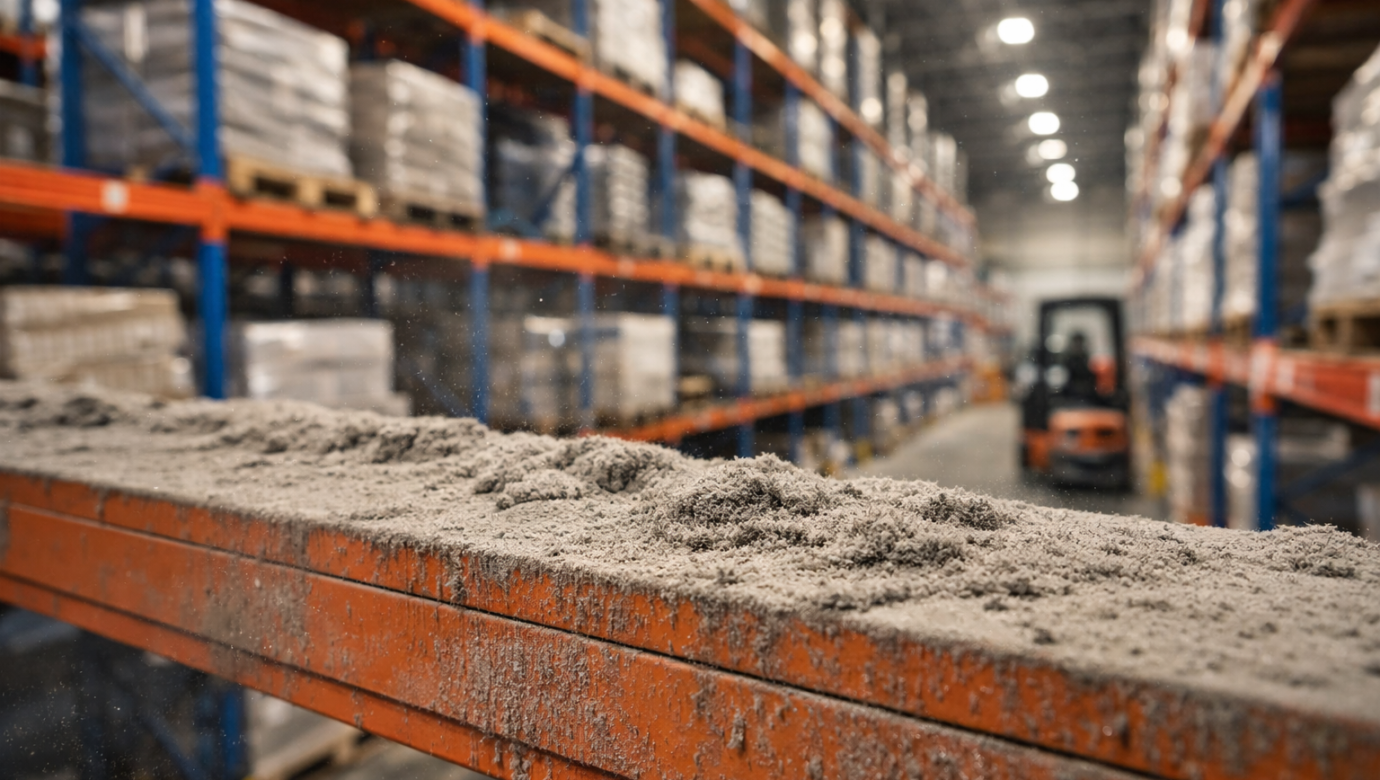
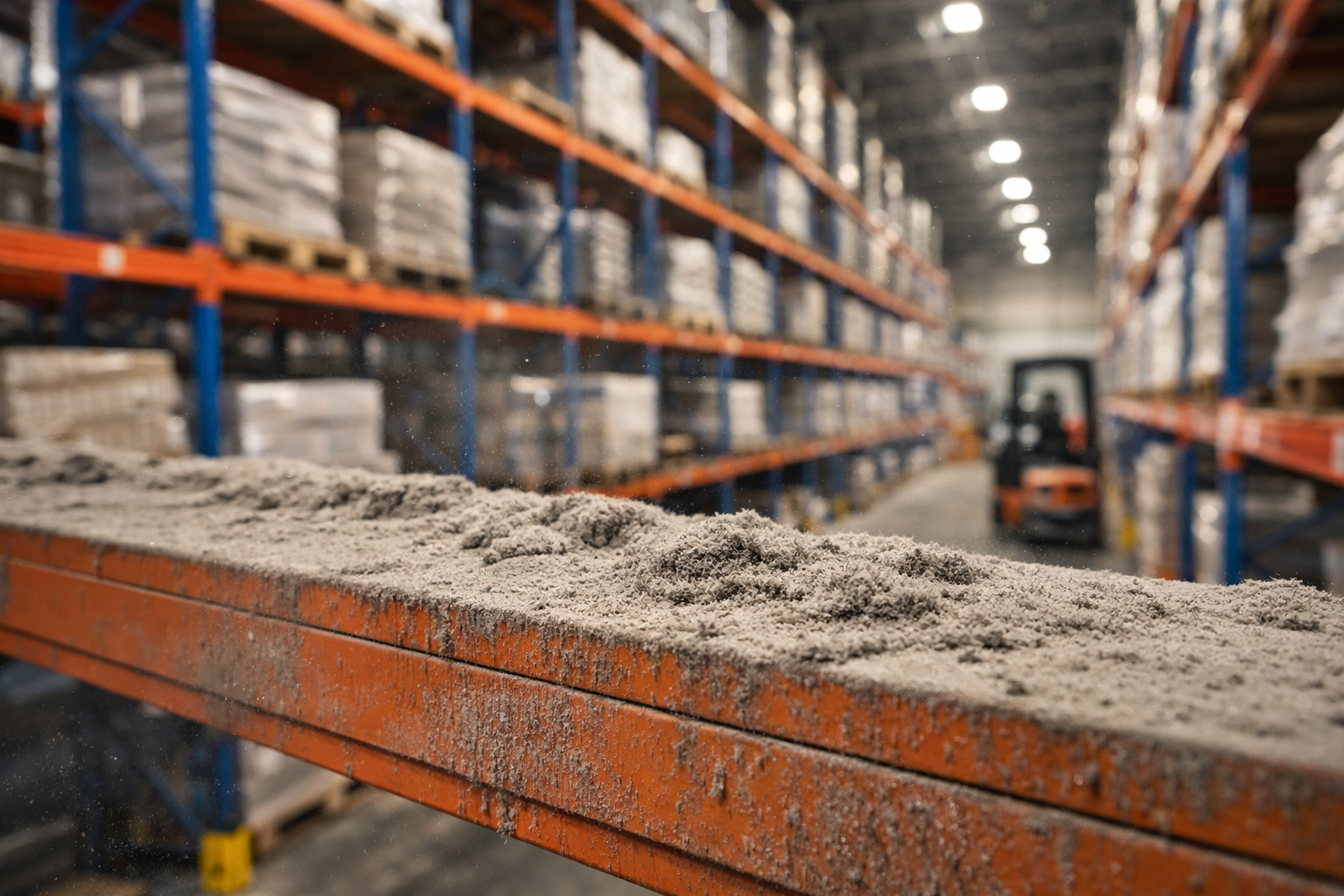
These particles settle on horizontal rack beams, upright frames, and shelf surfaces. Over time, layers of dust can form in areas that are difficult to reach during routine cleaning.
Poor ventilation worsens the issue. Facilities with limited airflow or outdated filtration systems tend to experience higher particulate concentrations, especially in high-bay storage zones.
Why Warehouse Dust Hazards Affect Rack Longevity
Dust may appear harmless, but its long-term impact on metal storage systems can be significant. Steel racking is designed for durability, yet environmental conditions heavily influence its lifespan.
Corrosion Risks Linked to Dust
Dust can trap moisture against metal surfaces. When humidity fluctuates, this moisture creates a micro-environment that encourages oxidation. According to industrial maintenance research, even coated steel can corrode faster when exposed to persistent particulate buildup combined with damp conditions.
Over time, corrosion may:
- Reduce load-bearing capacity of rack components
- Weaken protective coatings and finishes
- Increase the likelihood of surface pitting
In coastal regions or facilities near chemical processing areas, airborne salts and pollutants can mix with dust, accelerating corrosive reactions.
Increased Mechanical Wear
Dust particles also contribute to mechanical friction. When moving parts such as adjustable shelf connectors or safety locks become coated in debris, they may not seat properly. This can cause:
- Improper beam engagement
- Reduced effectiveness of locking mechanisms
- Difficulty during inspections and adjustments
Although gradual, these effects can compromise structural reliability if not addressed during maintenance checks.
Air Quality and Worker Safety Considerations
Warehouse dust hazards are not limited to equipment concerns. Airborne particulates can affect worker health and regulatory compliance.
The Occupational Safety and Health Administration (OSHA) and similar agencies worldwide highlight the importance of controlling dust exposure. Fine dust may contribute to respiratory irritation, especially in facilities handling powders, textiles, or bulk agricultural goods.
From an operational perspective, excessive dust can also:
- Reduce visibility in high-traffic zones
- Interfere with sensors and automated systems
- Increase fire risks in combustible dust environments
Because racks occupy most vertical space in warehouses, they often collect significant dust layers that can be disturbed during loading and unloading, reintroducing particles into the air.
Housekeeping Practices That Protect Racking Systems
Routine cleaning is one of the most effective ways to manage warehouse dust hazards and extend rack life.
Facilities management experts recommend:
- Scheduled high-level cleaning using lifts or vacuum systems
- Avoiding dry sweeping methods that recirculate dust
- Using industrial HEPA filtration for fine particles
- Inspecting rack surfaces during cleaning for early corrosion signs
In addition, maintenance teams should document findings during routine rack inspections. Visible rust, coating damage, or debris buildup should be addressed promptly to prevent structural degradation.
Ventilation and Environmental Controls
Modern warehouses increasingly rely on environmental control systems to limit particulate accumulation.
Effective measures include:
- Upgrading HVAC filtration systems
- Maintaining positive air pressure to reduce outdoor dust entry
- Installing localized extraction in dusty processing areas
- Monitoring humidity to reduce condensation risks
Studies in industrial facility management show that balanced humidity levels help minimize the moisture conditions that contribute to corrosion beneath dust layers.
Inspection and Preventive Maintenance
Regular inspections are essential for identifying early signs of damage linked to dust exposure. Many safety standards recommend at least annual professional rack inspections, with internal visual checks conducted more frequently.
Inspectors typically look for:
- Flaking paint or protective coatings
- Surface rust or pitting
- Debris obstructing connections
- Signs of moisture retention
Early detection allows facilities to clean, treat, or repaint affected areas before structural performance declines.
What This Means
Warehouse dust hazards represent a gradual but important factor in storage system durability. While dust alone rarely causes immediate failure, its interaction with moisture, air quality, and neglected maintenance can shorten rack service life.
Facilities that combine strong housekeeping programs with ventilation improvements and scheduled inspections are better positioned to preserve structural safety and control long-term repair costs.
Key Takeaways
- Dust buildup can trap moisture and accelerate corrosion on steel racks
- Poor air quality increases both equipment wear and worker health risks
- Routine high-level cleaning helps prevent long-term structural damage
- Ventilation and humidity control reduce environmental stress on racking
- Regular inspections allow early detection of dust-related deterioration
FAQs
Warehouse dust hazards refer to risks created by airborne and settled particles in storage facilities. These particles can affect air quality, worker health, fire safety, and equipment durability. Over time, dust accumulation on racks and machinery can contribute to corrosion, mechanical wear, and reduced system reliability if not properly managed.
Dust can hold moisture against metal surfaces, especially in humid environments. This creates conditions that support oxidation, even on coated steel. When corrosive particles such as salts or pollutants mix with dust, the reaction can accelerate, gradually weakening rack components and protective finishes.
Yes. Excessive dust levels may lead to indoor air quality concerns and potential regulatory scrutiny, particularly in facilities handling fine powders or combustible materials. Proper ventilation, filtration, and housekeeping help maintain safer particulate levels and support compliance with occupational health standards.
Cleaning frequency depends on facility activity and dust generation, but many operations benefit from scheduled high-level cleaning several times per year. Regular visual checks during inspections help determine whether additional cleaning is needed to prevent buildup that could lead to corrosion or mechanical issues.
Dust can interfere with sensors, scanners, and moving mechanical components in automated systems. Accumulated particles may reduce accuracy, increase maintenance needs, and contribute to premature wear. Keeping racks and surrounding equipment clean supports smoother automation performance and longer equipment life.
