
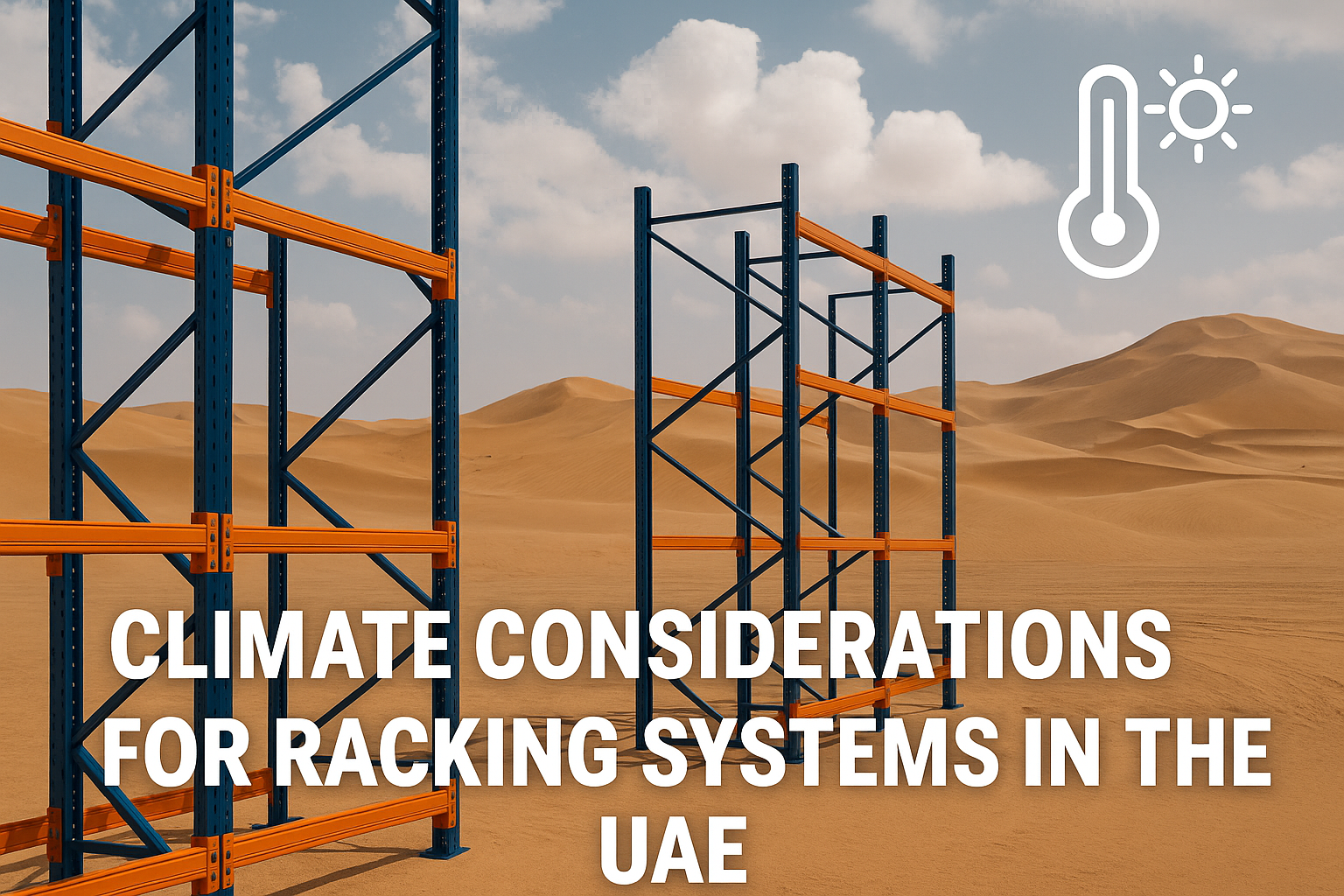
In a country where temperatures frequently soar above 45°C and humidity levels fluctuate dramatically, climate isn’t just a weather forecast—it’s a design parameter. For UAE-based warehouses, especially in hot logistics corridors like Jebel Ali, Abu Dhabi Industrial City, and Sharjah’s Sajjaa zone, ignoring climate impact on racking systems can lead to premature corrosion, safety hazards, and costly replacements.
From steel durability to moisture control, this article unpacks the key climate-related challenges and solutions for installing and maintaining racking systems across the Emirates.
1. Temperature Extremes: Choosing the Right Material Matters
Dubai and the broader UAE experience high ambient temperatures that can weaken standard steel over time and impact load-bearing capacity. Prolonged heat exposure can also degrade paint and finishes, making systems susceptible to corrosion.
✅ Solution:
- Use powder-coated steel or hot-dip galvanized racking, especially for outdoor or non-air-conditioned facilities.
- Opt for UV-resistant finishes for sun-exposed storage areas.
- Implement heat-resistant base plates to avoid expansion cracks in anchors.
2. Humidity and Corrosion Control
In coastal regions like Dubai and Abu Dhabi, salt-laden humidity accelerates rust, particularly in loading docks, mezzanines, and high-ceilinged warehouses. Corrosion reduces structural strength and increases safety risks.
✅ Climate-Smart Racking Tip:
- Choose marine-grade galvanization for racking used in open or semi-open spaces.
- Ensure regular inspections and maintenance to catch early signs of rust or wear.
- Implement dehumidification systems or install vapor barriers in humidity-sensitive zones.
3. Indoor vs. Outdoor Warehousing: Design Variations Required
Indoor and outdoor environments in the UAE have vastly different climate exposures. Indoor warehouses with AC systems may maintain a more stable environment, but loading bays often act as thermal bridges. Outdoor racking faces wind, dust, and direct sunlight.
✅ Best Practice:
- Design sealed transitional areas between indoor racking and exterior loading areas.
- Install roof covers or sunshades on outdoor pallet racking to prevent UV degradation.
- Anchor outdoor racking with wind-rated base systems to withstand sandstorms.
4. Thermal Expansion and Structural Stability
Steel racking expands and contracts with temperature changes. In UAE’s desert environments, daily shifts between scorching daytime heat and cooler nights can cause micro-movements, eventually loosening bolts or anchor points.
✅ Preventive Strategy:
- Use flexible anchor bolts designed for thermal expansion.
- Incorporate expansion joints in long-run racking systems.
- Schedule quarterly torque checks on bolts and fasteners.
5. Dust and Sand Intrusion: Maintenance Must-Have
Sandstorms and fine dust are common, especially in inland warehouses like those in Al Ain or Ras Al Khaimah. Dust buildup can affect rolling elements, sensors, and even stability.
✅ Solution:
- Apply anti-static coatings to reduce dust adhesion.
- Use sealed bearing components on mobile racking systems.
- Regularly clean and vacuum warehouse floors and base plates.
6. Climate-Responsive Fire Safety Compliance
High heat environments increase the risk of fire ignition, particularly in tightly packed racking setups. Dubai Civil Defence (DCD) mandates specialized fire suppression systems in climate-challenged warehouses.
✅ Compliance Checklist:
- Install heat-resistant sprinkler heads in racking aisles.
- Use non-combustible racking materials where possible.
- Incorporate fire-rated partitions for climate-sensitive storage zones.
7. Smart Monitoring for Climate Conditions
Modern racking systems benefit from IoT-enabled sensors that track humidity, temperature, and corrosion levels in real-time. These insights can predict maintenance needs and reduce risk.
✅ Advanced Tip:
Invest in AI-powered warehouse management systems (WMS) that factor in climate data to adjust racking usage and maintenance schedules dynamically.
Conclusion: Climate Isn’t a Challenge—It’s a Design Opportunity
In the UAE, where climate is as fierce as the competition, businesses that factor environmental conditions into racking system planning enjoy lower downtime, fewer repairs, and longer asset lifespans. Whether you’re operating in Dubai’s dry docks or Sharjah’s industrial belt, designing with climate in mind isn’t optional—it’s a strategic advantage.