
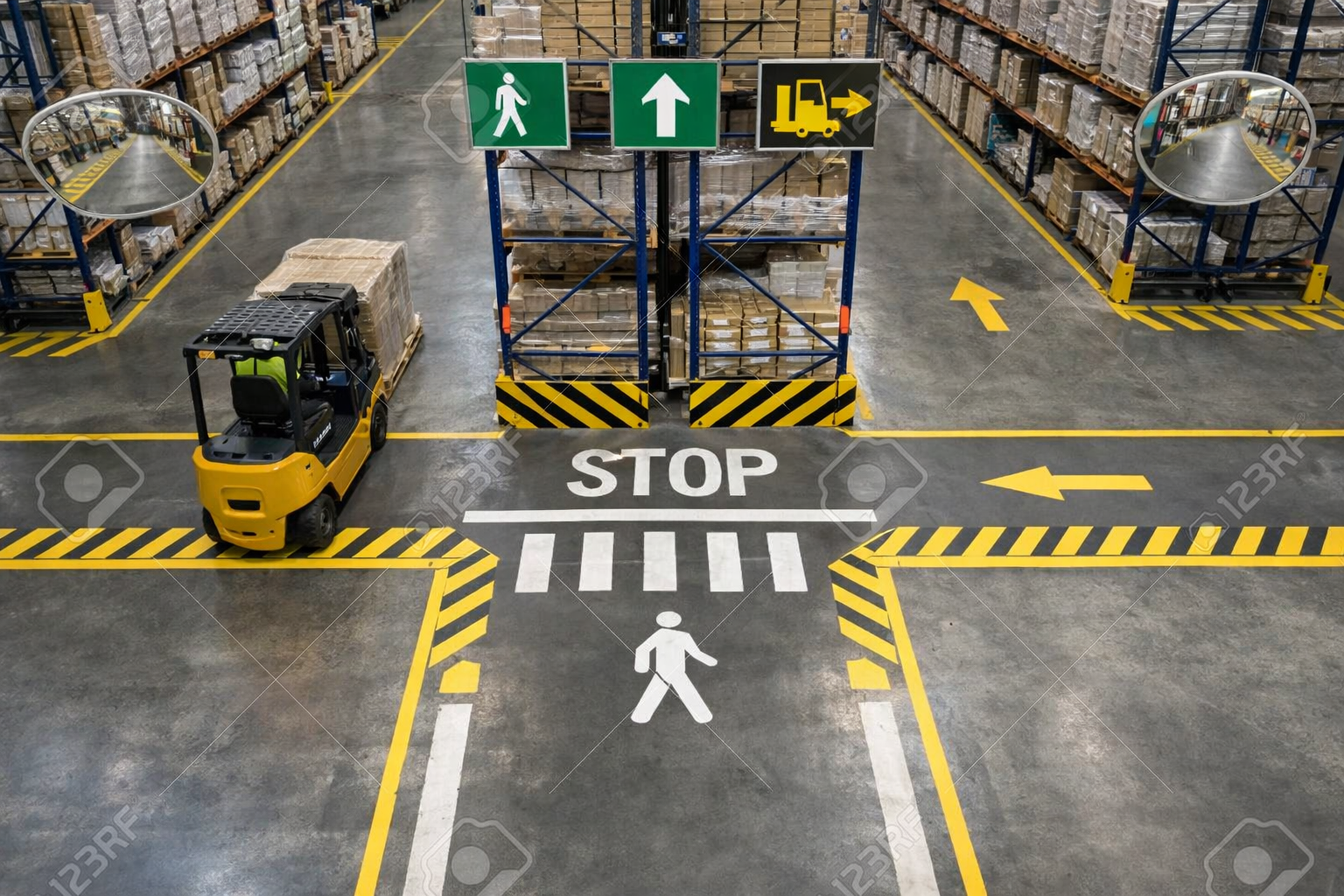
Cross-aisle design plays a critical role in reducing forklift incidents and improving traffic flow inside modern warehouses. As facilities expand to meet growing logistics demands, poorly planned aisle intersections have become a leading cause of collisions, product damage, and worker injuries. Industry safety bodies and supply chain engineers increasingly point to smarter cross-aisle layouts as a practical way to reduce risk without slowing operations.
Well-designed intersections help forklifts move predictably, improve sightlines, and create safer shared zones between pedestrians and equipment.
Why Cross-Aisle Design Matters in Warehouse Safety
Forklifts are essential for material handling, but they also present one of the highest safety risks in industrial facilities. According to global occupational safety data, vehicle-related incidents account for a significant share of warehouse injuries each year. Many of these occur at intersections where operators face limited visibility or unclear right-of-way rules.
Effective cross-aisle design addresses these challenges by:
- Reducing blind corners
- Standardizing forklift clearances
- Separating pedestrian pathways
- Improving traffic planning across zones
When aisles are designed with predictable movement patterns, operators can anticipate traffic and react faster.
Key Principles of Cross-Aisle Design
Proper Forklift Clearances
Adequate width is essential at intersections. Cross-aisles should allow forklifts to turn without encroaching on adjacent lanes or storage racks.
Safety planners often recommend:
- Allowing turning radii based on the largest forklift in use
- Adding buffer space for loads extending beyond forks
- Avoiding tight 90-degree turns in high-speed zones
Insufficient clearance forces operators to make sharp corrections, increasing the chance of tipping or striking infrastructure.
Clear Traffic Planning
Traffic planning ensures forklifts move in a predictable direction. Cross-aisles should align with main travel corridors rather than creating confusing multi-directional crossings.
Effective measures include:
- One-way traffic flow in primary aisles
- Marked priority lanes at intersections
- Dedicated crossing zones for pedestrians
Clear rules reduce hesitation and sudden stops, both of which contribute to accidents.
Improved Visibility at Intersections
Obstructed views are a major cause of cross-aisle collisions. High racking, stored pallets, or solid barriers near aisle openings limit operator awareness.
Safety improvements may involve:
- Lower storage heights near intersections
- Installing convex safety mirrors
- Using floor markings and warning signage
These measures help drivers see approaching vehicles before entering the cross-aisle.
How Cross-Aisle Design Supports Operational Efficiency
Safety improvements often bring productivity benefits. When forklifts can travel smoothly without frequent stops or near misses, overall throughput increases.
Better cross-aisle layouts can:
- Reduce travel time between storage zones
- Minimize congestion during peak shifts
- Lower the risk of damaged goods
- Decrease maintenance costs from collision-related repairs
In large distribution centers, even small layout adjustments can lead to measurable efficiency gains.
Common Cross-Aisle Design Mistakes
Despite best practices, many warehouses still operate with legacy layouts that were not designed for today’s traffic volumes.
Frequent design issues include:
Narrow Intersections
Older facilities often have cross-aisles sized only for pallet movement, not modern forklifts with extended loads.
Mixed Pedestrian and Vehicle Paths
Shared routes without clear separation increase the risk of serious injuries.
Poor Signage and Markings
Faded floor lines or inconsistent symbols lead to confusion, especially for new operators.
Storage Encroachment
Temporary pallet storage near intersections blocks sightlines and reduces maneuvering space.
Addressing these issues typically requires layout audits and updated safety planning rather than full facility redesigns.
Cross-Aisle Design and Regulatory Compliance
While exact requirements vary by region, workplace safety regulations consistently emphasize safe vehicle routes and hazard prevention. Inspectors often evaluate:
- Aisle width adequacy
- Visibility at crossings
- Pedestrian protection measures
- Traffic management procedures
Documented traffic planning and clearly marked cross-aisles can help facilities demonstrate proactive safety management during audits.
The Role of Data in Cross-Aisle Improvements
Many warehouse operators now use operational data to refine cross-aisle design. Telematics systems and incident reports reveal where congestion and near misses occur most often.
Facilities may analyze:
- Forklift travel paths
- High-traffic time windows
- Incident location clusters
These insights support targeted layout changes rather than broad, disruptive redesigns.
Key Takeaways
- Cross-aisle design directly affects forklift safety and traffic efficiency
- Proper clearances, visibility, and traffic planning reduce collision risks
- Well-designed intersections improve both safety and productivity
- Regular layout reviews help warehouses adapt to higher traffic volumes
- Data-driven planning supports smarter, lower-cost safety upgrades
FAQs
Cross-aisle design refers to how perpendicular aisle intersections are planned within a warehouse. It includes width, visibility, traffic direction, and pedestrian separation. A well-designed cross-aisle helps forklifts move safely between storage rows while reducing collision risks and improving overall traffic flow.
Cross-aisle design reduces blind spots, congestion, and unclear right-of-way situations. By improving forklift clearances and sightlines, warehouses can lower the risk of collisions, tipping incidents, and pedestrian injuries. Safe intersections allow operators to anticipate traffic and make controlled movements.
The required width depends on the largest forklift and load dimensions in use. Cross-aisles should accommodate turning radii plus extra space for load overhang. Safety planners often recommend wider intersections than standard aisles to allow smoother turns and reduce impact risks.
Visibility can be improved by lowering storage near intersections, installing convex mirrors, and adding clear floor markings and warning signs. Removing visual obstructions helps forklift operators detect approaching vehicles earlier, reducing sudden stops and intersection collisions.
Yes, efficient cross-aisle design reduces travel delays and congestion. When forklifts move smoothly between zones, operations experience fewer interruptions, less product damage, and lower repair costs. Improved traffic flow can lead to measurable gains in throughput and operational efficiency.