
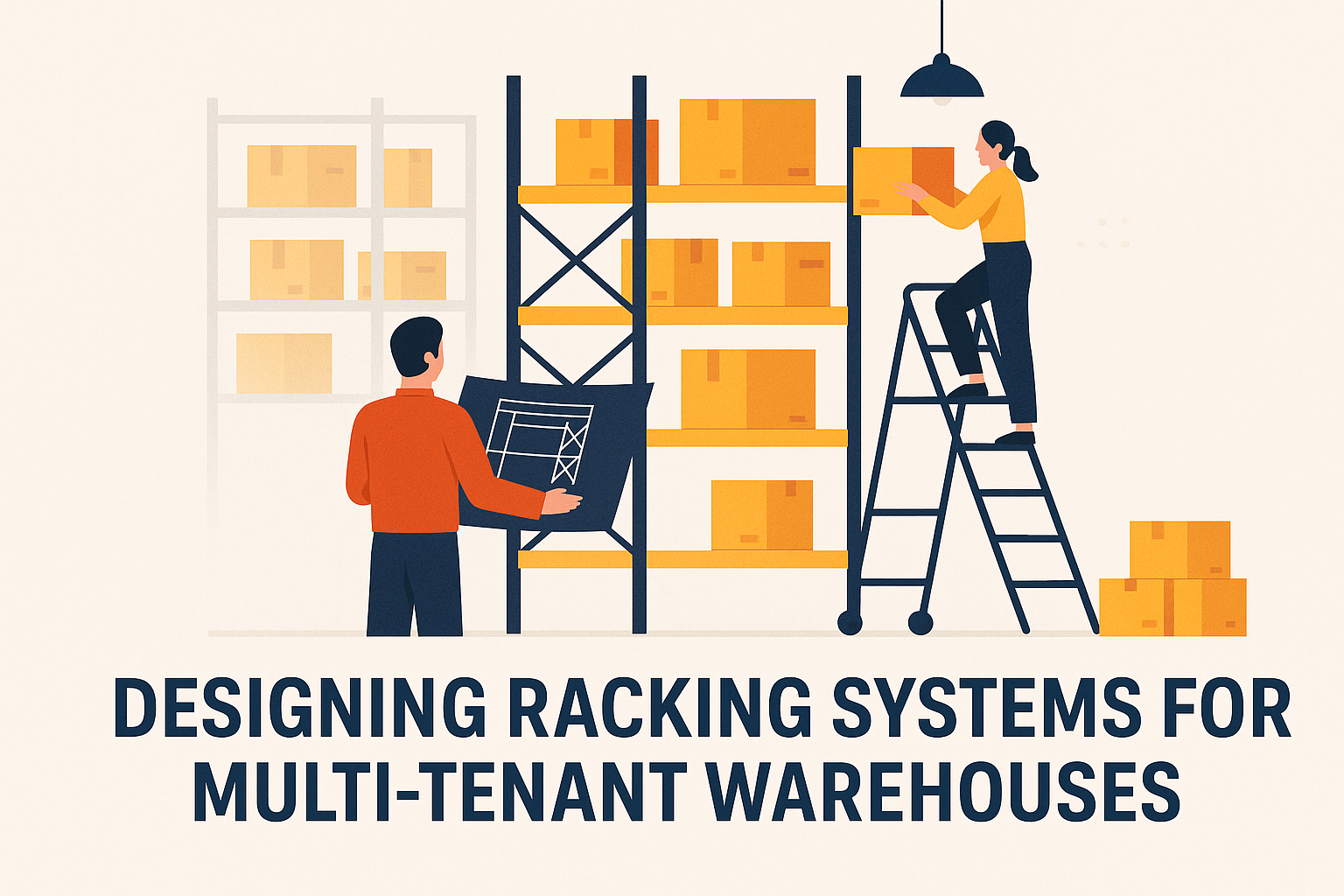
Dubai’s logistics landscape is evolving rapidly, with multi-tenant warehouses becoming the preferred model for e-commerce, 3PL providers, and SMEs. These shared spaces offer flexibility and cost savings but pose unique challenges for racking system design. Creating racking solutions that cater to multiple tenants with varied storage needs demands a balance between space optimization, safety, and scalability.
In this article, we’ll explore how to design racking systems that maximize efficiency and meet the demands of multi-tenant warehouse operations in the UAE.
Understanding Multi-Tenant Warehouse Dynamics
Multi-tenant warehouses house diverse businesses with different inventory types, turnover rates, and operational requirements. This calls for:
- Flexible layouts that can adapt to changing tenant needs.
- Clear demarcation of tenant zones for security and accountability.
- Efficient flow paths for shared loading docks, aisles, and material handling equipment.
Key Considerations in Racking Design
1. Flexibility and Modularity
Opt for adjustable and modular racking systems that allow easy reconfiguration as tenants expand or downsize. Pallet racking, drive-in systems, and mezzanine floors work well for dynamic storage demands.
2. Safety and Compliance
Each tenant must adhere to Dubai’s strict safety and fire regulations. Racking design should include:
- Fire suppression access points
- Load capacity signage
- Anti-collapse barriers and secure anchoring
3. Optimizing Vertical Space
Maximizing cubic space is crucial in high-demand warehouse areas. Tall racking systems with narrow aisle configurations can increase storage capacity by up to 40% without expanding the footprint.
4. Efficient Traffic Flow
Shared spaces need strategically designed aisles to prevent congestion. Implement clear traffic lanes for forklifts and designated pedestrian walkways.
5. Technology Integration
Modern multi-tenant facilities benefit from warehouse management systems (WMS) that track inventory across tenants, optimize picking routes, and reduce operational bottlenecks.
Cost Management for Tenants and Owners
Racking systems for multi-tenant warehouses must strike a balance between initial investment and long-term ROI. Shared costs for installation and maintenance make high-quality racking affordable for smaller businesses while ensuring owners get reliable, durable systems.
Benefits of Well-Designed Racking in Multi-Tenant Spaces
- Improved space utilization and reduced operational costs.
- Enhanced tenant satisfaction through flexibility and scalability.
- Increased warehouse safety and compliance.
- Higher asset value for property owners.
Facts
Designing racking systems for multi-tenant warehouses in Dubai requires a strategic, future-proof approach. By focusing on flexibility, safety, and efficiency, businesses can create shared storage spaces that support growth, attract diverse tenants, and keep operations running smoothly.
They allow easy reconfiguration to accommodate changing tenant needs without significant downtime.
By adhering to Dubai Municipality and Civil Defense regulations and conducting regular racking safety audits.
WMS and inventory tracking systems streamline operations and enhance transparency between tenants.
Shared installation and maintenance expenses make high-quality racking accessible to all tenants.
Yes, utilizing vertical space reduces the need for costly warehouse expansions and increases ROI.